
Respiratory Therapy Associate's Degree at CNM: 2-Year Guide
The Respiratory Care Therapy/Therapist Associate's degree at CNM takes about two years in person and leads to a licensed therapist role with hands-on clinical training.

By Irene Ellis
Respiratory therapists are the frontline specialists who help patients breathe easier, whether that means managing a ventilator in an intensive care unit, coaching a child through an asthma attack, or teaching a former smoker how to use oxygen at home. If that combination of hands-on medicine and direct patient impact appeals to you, the Respiratory Care Therapy/Therapist Associate's degree, usually 2 years In-person at Central New Mexico Community College, may be the most practical entry point into this field. The program is designed for students who want a fast, focused route to a licensed healthcare career without committing to a four-year bachelor's degree first.
What makes this particular pathway worth a close look is its structure. You are not just taking courses; you are training in labs, practicing on simulation equipment, and completing clinical rotations in real hospitals and clinics. That in-person format matters in respiratory care, where the difference between a good outcome and a bad one can come down to your hands and your judgment in the moment. This guide walks through what the degree involves, who it suits, how to prepare, what it costs, and how to decide whether it is the right fit for your goals.
What a Respiratory Therapy Associate's Degree Actually Prepares You to Do
Respiratory therapists evaluate, treat, and monitor patients with cardiopulmonary conditions. The job title can sound narrow, but the scope is broad. In a typical week, a therapist might adjust mechanical ventilators for a patient recovering from surgery, administer inhaled medications to someone with chronic obstructive pulmonary disease, run pulmonary function tests to help diagnose lung disease, or respond to an emergency where a patient suddenly cannot breathe. You are part of the care team, not a passive assistant, and physicians and nurses depend on your assessments.
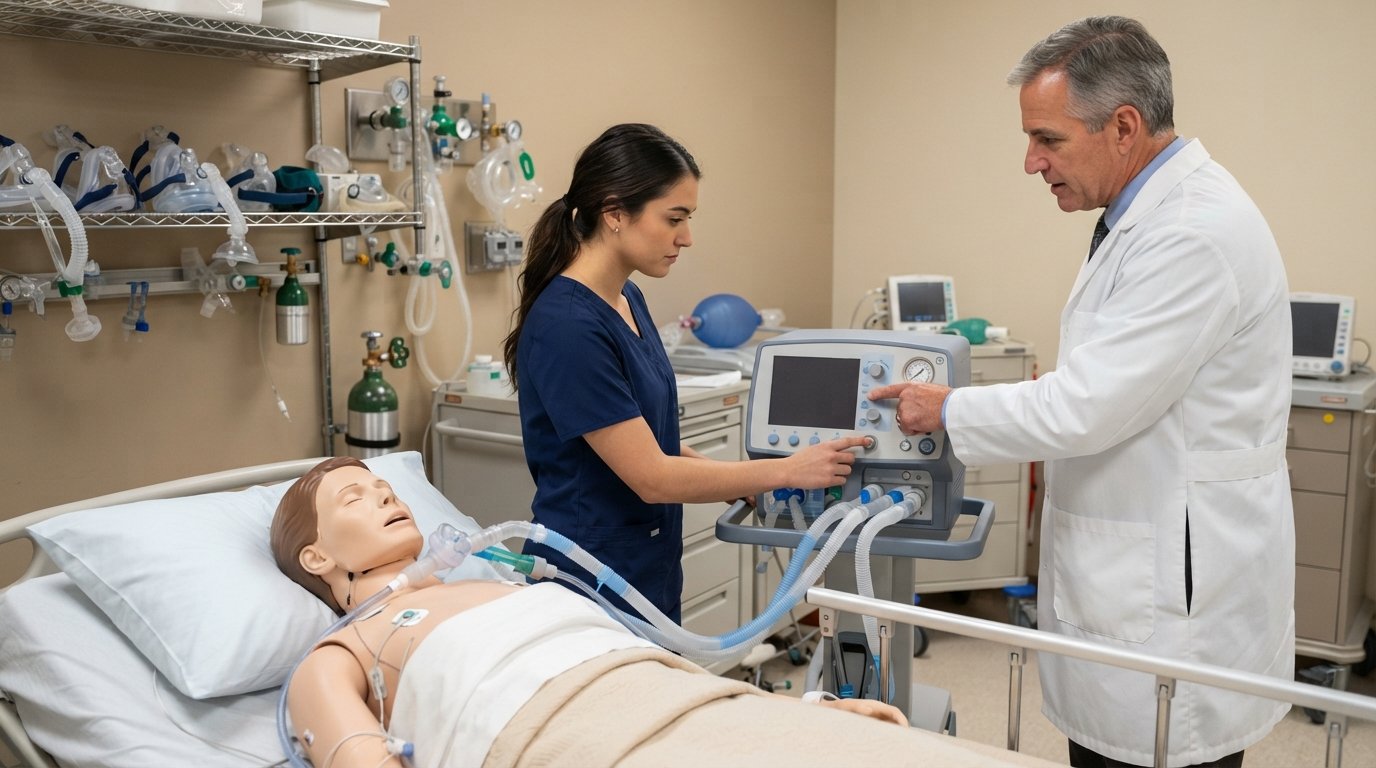
The associate's degree pathway is built to get you to that level of responsibility efficiently. Coursework typically covers anatomy and physiology, cardiopulmonary pharmacology, mechanical ventilation, respiratory disease management, and patient assessment, combined with general education requirements in communication, math, and the social sciences. The clinical component is where the classroom knowledge becomes usable skill. Students rotate through settings such as hospitals, outpatient clinics, and long-term care facilities, supervised by licensed therapists and instructors.
Upon completion, graduates are eligible to sit for credentialing exams, which are typically required for state licensure. That licensing step is non-negotiable in most states, so the quality of a program's exam preparation and clinical placement support is a strong signal of its value. An in-person program like the one at Central New Mexico Community College is structured around that reality, with lab time and supervised patient contact built into the schedule rather than treated as an optional add-on.
It is worth being clear about what the degree does not do. It does not make you a nurse, a physician assistant, or a physician, and it does not automatically guarantee a job. What it does is qualify you for an entry-level therapist role and for the credentialing process that employers expect. For students who want a defined, respected healthcare role without a decade of schooling, that trade-off is often exactly right.
Why the In-Person Format at Central New Mexico Community College Matters
Online education has expanded access to many fields, and for good reason. But respiratory care is one of those disciplines where remote learning cannot replace the physical experience of operating equipment and reading a patient's condition in real time. The program's in-person design at Central New Mexico Community College reflects that. Students work with ventilators, oxygen delivery systems, and airway management tools in a lab setting before they ever touch a patient, and instructors can correct technique immediately.
There is also a practical credentialing dimension. Clinical placements require agreements with healthcare facilities, and those facilities expect students to have completed hands-on training first. An in-person program coordinates those placements and maintains the relationships that make them possible. Students who try to piece together a respiratory therapy education from disconnected online courses often run into walls when it is time to find supervised clinical hours.
The local labor market is another factor. Community college programs tend to have strong ties to regional hospitals and health systems, and those ties can translate into internship opportunities, mentorship, and sometimes job leads after graduation. If you plan to work in New Mexico or the surrounding region, studying where the employers are is a sensible strategy. You can explore related campus and online healthcare programs through HigherEducationAdvisor.com's program search to compare how different schools structure their clinical requirements.
Finally, the in-person format creates a cohort experience. Respiratory therapy students go through a demanding sequence of courses together, practice in the same labs, and often study for exams as a group. That peer support is not a small thing in a program with clinical hours, exam preparation, and the pressure of licensure looming at the end.
Admission Requirements and How to Prepare Before You Apply
Community college health programs are usually more selective than general admission, and respiratory care is no exception. Because clinical slots are limited and accreditation standards apply, programs typically require applicants to complete prerequisite courses and meet minimum GPA thresholds before entering the core sequence. Preparing well in advance can make the difference between starting on your intended timeline and waiting an extra year.
Typical prerequisites include college-level anatomy and physiology, medical terminology, English composition, and intermediate algebra or statistics. Some programs also expect a basic chemistry or microbiology course. Beyond coursework, applicants usually need current CPR certification for healthcare providers, proof of immunizations, and a background check before clinical rotations begin. Requirements vary, so confirm the current list directly with the program before you register for classes.
Here is a practical sequence for getting ready:
- Meet with an academic advisor to map prerequisite courses and confirm which ones can be taken concurrently.
- Complete anatomy and physiology early, since it is both a prerequisite and foundational for everything that follows.
- Maintain a strong GPA in prerequisite courses, as competitive programs often use it as a screening factor.
- Gather documentation such as immunization records, CPR certification, and any required health screenings ahead of the application window.
- Attend any program information sessions to learn about application deadlines and selection criteria.
One more preparation step is often overlooked: shadowing or informational interviewing. Spending a day observing a respiratory therapist in a hospital or clinic gives you a realistic picture of the work and strengthens your application narrative. It also helps you confirm that the profession matches your temperament. Respiratory care involves shift work, exposure to stressful situations, and close contact with patients who are seriously ill. Knowing that in advance prevents costly detours later.
Cost, Financial Aid, and the Return on a Two-Year Investment
Cost is one of the strongest arguments for the associate's degree route. Community college tuition is generally far lower than four-year university tuition, and the respiratory care program can be completed in about two years of full-time study, including prerequisites if you plan carefully. That shorter timeline means you enter the workforce and start earning sooner, which improves the overall return on your education investment.
Financial aid options are similar to those at other accredited institutions: federal student aid, state grants, institutional scholarships, and employer tuition assistance programs. Some hospitals offer loan repayment or tuition support for employees who pursue respiratory therapy credentials, so it is worth asking prospective employers about those benefits. The program's financial aid office can help you complete the Free Application for Federal Student Aid and identify scholarships specific to health professions.
When comparing costs, look beyond tuition. Clinical rotations may involve travel, uniforms, stethoscopes, and certification exam fees. Budget for those expenses early so they do not become a surprise. You can also compare program costs and formats across schools using resources such as CheapOnlineEducation, which helps prospective students browse degree and certificate options and connect with institutions that fit their goals.
The return side of the equation depends on where you work and what specialty you pursue. Respiratory therapists are employed in hospitals, outpatient clinics, home care agencies, and long-term care facilities, and salaries vary by region and setting. Rather than fixating on a single number, look at local job postings, talk to therapists in your area, and consider whether shift differentials or specialty certifications could increase your earnings over time.
Career Outlook and Advancement Beyond the Associate's Degree
The demand for respiratory therapists has been steady and is generally projected to remain so, driven by an aging population, the prevalence of chronic lung conditions, and the essential role therapists play in emergency and critical care. That said, no program can guarantee employment, and hiring conditions vary by region. The realistic approach is to treat the degree as a strong foundation, then build experience and credentials that make you competitive in your local market.
Advancement opportunities exist for therapists who want them. Experienced therapists can pursue specialty certifications in areas such as neonatal and pediatric care, adult critical care, or pulmonary function testing. Some move into education, supervising students in clinical settings, or into management roles overseeing respiratory care departments. Others use the associate's degree as a stepping stone to a bachelor's completion program in respiratory therapy or a related health science field, which can open doors to research, teaching, or leadership positions.
If you are still weighing healthcare paths, it can help to compare adjacent roles. Emergency medical services, for example, offers a different pace and scope of practice. Our overview of the EMT paramedic associate's degree at Central Arizona College explains how that pathway compares for students drawn to prehospital emergency care. Respiratory therapy tends to offer more continuity with patients and more time in hospital and clinic settings, while EMS emphasizes field response and rapid assessment. Neither is better; they suit different temperaments.
Before committing, ask yourself a few honest questions. Do you want to work directly with patients for most of your day? Are you comfortable with the physical and emotional demands of critical care? Do you prefer a defined two-year path to licensure, or do you want the flexibility of a broader degree? The answers will point you toward the right program. If respiratory care is the fit, the associate's degree at Central New Mexico Community College offers a structured, in-person route to a licensed profession, with clinical experience built in and a timeline that respects your budget.
Take the next step by confirming current admission requirements, application deadlines, and clinical placement details with the program, then explore your options through HigherEducationAdvisor.com's matching tools to see how this pathway compares with other healthcare programs that fit your goals. CheapOnlineEducation