
Mental Health Counseling at Boston College: Beyond a Bachelor's
Explore in-person mental health counseling programs at Boston College beyond a bachelor's degree, including admissions, curriculum, and licensure steps.
By Owen Adler
You have a bachelor's degree in psychology or a related field, and you know you want to help people navigate their mental health. But the path from a bachelor's degree to a licensed counseling career is not always clear. If you are considering mental health counseling or counselor training beyond a bachelor's degree in person at Boston College, you are looking at a rigorous, respected, and deeply human path. Boston College, a private Jesuit research university in Chestnut Hill, Massachusetts, offers graduate programs that prepare students for clinical work, but the journey involves specific prerequisites, licensure requirements, and a commitment to in-person learning. This guide walks you through what to expect, how to prepare, and how to decide if this path is right for you.
The Landscape of Mental Health Counseling Beyond a Bachelor's
Mental health counseling is a field that demands more than textbook knowledge. It requires supervised practice, ethical reasoning, cultural competence, and the ability to sit with another person's pain. That is why nearly every state requires a master's degree for licensure as a professional counselor. At Boston College, graduate programs in counseling and mental health are housed within the Lynch School of Education and Human Development, which offers master's degrees in mental health counseling and school counseling, among other related tracks. These programs are designed to meet the academic requirements for licensure in Massachusetts and often align with national standards.
What sets Boston College apart is its commitment to in-person, community-based learning. While online programs offer flexibility, the in-person format at BC emphasizes face-to-face supervision, cohort bonding, and immediate feedback from faculty who are active practitioners. This matters in a field where nonverbal cues, therapeutic presence, and relational skills are central. If you are weighing online versus on-campus options, consider that clinical training often benefits from the structure and mentorship that a physical campus provides. For those exploring broader degree options, resources like this guide to health sciences associate degrees can help you understand foundational pathways, though a master's is the standard for counseling licensure.
Beyond the master's degree, some counselors pursue doctoral degrees or specialized certificates in areas like trauma, substance abuse, or marriage and family therapy. But the master's is the gateway. At Boston College, the mental health counseling program typically spans 60 credits, includes a practicum and internship, and prepares students for the Licensed Mental Health Counselor (LMHC) credential in Massachusetts. The in-person requirement means you will be on campus for classes, labs, and supervision sessions, often during evenings or weekends to accommodate working students.
Program Structure and What You Will Learn
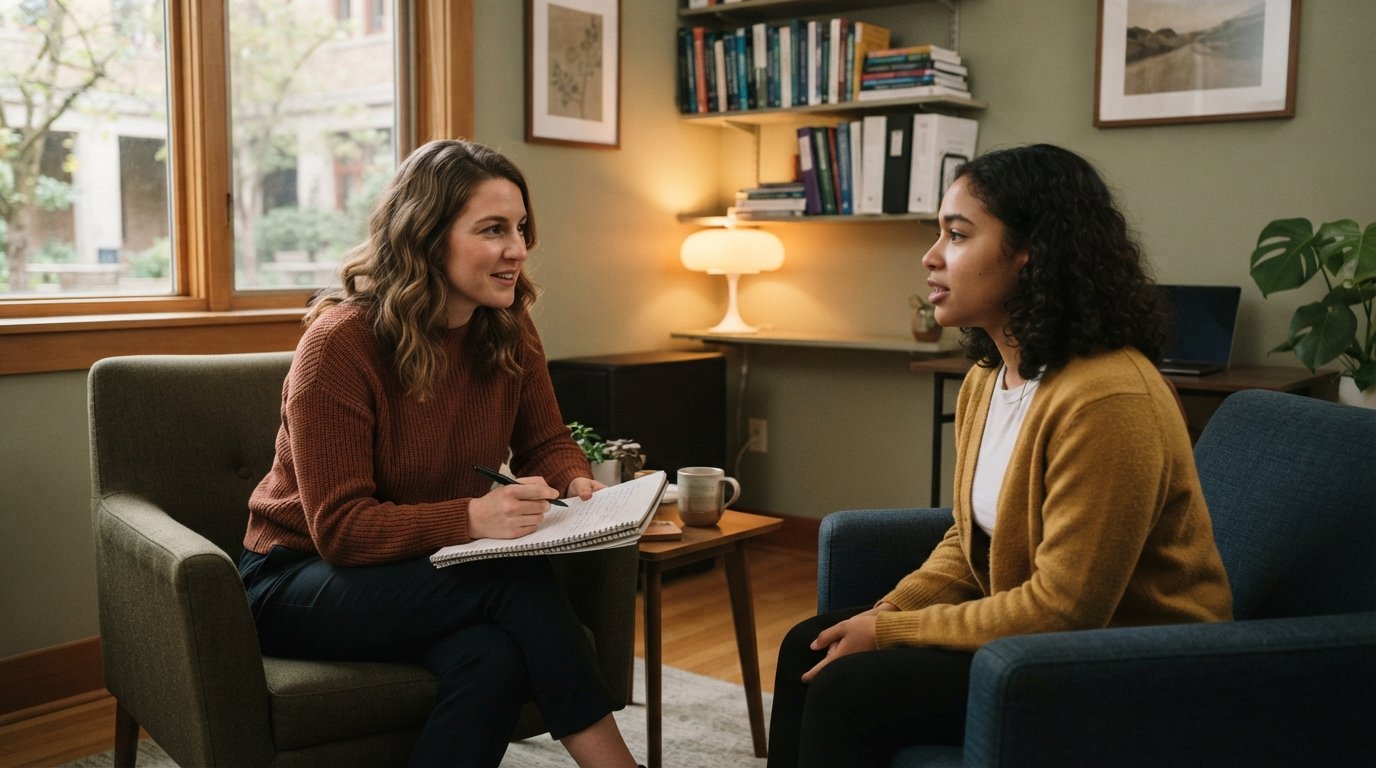
The curriculum for a master's in mental health counseling at Boston College is grounded in both theory and practice. You will take courses in counseling theory, psychopathology, assessment, group work, multicultural counseling, ethics, and research methods. But the heart of the program is the clinical sequence. You will begin with a practicum, where you observe and co-facilitate sessions under close supervision, and then move to an internship, where you take on more responsibility with clients. The in-person format allows for live supervision, role-plays, and immediate debriefing, which are difficult to replicate online.
Beyond the classroom, Boston College emphasizes reflective practice and social justice. The Lynch School's mission includes a focus on equity and inclusion, and counseling courses often integrate discussions of race, class, gender, and systemic barriers to mental health care. This is not just academic; it shapes how you will work with clients from diverse backgrounds. If you are considering a career in counseling, you should be prepared to examine your own biases and develop a culturally responsive approach.
Here is a snapshot of the typical components of a master's program in mental health counseling beyond a bachelor's degree:
- Core coursework: 8 to 10 courses covering counseling theories, human development, psychopathology, and ethics.
- Clinical practicum: 100 to 150 hours of supervised observation and initial client contact.
- Internship: 600 to 900 hours of supervised clinical work, often over two semesters.
- Electives: Specialized courses in trauma, addictions, family therapy, or school counseling.
- Comprehensive exam or capstone: A final project or exam demonstrating integration of learning.
Each of these components is designed to build your competence and confidence. The in-person format means you will have regular access to faculty advisors and clinical supervisors who can guide you through the challenges of working with real clients. It also means you will build a professional network with your cohort, which can be invaluable when you enter the job market.
Admissions and Prerequisites for Boston College's In-Person Program
Admission to Boston College's mental health counseling master's program is competitive. While a bachelor's degree in psychology or a related field is common, it is not strictly required, but you will need to demonstrate foundational knowledge in psychology. Prerequisite courses often include general psychology, abnormal psychology, developmental psychology, and statistics or research methods. If your undergraduate degree is in another field, you may need to take these courses before applying or as part of a conditional admission process.
The application typically requires transcripts, letters of recommendation, a personal statement, and sometimes GRE scores (though many programs have made the GRE optional). Boston College values applicants who have relevant experience, such as volunteer work at a crisis hotline, internships in mental health settings, or work as a paraprofessional. Your personal statement should articulate why you want to be a counselor, what populations you hope to serve, and why you are drawn to Boston College's specific approach. The in-person nature of the program means admissions committees also consider your ability to commit to on-campus attendance and your fit with the cohort model.
If you are an adult learner or career changer, you may be wondering how to balance the demands of graduate school with work and family. Boston College offers part-time options and evening classes for some tracks, but the clinical requirements are substantial. You will need to plan for time on campus and at internship sites. It is worth speaking with an admissions counselor to understand the flexibility and expectations.
Licensure and Career Outcomes
Earning a master's degree is only one step toward becoming a licensed mental health counselor. In Massachusetts, you must complete a specified number of supervised post-master's hours (typically 3,360 hours) and pass the National Clinical Mental Health Counseling Examination (NCMHCE) to become a Licensed Mental Health Counselor (LMHC). Boston College's program is designed to meet the educational requirements for this licensure, but you will need to plan for the post-graduate supervision period. Many graduates work in community mental health centers, hospitals, private practices, schools, and social service agencies while accumulating hours.
The career outlook for mental health counselors is strong. According to the Bureau of Labor Statistics, employment of substance abuse, behavioral disorder, and mental health counselors is projected to grow much faster than the average for all occupations, driven by increased demand for mental health services. In Massachusetts and the Boston area, there are numerous opportunities in healthcare systems, educational institutions, and nonprofit organizations. The in-person training at Boston College can give you an edge in these competitive markets because employers value the hands-on experience and supervision that residential programs provide.
If you are exploring education options and want to compare programs or find related fields, you can browse online and campus degree options through resources that help prospective students connect with schools. However, for clinical counseling, the in-person component at a institution like Boston College is often essential for developing therapeutic skills. Bear in mind that licensure requirements vary by state, and you should always confirm with your state's licensing board.
Is In-Person Training at Boston College Right for You?
Choosing an in-person program is a significant commitment. It means relocating or commuting, adjusting your work schedule, and immersing yourself in a campus community. But for many students, the benefits outweigh the costs. At Boston College, you will learn in small cohorts, receive individualized mentorship, and practice skills in real time with feedback from experienced clinicians. The Jesuit tradition also emphasizes care for the whole person, which aligns well with the counseling profession's focus on empathy and dignity.
However, in-person study is not for everyone. If you have geographic constraints or need maximum flexibility, you might consider hybrid or online programs, but verify that they meet licensure requirements in your state. Some online programs require in-person residencies or local internships, so the line between online and in-person is not always clear. The key is to ensure that your program includes supervised clinical experience and is accredited by the Council for Accreditation of Counseling and Related Educational Programs (CACREP), which Boston College's program holds. CACREP accreditation can simplify licensure and enhance your credibility.
Before you apply, reflect on your motivations and readiness. Counseling is rewarding but emotionally demanding. You will need resilience, self-awareness, and a commitment to ongoing learning. Talk to current students and alumni, visit the campus, and sit in on a class if possible. The more you understand the reality of graduate study in counseling, the better prepared you will be.
Taking the Next Step
The path to becoming a mental health counselor is challenging but deeply meaningful. If you are ready to move beyond your bachelor's degree and pursue in-person training at Boston College, start by reviewing the program's website, attending an information session, and connecting with faculty. Prepare your prerequisites, gather your application materials, and plan for the financial and time commitments. Remember that this is an investment in a career that changes lives, including your own.
As you explore your options, use tools like HigherEducationAdvisor.com to compare programs and request information from schools that fit your goals. Whether you choose Boston College or another accredited program, the key is to ensure your training meets licensure standards and prepares you for the real work of counseling. The journey is long, but the destination, a career helping others heal, is worth every step.