
Health Sciences Associate Degree at Collin College: Your 2-Year Path
Launch your healthcare career with the 2-year, in-person Health Sciences Associate degree at Collin College, a flexible path to high-demand jobs.

By Margaret Reis
Choosing the right educational path can feel overwhelming, especially when you are drawn to the rapidly growing healthcare field but are unsure which specific role fits you best. The Health Services/Allied Health/Health Sciences, General Associate's degree, usually 2 years In-person at Collin County Community College District, offers a versatile and strategic entry point. This program is designed not just for one narrow job title, but to build a broad foundation in health sciences, allowing you to explore various career avenues while gaining practical, transferable skills. If you are a high school graduate, a career changer, or an adult learner in the McKinney, Frisco, or Plano area, this degree could be the smart first step you need.
In this comprehensive guide, we will break down what makes this two-year, in-person program at Collin College unique. We will cover the curriculum, the diverse career paths it opens, how it compares to more specialized allied health programs, and why the in-person learning environment at Collin County Community College District might be the perfect fit for your learning style. By the end, you will have a clear understanding of how this degree can serve as a powerful launchpad for a rewarding career in healthcare.
What Exactly Is the Health Sciences General Associate Degree?
At its core, this degree is an Associate of Science (AS) or Associate of Applied Science (AAS) pathway, depending on your ultimate goal. The Health Services/Allied Health/Health Sciences, General Associate's degree, usually 2 years In-person at Collin County Community College District, provides a broad overview of the healthcare system, foundational sciences, and essential patient care principles. Unlike a nursing degree or a radiologic technology program, which train you for a specific clinical role, this generalist degree gives you a 360-degree view. You will take courses in human anatomy, physiology, medical terminology, healthcare ethics, and introductory psychology, alongside general education requirements in math and English.
This structure is ideal for students who have a passion for health but are still exploring their options. It allows you to get your feet wet in multiple disciplines before you commit to a specialized field. For many, this associate degree serves as the first two years of a four-year bachelor's degree in health sciences, public health, or healthcare administration. For others, it provides the pre-requisite coursework needed to apply to competitive programs like nursing, dental hygiene, or physical therapy assistant schools. In essence, it is both a standalone credential and a bridge to further education.
Why Choose the In-Person Route at Collin College?
In an age of online learning, you might wonder why you should choose an in-person program. For healthcare, the answer is often found in the hands-on experience and human connection. The Health Services/Allied Health/Health Sciences, General Associate's degree, usually 2 years In-person at Collin County Community College District, places you in a traditional classroom and lab setting, which is crucial for certain foundational courses. You will have direct access to instructors who are often working professionals in the field, and you will collaborate with peers in study groups and lab sessions. This face-to-face interaction builds a professional network that can be invaluable when you start your job search or apply for clinical programs.
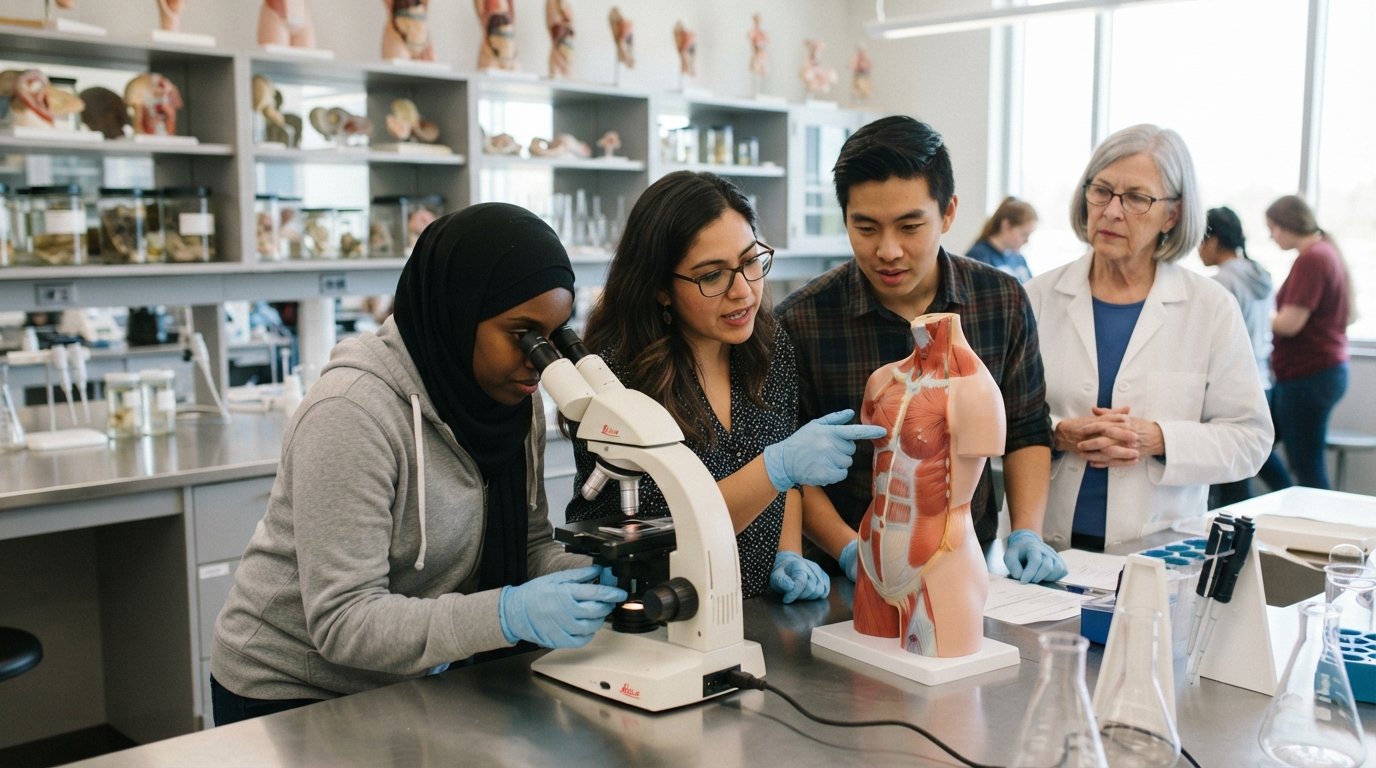
Collin College's campuses are equipped with modern science labs that allow you to apply theoretical knowledge immediately. For example, in anatomy and physiology labs, you will handle models, examine specimens, and use technology that is often used in clinical settings. This kinesthetic learning style is proven to increase retention and comprehension for many students. Furthermore, in-person learning offers structured accountability. Having set class times and a physical campus to attend helps many students stay on track, especially those who struggle with the self-discipline required for fully online courses. The support services at Collin College, including academic advising, tutoring, and career counseling, are also more readily accessible when you are on campus.
Core Curriculum and Key Subjects
While the exact course list may vary slightly based on your concentration (AS vs. AAS), you can expect a robust core curriculum. The program is carefully designed to give you both scientific depth and practical breadth. You will spend a significant amount of time in the sciences, but you will also take courses that develop your communication and critical thinking skills, which are essential for any healthcare professional.
Foundational Sciences
You will take a rigorous sequence of biology and chemistry courses. Human Anatomy and Physiology I and II are typically the cornerstone classes, often accompanied by labs. You will also study microbiology, which is critical for understanding infection control and disease processes. Introductory chemistry provides the molecular basis for understanding how drugs work and how the body functions at a cellular level.
Health Systems and Ethics
Crucially, you will take courses like Medical Terminology, which is the language of healthcare. You will also explore the structure of the U.S. healthcare system, learning about insurance, policy, and the roles of different providers. A course in healthcare ethics will challenge you to think about patient rights, end-of-life care, and the moral dilemmas professionals face daily. This is where you begin to think like a healthcare leader, not just a technician.
General Education
To earn your degree, you will also complete general education requirements in college-level writing, mathematics (often statistics or college algebra), and humanities or social sciences. These courses are not just filler; they are designed to improve your written communication and analytical skills, which are highly valued by employers and graduate programs alike.
Career Paths and Transfer Opportunities
One of the most significant advantages of this degree is its flexibility. Upon graduation, you will be prepared to enter the workforce in entry-level roles such as a medical assistant, health information technician, patient care technician, or medical office administrator. However, many students use this degree as a strategic stepping stone. The generalist nature of the Health Services/Allied Health/Health Sciences, General Associate's degree, usually 2 years In-person at Collin County Community College District, makes it an excellent starting point for further specialization.
For those aiming for a bachelor's degree, Collin College has strong articulation agreements with many four-year universities in Texas. This means your associate degree credits will easily transfer, allowing you to pursue a bachelor's in public health, health sciences, or healthcare management. For those seeking clinical licensure, the pre-requisite courses you complete can make you a competitive applicant for programs like:
- Nursing (ADN or BSN): Many pre-nursing students choose this path to complete their general education and science prerequisites.
- Allied Health Programs: This includes fields like radiography, respiratory therapy, or physical therapist assistant, which often have selective admission processes.
- Pre-Professional Tracks: If you are considering medical school, dental school, or pharmacy school in the long term, this degree can be a low-cost way to complete your pre-requisite courses before transferring to a four-year university.
It is important to note that the degree itself is not a clinical license. You will not be a nurse or a radiology tech upon graduation unless you enter a separate, specialized program. However, you will be a highly educated and versatile candidate for both employment and further education. According to the Bureau of Labor Statistics, healthcare occupations are projected to grow much faster than average over the next decade, so your skills will be in demand.
Admission Requirements and Program Details
Getting started is straightforward. To apply for the Health Services/Allied Health/Health Sciences, General Associate's degree, usually 2 years In-person at Collin County Community College District, you will need to complete the Collin College admissions application. You will also need to submit official high school transcripts or GED scores, and you may be required to take a placement test (like the TSI) to ensure you are ready for college-level coursework. It is highly recommended that you meet with an academic advisor before registering for classes, as they can help you choose the right track (AS vs. AAS) based on your goals.
The program is designed to be completed in two years of full-time study. Since you will be taking in-person classes, you will need to plan your schedule around campus locations in McKinney, Frisco, Plano, Wylie, or Farmersville. Collin College is known for its smaller class sizes and dedicated faculty, which means you will receive personalized attention. The cost of tuition at Collin College is significantly lower than at a four-year university, making this an economically smart way to start your education. Financial aid, scholarships, and payment plans are available to help you fund your studies.
How to Make the Most of Your Two Years
Your time in the program is what you make of it. To truly maximize your experience and stand out to future employers or transfer admissions committees, you should be proactive. First, get to know your professors. Visit them during office hours to ask questions about the field and seek advice. They can write strong letters of recommendation when you apply to nursing school or a university. Second, get involved on campus. Join the Health Sciences Club or a pre-professional society. These organizations often host guest speakers, volunteer events, and networking mixers that can open doors.
Additionally, consider seeking volunteer experience or a part-time job in a healthcare setting during your studies. Even a few hours a week at a local hospital or clinic can solidify your understanding of the field and demonstrate your commitment. Many students find that this practical experience helps them decide which specialty to pursue. For example, you might think you want to work in pediatrics, but after volunteering in a rehabilitation center, you might discover a passion for physical therapy. An online tool like TopStudents can also help you explore various healthcare degree options and connect with schools that offer specialized programs, giving you a clearer picture of your future path.
Beyond Graduation: Next Steps
Once you complete your associate degree, you will have several options. If you choose to enter the workforce immediately, your degree will make you eligible for roles that require a post-secondary credential. You can work in physician's offices, clinics, hospitals, insurance companies, and public health departments. The critical thinking, communication, and science skills you have gained will set you apart from those with only a high school diploma.
If you decide to continue your education, you will be well-positioned to transfer your credits. Collin College advisors can help you navigate the transfer process, ensuring your courses align with your chosen bachelor's program. The investment you make in these two years will pay dividends for decades, both in terms of your earning potential and your ability to make a positive impact on people's lives. The healthcare field is not just a job; it is a calling, and this degree is your first step toward answering it.
In summary, the Health Services/Allied Health/Health Sciences, General Associate's degree, usually 2 years In-person at Collin County Community College District, is a pragmatic and powerful choice for anyone interested in the business of health or the science of patient care. It offers affordability, flexibility, and a solid academic foundation. By committing to this in-person program, you are not just earning a credential; you are building a network, gaining hands-on experience, and creating a launchpad for a fulfilling career. Whether you see yourself as a nurse, a health administrator, a researcher, or a therapist, this degree is a wise and versatile investment in your future.
Take the next step today. Visit the Collin College website to view the current course catalog, speak with an admissions counselor, and map out your journey. The healthcare industry needs skilled, compassionate, and knowledgeable professionals, and your path to joining them can start right here, right now, in your own community.