
Materials Engineering Bachelor's at Boise State
Explore the Materials Engineering Bachelor's degree at Boise State: a four-year, in-person program with hands-on labs, research, and strong industry ties.

By Wendy Shaw
Choosing a college major is one of the most consequential decisions a student can make, and for those drawn to the intersection of science and innovation, a Materials Engineering Bachelor's degree, usually 4 years In-person at Boise State University, offers a focused and hands-on path. Boise State University, located in Idaho's capital city, has built a reputation for connecting engineering education with real-world industry needs. Its materials engineering program stands out for its emphasis on experiential learning, small class sizes, and strong ties to regional employers in semiconductor manufacturing, aerospace, and energy sectors. For students who thrive in a lab environment and want to understand how the stuff of the world is designed, tested, and transformed, this program merits close attention.
This guide explores every facet of the Materials Engineering Bachelor's degree at Boise State, from admission requirements and curriculum structure to research opportunities, career outcomes, and how to decide if this in-person, four-year path aligns with your goals. We will also examine how Boise State's program compares to alternatives and what prospective students should consider before committing. Whether you are a high school senior mapping your future or an adult learner contemplating a career shift, the details below will help you evaluate this option with clarity.
Why Materials Engineering Matters in Today's Economy
Materials engineering sits at the heart of nearly every technological advancement, from the microchips powering smartphones to the lightweight alloys used in electric vehicles. Materials engineers study the properties, processing, and performance of metals, ceramics, polymers, and composites, then apply that knowledge to create new materials or improve existing ones. The field is inherently interdisciplinary, drawing on chemistry, physics, and mechanical engineering to solve complex problems. Graduates find themselves in demand across industries that prioritize innovation, sustainability, and efficiency.
Boise has emerged as a significant hub for semiconductor manufacturing, with major employers like Micron Technology headquartered in the area. This proximity gives Boise State students a distinct advantage: access to internships, co-op opportunities, and networking events that can translate directly into employment after graduation. The region's growing tech sector, combined with Boise State's investment in engineering facilities, creates an ecosystem where classroom learning connects seamlessly with industry practice.
Nationally, the Bureau of Labor Statistics projects steady demand for materials engineers, particularly in fields related to renewable energy, medical devices, and advanced manufacturing. A bachelor's degree in this discipline opens doors to roles in research and development, quality assurance, process engineering, and technical sales. For students who want to be at the forefront of innovation, materials engineering offers a dynamic and rewarding career path.
Program Overview: What to Expect from the Four-Year Path
The Materials Engineering Bachelor's degree at Boise State is designed as a four-year, in-person program that blends rigorous coursework with extensive laboratory experience. Students begin with foundational courses in calculus, chemistry, and physics, then progress to core materials science topics such as thermodynamics, crystallography, mechanical behavior of materials, and materials characterization. Upper-division courses delve into specialized areas like polymers, ceramics, metals, and composites, with electives allowing students to tailor their studies to specific interests.
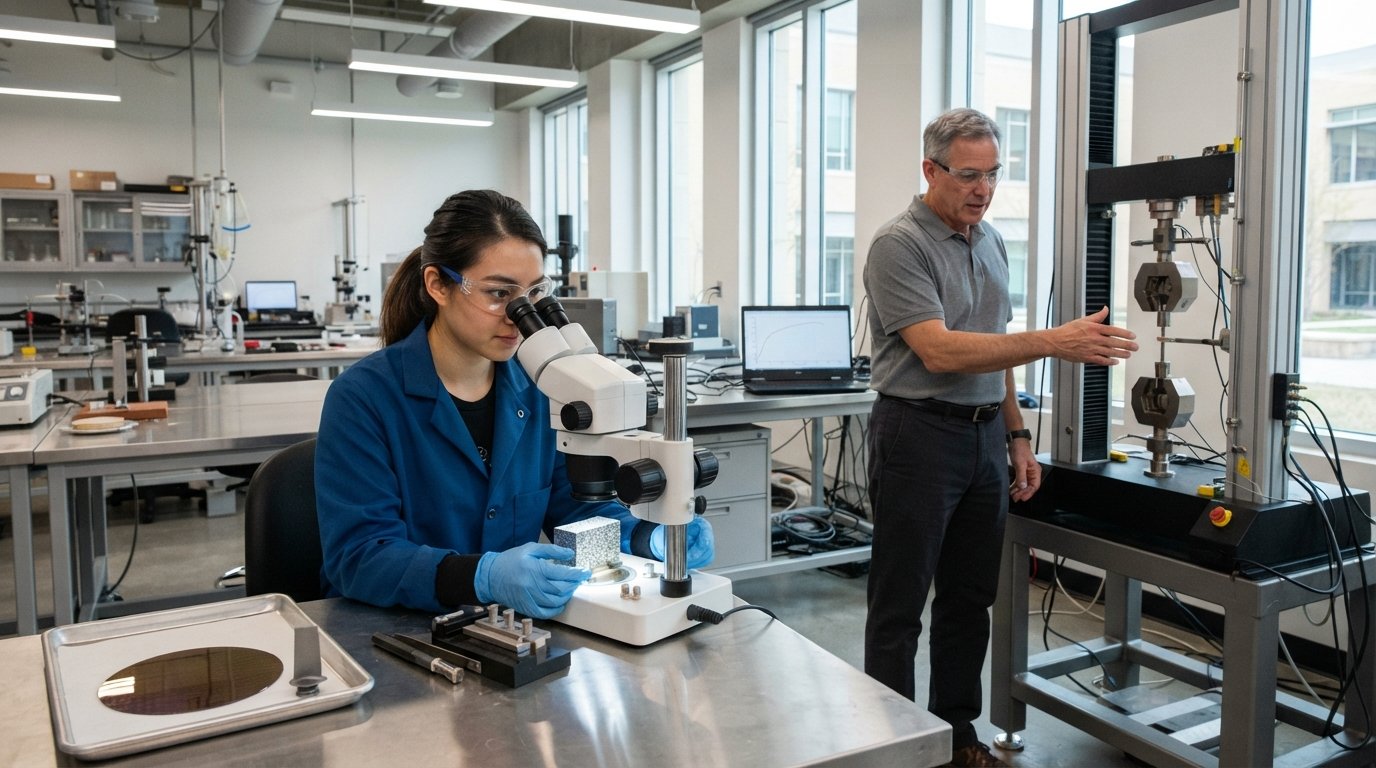
One of the program's hallmarks is its emphasis on hands-on learning. From the first year onward, students spend significant time in laboratories, working with equipment such as scanning electron microscopes, X-ray diffractometers, and mechanical testing machines. This practical exposure ensures that graduates enter the workforce with tangible skills, not just theoretical knowledge. Many courses incorporate project-based assignments where students design and test materials for specific applications, simulating the kind of work they will do in industry.
The curriculum also includes a senior design capstone, a year-long project where teams of students tackle real-world problems sponsored by industry partners or faculty research groups. This capstone experience is often cited by alumni as a highlight of the program, providing a portfolio piece and a chance to demonstrate competence to potential employers. Throughout the four years, students also complete general education requirements in humanities, social sciences, and communication, ensuring a well-rounded education.
Admission Requirements and How to Apply
Admission to Boise State's Materials Engineering program is competitive but accessible. Prospective first-year students should have a strong background in math and science, ideally completing calculus, chemistry, and physics in high school. The university considers GPA, standardized test scores (optional for some applicants), and extracurricular involvement. Transfer students and those with prior college credit are evaluated on a case-by-case basis, with an emphasis on completion of prerequisite courses.
Applicants should also demonstrate genuine interest in the field, whether through participation in science fairs, robotics clubs, or relevant work experience. Boise State's admissions team looks for students who are curious, resilient, and ready to engage in hands-on learning. The application process is straightforward: submit an online application, official transcripts, and any required test scores, then await a decision. Financial aid and scholarship opportunities are available, and the university's financial aid office can guide families through the process.
Hands-On Learning and Research Opportunities
Boise State's Materials Engineering program is distinguished by its commitment to undergraduate research. Faculty members actively involve students in their research projects, which span topics such as advanced materials for energy storage, corrosion-resistant coatings, and biomedical implants. Undergraduate students can work alongside graduate researchers, gaining experience in experimental design, data analysis, and scientific communication. These opportunities are invaluable for students considering graduate school or seeking to stand out in the job market.
The university's facilities support this research focus. The Micron Center for Materials Research, for example, houses state-of-the-art equipment and collaborative workspaces where students and faculty can tackle challenging problems. Boise State also maintains strong partnerships with industry, allowing students to participate in internships and co-ops that provide real-world experience and often lead to job offers. The program's advisory board, composed of industry professionals, helps ensure that the curriculum remains relevant and that students graduate with skills employers need.
Beyond the lab, students can join organizations like the Materials Research Society student chapter or the Society of Women Engineers, which offer networking events, guest lectures, and professional development workshops. These extracurricular activities foster a sense of community and help students build connections that extend beyond graduation.
Career Outcomes and Industry Connections
Graduates of Boise State's Materials Engineering program are well-positioned for success in a variety of industries. The program's alumni work at companies such as Micron Technology, Intel, Boeing, and Hewlett-Packard, as well as smaller firms and startups in the region. Common job titles include materials engineer, process engineer, quality engineer, and research scientist. Salaries for materials engineers are competitive, with entry-level positions often starting in the $60,000 to $75,000 range, depending on the industry and location.
The program's strong industry connections are a major asset. Boise State's location in a growing tech hub means students have access to internships and co-ops that provide hands-on experience and often serve as a pipeline to full-time employment. The university's career services office offers resume workshops, mock interviews, and job fairs, helping students transition smoothly from college to career. Additionally, the alumni network is active and supportive, with many graduates willing to mentor current students and share job leads.
For students interested in pursuing graduate studies, the program provides a solid foundation. Many alumni go on to earn master's or doctoral degrees in materials science, chemical engineering, or related fields at institutions across the country. Faculty advisors help students identify graduate programs and prepare application materials, ensuring that those who wish to continue their education are well-supported.
Comparing Boise State to Other Options
When evaluating a Materials Engineering Bachelor's degree, it is wise to compare Boise State's program with alternatives. While many universities offer materials engineering, Boise State's advantages include its smaller class sizes, focus on undergraduate research, and proximity to industry partners. The in-person format fosters close relationships with faculty and peers, which can be particularly beneficial for students who thrive in collaborative environments.
Prospective students might also consider online or hybrid programs, which offer flexibility for those balancing work or family commitments. However, materials engineering is a lab-intensive field, and hands-on experience is difficult to replicate in an online setting. For students who can commit to an in-person program, Boise State offers a rich, immersive experience that prepares them thoroughly for the workforce. It is also worth noting that Boise State's program is accredited by the Engineering Accreditation Commission of ABET, ensuring that graduates meet high standards of quality and rigor.
Cost is another factor to weigh. Boise State's tuition is competitive compared to many private institutions, and the university offers various scholarships and financial aid options. In-state students benefit from lower tuition rates, while out-of-state students may qualify for Western Undergraduate Exchange (WUE) discounts. Prospective students should explore all financial aid avenues and consider the long-term return on investment of their degree.
For those exploring a range of academic paths, resources like this guide to a Bible studies bachelor's degree at Dallas Christian College can illustrate how different institutions structure four-year, on-campus programs. Comparing such examples can help you assess what matters most in your own college search, whether that is research access, industry ties, or campus culture. Additionally, platforms like CheapOnlineEducation can help prospective students explore online and campus degree options and connect with participating schools, making it easier to compare programs and request information without obligation.
Is This Program Right for You?
Deciding whether a Materials Engineering Bachelor's degree at Boise State is the right fit requires honest self-assessment. Consider your interests: do you enjoy solving puzzles, working with your hands, and applying scientific principles to practical problems? Are you comfortable with math and chemistry? Do you thrive in a collaborative, lab-based environment? If so, this program could be an excellent match.
It is also important to think about your career goals. If you aspire to work in semiconductor manufacturing, aerospace, energy, or advanced materials research, Boise State's program provides a direct pathway. The university's location and industry partnerships give students a leg up in these fields. However, if you are unsure about committing to a four-year in-person program, you might explore related fields such as mechanical engineering, chemical engineering, or physics, which offer overlapping skill sets and career opportunities.
Finally, consider the practical aspects: Can you relocate to Boise for four years? Are you prepared for the rigors of a STEM curriculum? Do you value the mentorship and networking that come with an in-person program? If the answers are yes, Boise State's Materials Engineering program is worth serious consideration. It offers a blend of academic rigor, hands-on experience, and industry connections that few programs can match.
In summary, the Materials Engineering Bachelor's degree at Boise State University is a four-year, in-person program that prepares students for dynamic careers in a rapidly evolving field. With its focus on undergraduate research, strong industry ties, and supportive learning environment, it stands out as a compelling option for students who want to make a tangible impact through science and engineering. As you weigh your options, keep in mind that the best program is the one that aligns with your interests, values, and career aspirations. Boise State's program offers a powerful combination of theory and practice, positioning graduates to succeed in a world that increasingly depends on advanced materials.