
Criminal Justice Associate's Degree at EMCC: 2-Year Path
Earn a Criminal Justice/Safety Studies Associate's degree in two years at Eastern Maine Community College, with hands-on training for law enforcement and safety careers.

By Irene Ellis
Choosing a path in criminal justice or safety studies often starts with a single, practical question: where can I get the training I need without spending four years or moving across the country? For many students in Maine and beyond, the answer is a Criminal Justice/Safety Studies Associate's degree, usually 2 years In-person at Eastern Maine Community College. This program blends foundational law enforcement concepts with hands-on safety training, and it is designed to get you into the workforce or into a four-year institution quickly. If you are weighing your options, understanding the structure, cost, and career outcomes of this specific degree will help you decide whether it fits your goals.
Eastern Maine Community College (EMCC) sits in Bangor, a hub for public safety and legal services in the region. The associate's degree in Criminal Justice/Safety Studies is typically completed in two years of full-time, in-person study. That in-person format matters: it means access to simulation labs, face-to-face networking with instructors who have field experience, and a structured schedule that mirrors the discipline of shift work in public safety. For students who thrive in a classroom community and want direct mentorship, this residency requirement is a benefit rather than a drawback. For those who need maximum flexibility, online alternatives exist, but the EMCC program leans into its campus resources.
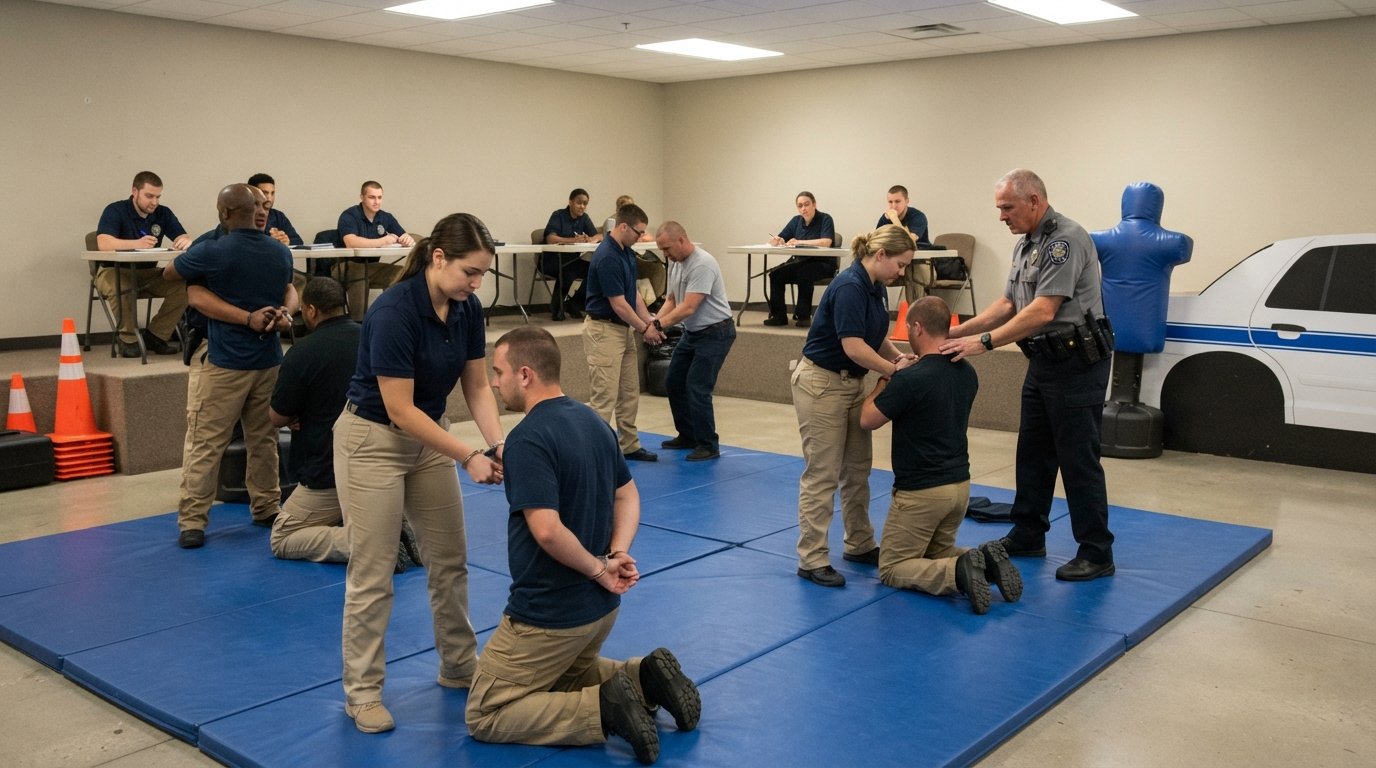
Before diving into the curriculum, it helps to understand how this degree fits into the broader landscape of higher education. An associate's degree is a two-year undergraduate credential, typically 60 to 65 credits, that can serve as a terminal qualification for entry-level jobs or as a stepping stone to a bachelor's degree. In criminal justice, an associate's degree often satisfies the educational requirement for police academy sponsorship, corrections officer roles, and private security positions. It is also a common pathway for students who plan to transfer to a four-year school but want to save money on general education credits. The in-person nature of the EMCC program adds a layer of practical preparation that purely online programs may struggle to replicate, especially in areas like defensive tactics, report writing under supervision, and crime scene processing.
What the Criminal Justice/Safety Studies Associate's Degree Covers
The curriculum at EMCC is built around a core of criminal justice courses supplemented by safety studies electives and general education requirements. You can expect to study policing, corrections, criminal law, and homeland security, with hands-on components woven throughout. The safety studies side of the degree distinguishes it from a generic criminal justice program: it prepares students for roles in occupational safety, emergency management, and loss prevention, not just sworn law enforcement. This dual focus broadens your job prospects and gives you flexibility if you decide that patrol work is not for you.
Typical courses in the first year include Introduction to Criminal Justice, Criminal Law, and Report Writing, alongside English composition and a social science elective. The second year dives deeper into areas like Criminal Procedure, Corrections, and Safety Management, with a capstone or internship experience often required. Because the program is in-person, you will participate in mock crime scene exercises, courtroom simulations, and possibly ride-alongs or site visits to local agencies. These experiences are difficult to replicate online and are a major reason students choose the on-campus format. The faculty typically include former police officers, corrections professionals, and safety managers, bringing real-world perspective to the classroom.
One of the strengths of this program is its alignment with local workforce needs. Maine's public safety agencies, including municipal police departments, county sheriff's offices, and the state police, frequently recruit from community college criminal justice programs. The safety studies component also connects with Maine's manufacturing, healthcare, and tourism sectors, which need professionals trained in workplace safety and emergency preparedness. If you are considering a career change from a trade or administrative role, this degree can provide a structured entry point into a new field without requiring a four-year commitment.
Admissions, Costs, and Transfer Pathways
Admission to EMCC is generally open-access, meaning you need a high school diploma or equivalent, but you do not need to submit SAT or ACT scores for most programs. The criminal justice program may have additional requirements such as a background check for internship placements, but these are typically handled after enrollment. Because the program is in-person, you should plan for a commute or relocation to the Bangor area. EMCC offers financial aid, scholarships, and payment plans, and Maine residents may qualify for state grant programs. The total cost for two years is significantly lower than a four-year residential college, making this an attractive option for students who want to minimize debt.
Transfer pathways are a key consideration. Many students use the associate's degree as a launchpad to a Bachelor of Science in Criminal Justice at a four-year institution, such as the University of Maine or Husson University. Articulation agreements may allow you to transfer up to 60 credits, meaning you enter as a junior. If you are exploring broader associate degree options and want to compare interdisciplinary programs that offer flexibility, you might find our guide on the Interdisciplinary Studies Associate Degree at Connors State helpful for understanding alternative pathways. However, for students set on criminal justice, the EMCC program is more directly aligned with field-specific coursework.
For students who need to compare costs and formats across multiple schools, using a matching service can save time. CheapOnlineEducation helps prospective students explore online and campus degree options and connect with participating schools. Visitors can browse sponsored programs by subject or state, compare listings, and request information from colleges that match their goals, with no obligation to apply or enroll. This is especially useful if you are considering online alternatives to the in-person EMCC program or want to see what financial aid options other schools might offer.
Career Outcomes and Job Outlook
Graduates of the Criminal Justice/Safety Studies Associate's degree at EMCC pursue a range of careers. The most common path is into law enforcement, where an associate's degree can give you an edge in hiring and promotion. Police departments in Maine and across the country increasingly prefer candidates with college credits, and some agencies offer educational incentives. Corrections officers, probation and parole officers, and dispatchers also benefit from this credential. On the safety side, graduates find work as occupational safety technicians, loss prevention specialists, and emergency management assistants. These roles often pay competitive wages and offer advancement opportunities with additional certifications.
Job outlook for criminal justice and safety occupations varies by specialization. According to the Bureau of Labor Statistics, employment of police and detectives is projected to grow modestly, with turnover creating openings each year. Safety technicians and specialists are in demand in construction, manufacturing, and healthcare, where regulatory compliance is critical. The hands-on training you receive in the EMCC program, combined with internships, makes you a stronger candidate than someone with only online coursework. Many graduates also continue their education part-time while working, using tuition reimbursement programs offered by their employers.
It is important to note that this degree does not guarantee employment, and some sworn officer positions require completion of a police academy in addition to the degree. However, the program's curriculum is designed to prepare you for academy training and to help you succeed in the hiring process. Students who are unsure about law enforcement can use the safety studies electives to explore alternative careers in security management, insurance investigation, or environmental health and safety. The versatility of the degree is one of its strongest selling points.
Why Choose In-Person Study at EMCC
The decision to pursue an in-person program rather than an online one often comes down to learning style and networking. At EMCC, you will build relationships with instructors who can write recommendations, connect you with internship sites, and alert you to job openings. The campus culture includes clubs and activities related to criminal justice, such as a criminal justice club or honor society, which provide additional networking opportunities. The Bangor area is home to the Penobscot County Sheriff's Office, Bangor Police Department, and several state agencies, making it easier to arrange site visits and internships during the semester.
In-person study also provides structure and accountability. For students who are returning to school after years in the workforce, a scheduled class format can help build momentum. The hands-on labs and simulations require your physical presence, which means you cannot multitask or skip sessions as easily as with online modules. This immersive approach can lead to deeper retention of material and better preparation for the high-pressure environments of public safety work. If you are an adult learner or career changer, the cohort model at EMCC can also provide a support system of peers facing similar challenges.
Of course, in-person study requires logistical planning. You will need reliable transportation, and if you live far from Bangor, you may need to arrange housing or a long commute. Some students carpool or use public transit. EMCC's advising office can help you plan your schedule to minimize trips to campus, though the program is designed to be full-time. If you have work or family obligations, you may need to adjust your schedule or consider a part-time option, which extends the program beyond two years. The typical two-year timeline assumes full-time enrollment, so plan accordingly.
Steps to Enroll and Succeed
If you are ready to move forward, the enrollment process is straightforward but requires attention to deadlines. Here is a step-by-step overview to help you navigate the path from applicant to graduate.
- Complete the EMCC application. Apply online through the college's admissions portal. There is typically no application fee, and you will need to provide your high school transcript or equivalent.
- Apply for financial aid. Fill out the FAFSA to determine your eligibility for federal grants, loans, and work-study. Maine residents should also check state grant programs.
- Meet with an advisor. Once accepted, schedule a meeting with a criminal justice faculty advisor to map out your two-year plan and discuss internship requirements.
- Register for classes. Register early to secure seats in required courses, especially those with labs or simulations that have limited capacity.
- Prepare for internships. Many placements require background checks, fingerprinting, and possibly a physical fitness test. Start these processes early to avoid delays.
Success in the program requires more than just attending class. You should plan to study regularly, participate in simulations, and seek out extra help if you struggle with legal writing or procedural courses. Building a professional network is also important: attend career fairs, join student organizations, and get to know your instructors. Many graduates say that the relationships they built at EMCC were as valuable as the coursework itself. If you are considering transferring to a four-year school, work with your advisor to ensure your credits will transfer smoothly.
Finally, keep your long-term goals in mind. The criminal justice field values continuous learning, so plan for additional training after graduation, whether through a police academy, certifications in safety management, or a bachelor's degree. The associate's degree is a starting point, not the finish line. With the hands-on foundation from EMCC, you will be well positioned to take the next step, whether that is entering the workforce or continuing your education.
Earning a Criminal Justice/Safety Studies Associate's degree through a two-year, in-person program at Eastern Maine Community College is a practical investment in your future. The combination of field-specific coursework, hands-on training, and local networking gives you a competitive edge in a stable and service-oriented field. By understanding the curriculum, costs, and career pathways, you can make an informed decision about whether this program aligns with your goals. Take the time to visit campus, speak with faculty, and explore your financial aid options, and you will be ready to embark on a rewarding career in criminal justice or safety studies.