
Electrician Associate's Degree: 2-Year In-Person at College of DuPage
The Electrician Associate's degree at College of DuPage takes about two years in person and prepares you for a skilled trade career with hands-on training.

By Wendy Shaw
If you are looking for a hands-on, affordable path into the electrical trade, the Electrician Associate's degree at College of DuPage stands out as a strong option. This program, usually completed in two years of in-person study, combines classroom instruction with practical lab work to prepare you for entry-level roles in residential, commercial, and industrial electrical work. Unlike shorter certificate programs, an associate degree offers broader coursework in electrical theory, code, and safety, plus general education that can open doors to advancement later. For prospective students weighing their options, understanding what this program entails, how to enroll, and what to expect can make the decision much clearer.
Why an Electrician Associate's Degree at College of DuPage?
College of DuPage, located in Glen Ellyn, Illinois, is one of the largest community colleges in the region, and its electrical program is designed to meet the growing demand for skilled electricians. The Electrician Associate's degree, usually 2 years In-person at College of DuPage, provides a structured pathway that blends technical training with essential safety protocols and code knowledge. Students benefit from experienced instructors, modern labs, and connections to local industry.
An associate degree in this field goes beyond basic wiring. You will study electrical circuits, motor controls, programmable logic controllers, and the National Electrical Code (NEC). This depth of knowledge can give you an edge when seeking apprenticeships or entry-level positions, and it may shorten the time required to advance in your career. For those considering a trade, the in-person format ensures you get hands-on practice with tools and equipment, which is critical for developing confidence and competence.
Program Overview and Curriculum
The Electrician Associate's degree program at College of DuPage typically requires about 60 to 65 credit hours, including technical courses, general education, and electives. The curriculum is designed to be completed in two years of full-time study, though part-time options may be available. Core courses cover topics such as electrical fundamentals, alternating current circuits, residential wiring, commercial wiring, industrial controls, and code compliance. You will also take general education classes in communication, mathematics, and social sciences, which help build a well-rounded skill set.
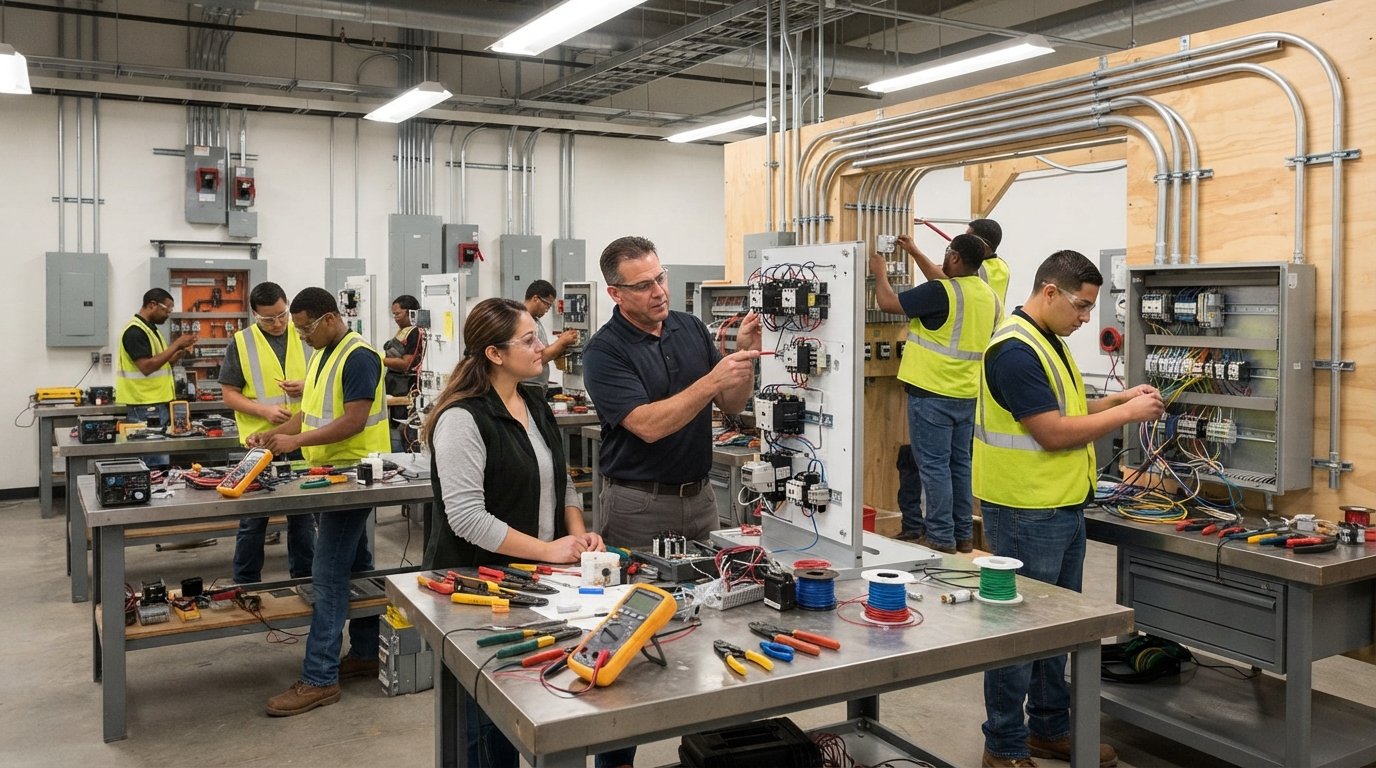
Hands-on learning is a cornerstone of the program. Students spend significant time in labs working with real electrical systems, wiring mock-ups, and diagnostic tools. This practical experience is invaluable for understanding how theory applies to real-world scenarios. Additionally, the program may include opportunities for internships or cooperative education, allowing you to gain on-the-job experience before graduation.
Sample Course Sequence
While the exact schedule may vary, a typical first year might include courses like Electrical Fundamentals, Residential Wiring, and Applied Mathematics. In the second year, you would move on to Commercial Wiring, Motor Controls, and NEC Code. General education requirements are often spread throughout both years. It is important to meet with an academic advisor to plan your sequence and ensure prerequisites are met.
Admission Requirements and Enrollment Steps
Admission to the Electrician Associate's degree program at College of DuPage is generally open to high school graduates or those with a GED. There may be placement tests in math and English to ensure you are ready for college-level coursework. Some technical courses may have prerequisites, such as a basic electrical course or algebra. Prospective students should check the college website for specific requirements and any additional criteria for the electrical program.
Enrollment is typically a multi-step process. Here is a general outline of what to expect:
- Complete the college application online and pay any application fee.
- Submit official high school transcripts or GED scores.
- Take placement tests or provide ACT/SAT scores if available.
- Meet with an academic advisor to discuss program requirements and create an educational plan.
- Register for classes during the designated registration period.
It is advisable to apply early, as some courses may fill up quickly. Financial aid is available for eligible students, and the college's financial aid office can help you explore grants, loans, and scholarships. For those exploring other two-year health sciences options, our guide on the Health Sciences Associate Degree at Collin College offers a useful comparison for how in-person associate programs are structured.
Costs and Financial Aid
The cost of the Electrician Associate's degree at College of DuPage is based on per-credit-hour tuition, which is generally more affordable than four-year institutions, especially for in-district residents. Additional costs include fees, textbooks, tools, and supplies. Students should budget for these expenses and check the college's website for current tuition rates.
Financial aid options include federal grants, loans, work-study, and institutional scholarships. The Free Application for Federal Student Aid (FAFSA) is the primary way to apply for aid. College of DuPage also offers scholarships specifically for career and technical education students. It is recommended to speak with a financial aid advisor to understand your options and deadlines.
Career Outlook and Opportunities
Electricians are in high demand across the country, and an associate degree can help you stand out in the job market. Graduates may find employment in construction, maintenance, manufacturing, and utilities. According to the U.S. Bureau of Labor Statistics, employment of electricians is projected to grow faster than the average for all occupations over the next decade. The skills you learn in the program, including problem-solving, attention to detail, and safety awareness, are highly valued by employers.
After completing the degree, you may still need to complete an apprenticeship or gain on-the-job training to become a licensed electrician, depending on state requirements. The associate degree can often count toward some of the required classroom hours for apprenticeship programs, giving you a head start. Many graduates begin as electrical assistants or helpers and work their way up.
Is This Program Right for You?
If you enjoy working with your hands, solving problems, and learning a trade with strong job prospects, the Electrician Associate's degree at College of DuPage could be an excellent fit. The in-person format is ideal for those who learn best through direct interaction and practical application. It also provides a structured environment that can help you stay on track and build a network with peers and instructors.
However, it is important to consider your schedule and commitments. The program requires a significant time investment, with daytime classes and labs. If you need flexibility, you might explore online or hybrid options, but for hands-on electrical training, in-person instruction is generally preferred. Prospective students should also consider their career goals: if you aim to start working quickly, a certificate might suffice, but an associate degree offers broader opportunities for advancement and specialization.
Next Steps and Resources
To learn more about the Electrician Associate's degree at College of DuPage, visit the college's official website or contact the admissions office. They can provide detailed information on curriculum, application deadlines, and financial aid. Additionally, you can explore other programs and resources through platforms like CheapOnlineEducation, which helps prospective students compare online and campus degree options and connect with schools that match their goals.
Remember that this guide is for informational purposes, and program details may change. Always verify information with the institution directly. With careful planning and a clear understanding of what the program offers, you can take a confident step toward a rewarding career as an electrician.