
Delta College Electrician Associate's Degree: 2-Year In-Person Path
Delta College's electrician associate's degree, usually 2 years in-person, blends hands-on labs with theory to prepare you for a licensed electrical career.

By Irene Ellis
Skilled electricians keep homes, businesses, and entire power grids running safely. If you are considering a hands-on career with strong demand and solid pay, an electrician associate's degree, usually 2 years in-person at Delta College, offers a structured path into the electrical trades. Delta College, located in Michigan's Great Lakes Bay Region, provides a campus-based program that blends classroom theory with lab work and real-world experience. This guide explains what the degree covers, how to apply, what it costs, and how it fits into the broader landscape of trade education. Whether you are a recent high school graduate, a career changer, or a veteran looking for a new direction, understanding the details of this program can help you make an informed decision.
What an Electrician Associate's Degree Covers
An associate's degree in electrician technology is a two-year program that typically awards an Associate in Applied Science (AAS) degree. At Delta College, the curriculum is designed to prepare students for entry-level positions in residential, commercial, and industrial electrical work. Coursework generally includes electrical theory, wiring methods, the National Electrical Code (NEC), motor controls, transformers, and safety practices. Students also take general education courses such as math, communication, and social sciences to round out their education.
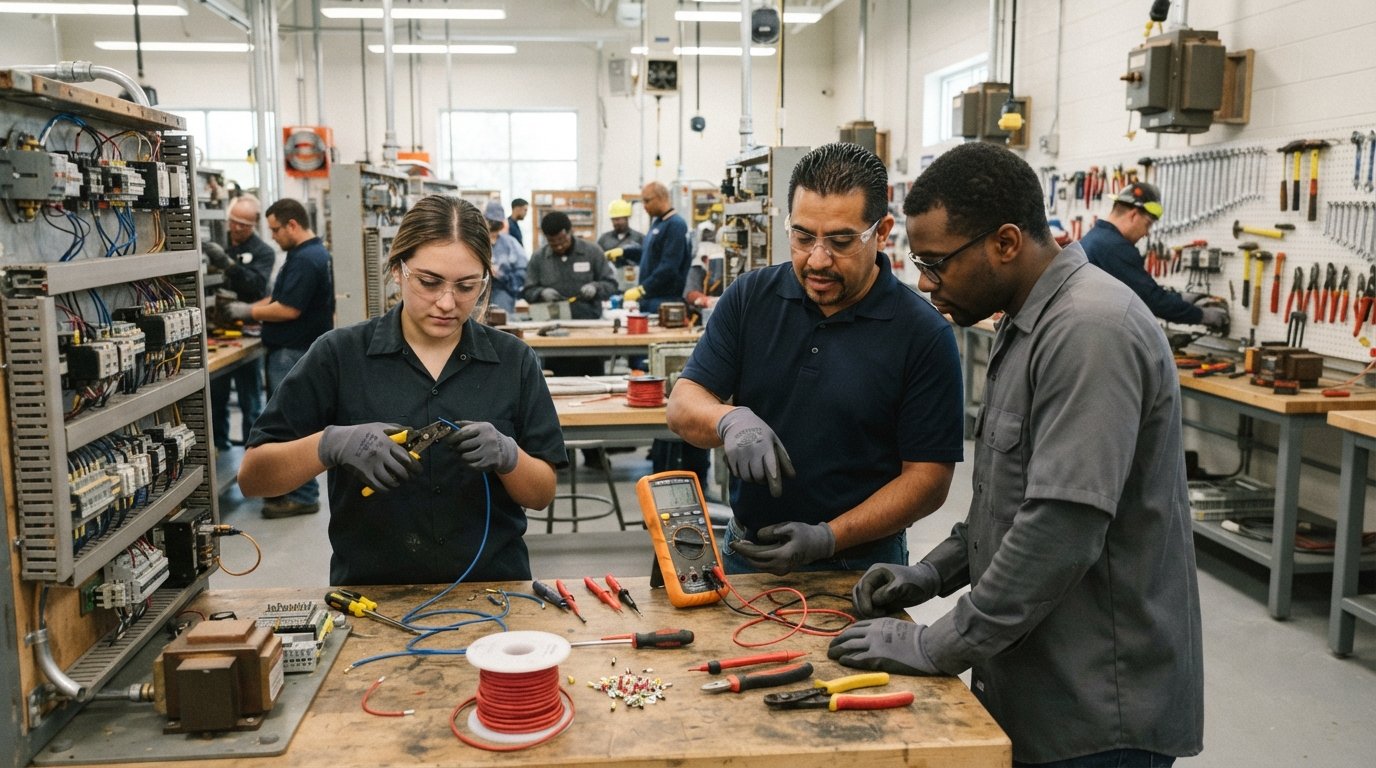
The program is delivered in person because electrical work requires hands-on practice with tools, equipment, and live circuits (under supervised conditions). Lab sessions allow students to wire mock-ups, troubleshoot circuits, and learn to use meters and other diagnostic tools. This practical component is difficult to replicate online, which is why Delta College emphasizes face-to-face instruction for this trade.
Beyond technical skills, the degree often includes courses in blueprint reading, electrical estimating, and project management. These topics help graduates move into supervisory roles or start their own contracting businesses later in their careers. Some programs also incorporate programmable logic controllers (PLCs) and renewable energy systems, reflecting the evolving nature of the electrical field.
Core Courses and Hands-On Training
While specific course titles vary, most electrician associate's degree programs at Delta College include a set of core technical courses. Students can expect to take classes such as:
- Electrical Fundamentals: covers Ohm's law, series and parallel circuits, and basic magnetism.
- Residential Wiring: focuses on single-family homes, including service entrances, branch circuits, and device installation.
- Commercial and Industrial Wiring: explores three-phase power, conduit bending, and motor installations.
- National Electrical Code: teaches how to navigate and apply the NEC, a critical skill for passing licensing exams.
- Motor Controls and PLCs: introduces control circuits, relays, and basic automation.
These courses are typically sequenced so that students build foundational knowledge before advancing to more complex topics. Many programs also require a capstone course or internship where students work under a licensed electrician, gaining hours toward their journeyman license.
Admission Requirements and Application Steps
Delta College maintains an open-door admission policy for most programs, but the electrician associate's degree may have specific prerequisites. Prospective students should review the program webpage or contact an advisor to confirm requirements. Generally, applicants need a high school diploma or GED, and may need to demonstrate readiness for college-level math and English through placement tests or prior coursework.
Because the program is in-person and lab-based, there may be additional requirements such as a background check, drug screening, or physical exam before enrolling in certain courses. These are common in trade programs to ensure student safety and to meet employer expectations during internships.
To apply, follow a typical community college process:
- Complete the Delta College admission application online.
- Submit official high school transcripts or GED scores.
- Take placement tests if required, or provide ACT/SAT scores.
- Meet with an academic advisor to plan your schedule and confirm program-specific requirements.
- Register for classes during the designated registration period.
Because the program is cohort-based, some courses may fill quickly. Early application and advising are recommended to secure a spot in the fall or spring start.
Costs, Financial Aid, and Value
Tuition for an in-person associate's degree at a Michigan community college is generally more affordable than a four-year university. Delta College publishes current tuition rates on its website, and students should budget for additional expenses such as tools, safety gear, textbooks, and lab fees. Many electrical programs require students to purchase a basic tool kit and personal protective equipment (PPE) by the second semester.
Financial aid is available for eligible students through federal and state programs, including Pell Grants, Michigan Tuition Incentive Program, and scholarships offered by the Delta College Foundation. Apprenticeship sponsors and employers sometimes provide tuition reimbursement or paid internships that can offset costs. Prospective students should file the Free Application for Federal Student Aid (FAFSA) as early as possible to maximize aid opportunities.
To compare costs and program features across different institutions, you can use the resources at CheapOnlineEducation, which lists online and campus options for trade programs. Keep in mind that while online electrician degrees are rare due to hands-on requirements, some related certificates or general education courses may be available online.
Career Outcomes and Licensure
Graduates of an electrician associate's degree program are prepared for entry-level roles such as electrical apprentice, maintenance electrician, or electrical technician. In Michigan, electricians must be licensed by the state, which typically involves completing an apprenticeship, accumulating work hours, and passing a journeyman exam. The associate's degree can provide a strong foundation and may count toward some of the required classroom hours for licensure.
Employment of electricians is projected to grow steadily, according to the U.S. Bureau of Labor Statistics, driven by aging infrastructure, renewable energy projects, and increased demand for electrical systems in homes and businesses. Median annual wages for electricians are well above the national average for all occupations, and experienced journeymen and master electricians can earn significantly more.
Career paths for graduates include:
- Residential electrician: wiring and repairing homes.
- Commercial electrician: working on offices, retail spaces, and industrial facilities.
- Industrial electrician: maintaining and repairing machinery and control systems.
- Electrical inspector: ensuring compliance with codes.
- Electrical contractor: running your own business.
Some graduates choose to continue their education, pursuing a bachelor's degree in electrical engineering technology or construction management to move into design or management roles. Others use their skills to transition into related fields such as solar installation, automation, or building maintenance.
Apprenticeship and Work-Based Learning
Many electrician associate's degree programs include an apprenticeship component or cooperative education. Delta College may partner with local unions or contractors to place students in paid apprenticeships while they earn their degree. This earn-while-you-learn model is highly valued because it allows students to accumulate the on-the-job training hours required for licensure while earning a paycheck.
Apprenticeships typically last four to five years, but students who complete an associate's degree may receive credit toward the related instruction portion. It is important to verify with the program and the state licensing board how credits transfer to apprenticeship requirements.
Comparing Delta College to Other Electrician Programs
Delta College is one of several institutions in Michigan offering electrician training. When comparing programs, consider factors such as location, cost, class size, lab facilities, and job placement rates. An in-person program like Delta's offers the advantage of face-to-face instruction and access to campus resources, but it may not be feasible for students who live far away or need flexible scheduling.
For those exploring other trade programs, our guide on the Amarillo College Fire Science Associate's Degree provides a useful comparison of how another two-year trade degree is structured. While the fields differ, the format, admission steps, and career outcomes share similarities that can inform your decision.
It is also worth noting that some states require electricians to complete a formal apprenticeship rather than a degree. In Michigan, both routes are valid, but the associate's degree may provide a broader education and better advancement opportunities. Prospective students should research their state's licensing requirements and talk to local employers about their preferences.
Is the Electrician Associate's Degree Right for You?
An electrician associate's degree, usually 2 years in-person at Delta College, is a solid choice for individuals who enjoy hands-on work, problem-solving, and learning a skilled trade. The program requires commitment and physical stamina, but it opens doors to a stable career with room for growth. If you prefer a structured learning environment with experienced instructors and access to modern labs, this path may be a good fit.
However, it is not the only route. Some people enter the trade through apprenticeships alone, which allow them to earn while they learn without paying tuition. Others pursue certificates or shorter programs. The best choice depends on your learning style, financial situation, and career goals. To explore a wide range of sponsored trade and vocational programs, you can use the matching tool at HigherEducationAdvisor.com, which lets you browse options by field and state without any obligation to apply.
Before enrolling, visit the Delta College campus, meet with faculty, and talk to current students or graduates. Ask about job placement rates, internship opportunities, and support services. A campus visit can give you a feel for the program culture and help you decide if it is the right investment of your time and money.
In summary, the electrician associate's degree at Delta College combines technical instruction, hands-on training, and general education to prepare graduates for a rewarding career in the electrical trades. With careful planning and a clear understanding of the requirements, you can take the first step toward becoming a licensed electrician.