
Amarillo College Fire Science Associate's Degree Guide
Earn a Fire Science/Fire-fighting Associate's degree, usually 2 years In-person at Amarillo College, and graduate ready for firefighter certification and hiring.

By Benjamin Miller
Wildland fires, structure fires, medical emergencies, and hazardous material spills: firefighters run toward the situations most people flee. If you want to be the person who answers that call, you need more than courage. You need formal training in fire behavior, rescue tactics, building construction, and emergency medical care. That is exactly what the Fire Science/Fire-fighting Associate's degree at Amarillo College delivers, usually over two years of in-person study on the college's campus in the Texas Panhandle. The program blends classroom theory with hands-on drills, live burns, and physical fitness conditioning, giving you a realistic picture of what the job demands before you ever apply for a full-time position. This guide breaks down the curriculum, admission steps, costs, career outcomes, and the practical questions adult learners and high school seniors ask most often.
What the Fire Science/Fire-fighting Associate's Degree at Amarillo College Covers
The degree is built around the National Fire Protection Association (NFPA) standards and the Texas Commission on Fire Protection (TCFP) requirements. Amarillo College structures the program so that graduates leave with both an academic credential and the certifications employers expect to see on an application. The typical timeline is two years of full-time study, though part-time schedules stretch the program to three or four years for working adults.
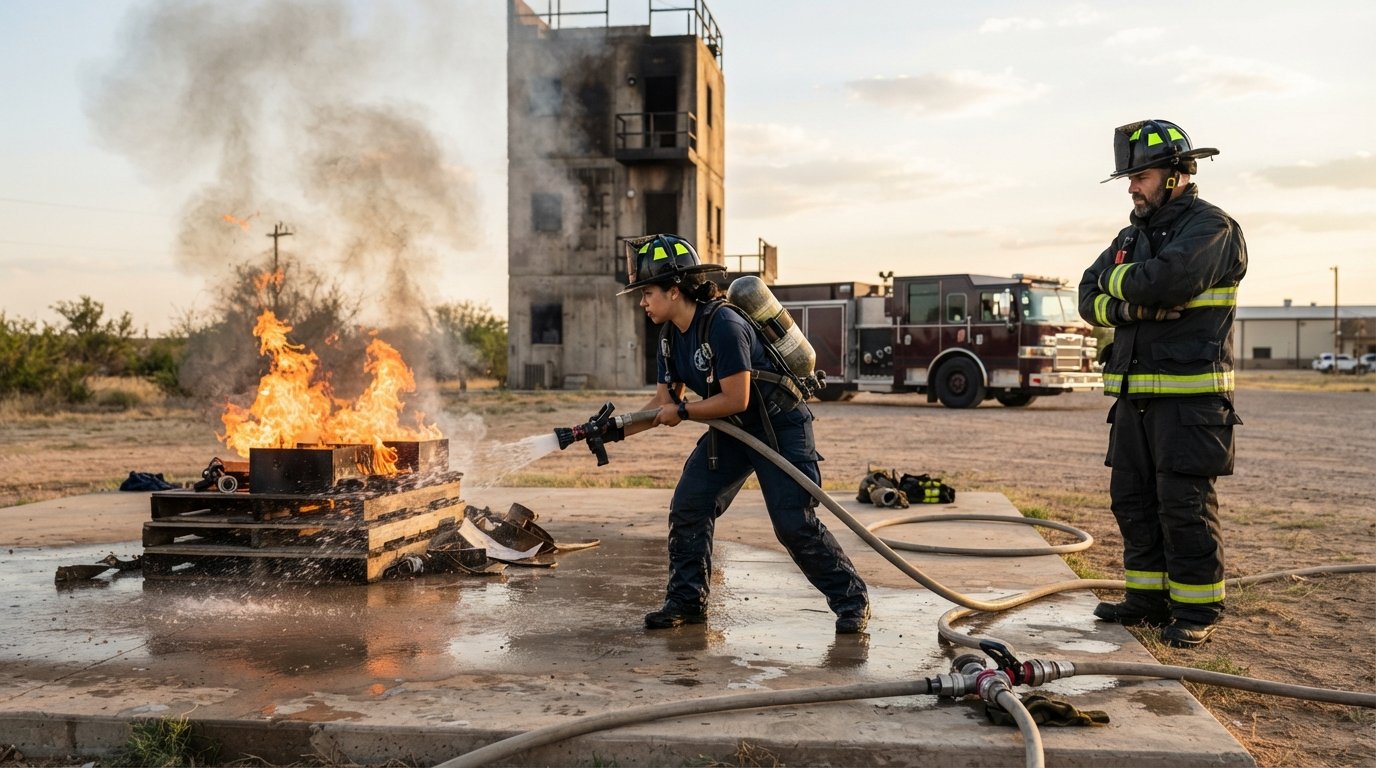
Coursework splits into three broad areas: fire science theory, practical firefighting skills, and general education. You will study fire behavior and combustion, building construction as it relates to fire spread, fire protection systems, hazardous materials response, and incident command. Lab and field components cover self-contained breathing apparatus (SCBA) use, ladder operations, hose handling, forcible entry, ventilation, search and rescue, and live fire evolutions on a training ground.
Because modern fire departments respond to far more medical calls than fire calls, the program includes emergency medical training. Many students pair the associate's degree with EMT-Basic or paramedic certification, which significantly broadens hiring options. Amarillo College also emphasizes physical fitness, since candidates must pass demanding agility tests during the hiring process, including the Candidate Physical Ability Test (CPAT) used by many departments.
General education requirements round out the degree with communications, mathematics, and social science courses. These credits matter if you later decide to pursue a bachelor's degree in fire administration, emergency management, or public safety. The 60 to 65 credit hours required for graduation transfer more smoothly than standalone certificate programs, which is a point worth weighing when comparing training paths. Students exploring other two-year credentials can review this Edmonds College accounting certificate overview to see how in-person, career-focused programs are structured elsewhere.
Admission Requirements and Enrollment Steps
Amarillo College maintains an open-door admission policy for the college itself, but the fire science program has additional requirements because of the physical and safety demands of the training. Prospective students should plan for a sequence of steps that takes several weeks to complete.
- Apply for general admission to Amarillo College and submit official high school transcripts or GED scores.
- Complete Texas Success Initiative (TSI) assessment or provide qualifying scores, unless exempt.
- Meet with the fire science program advisor to review the degree plan and course sequencing.
- Provide proof of immunizations, a physical examination, and a negative tuberculosis screening.
- Obtain CPR certification and complete a criminal background check, which fire departments require for clinical and ride-along placements.
Because the program is in-person and cohort-based, seats in lab sections are limited. Students who delay registration often find the fall start date closed and must wait for the next term. Advisors recommend completing testing and documentation at least two months before the semester begins. High school students in the Amarillo area can sometimes earn dual credit through articulated agreements, which shortens the time to degree completion.
Transfer students from other fire science programs should request a credit evaluation early. Amarillo College accepts some TCFP certifications for prior learning credit, but the process requires official documentation and program director approval. Military veterans with firefighting experience (for example, Air Force fire protection specialists) often qualify for credit based on their service records, though each case is reviewed individually.
Costs, Financial Aid, and Return on Investment
Compared with four-year degrees, the Fire Science/Fire-fighting Associate's degree, usually 2 years In-person at Amarillo College, is an affordable entry point into a stable public safety career. Tuition is charged per credit hour, and Texas residents pay significantly less than out-of-state students. Additional costs include books, uniforms, personal protective equipment, and certification exam fees, which can total several hundred dollars per semester.
Financial aid options include federal Pell Grants, Texas Public Educational Grants, and institutional scholarships. The Amarillo College Foundation administers several scholarships specifically for public safety students. Many fire science students also qualify for workforce development funding through the Texas Workforce Commission, particularly adult learners who are changing careers. Students should file the FAFSA as early as possible each year, since some aid is distributed on a first-come, first-served basis.
Salary expectations for entry-level firefighters in Texas vary by department size and region. Smaller volunteer and combination departments may start lower, while larger municipal departments offer benefits, pension participation, and promotional opportunities. According to Bureau of Labor Statistics data, the median annual wage for firefighters nationally sits in the mid-$50,000s, with overtime pushing many career firefighters higher. The degree itself does not guarantee a job, but it satisfies the educational requirement many civil service departments now list and gives candidates a scoring advantage in hiring processes.
Hands-On Training Facilities and What to Expect Day to Day
The Amarillo College fire training facility includes a burn building, drill tower, and apparatus bay where students practice evolutions under live supervision. A typical week mixes lecture mornings with afternoon practicals. Students wear full turnout gear during drills, which means heat stress and physical fatigue are part of the learning curve. Instructors stress safety and accountability from the first day, and students learn the same crew resource management principles used on actual fire grounds.
Ride-along and clinical placements with area fire departments give students exposure to real incident response. These placements are arranged through the program and require clean background checks and immunization records. Students who perform well during ride-alongs often build relationships that lead to job offers after graduation, which is one reason the in-person format matters: networking happens in the apparatus bay, not in a discussion forum.
Physical fitness is woven into the curriculum rather than treated as an afterthought. Students run, climb stairs in gear, and practice drags and carries that mirror the CPAT. Instructors advise starting a conditioning program months before classes begin, because the fitness standards do not relax once the semester starts.
Career Outcomes and Certification Pathways
Graduates leave with a combination of credentials that position them for several roles. The most common path is a municipal or county fire department, where hiring processes include written exams, physical ability tests, interviews, and background investigations. Some graduates go into wildland firefighting with state or federal agencies, where seasonal work can lead to permanent positions. Others move into industrial fire brigades, airport fire rescue, or emergency management roles.
Certifications earned during the program typically include TCFP Basic Firefighter, Hazardous Materials Awareness and Operations, and EMT-Basic. Students who continue to paramedic certification open doors to fire-based EMS systems, which are common in Texas cities. The associate's degree also satisfies promotion requirements in some departments and provides a foundation for a bachelor's degree in fire science or emergency services management.
For readers comparing campus-based and online pathways, this online and campus degree directory offers a way to browse sponsored programs by subject and state, which can help you see how fire science fits alongside other public safety and trade credentials.
Frequently Asked Questions
Can I work full time while earning this degree?
Many students do, but the schedule is demanding. Lab sections meet during daytime hours on campus, so evening and weekend shifts work best. Part-time students typically take two courses per semester and finish in three to four years. Advisors can map a part-time plan that keeps financial aid eligibility intact.
Is the program available online?
The fire science degree is designed as an in-person program because practical skills cannot be certified through online instruction alone. Some general education courses may be available in hybrid or online formats, but the core firefighting curriculum requires hands-on evaluation. Prospective students should confirm current course delivery formats with the program office, since schedules change by semester.
What if I have no firefighting experience?
No prior experience is required. The program starts with foundational courses and builds skills progressively. What matters most is physical readiness, dependable attendance, and a willingness to work in a team environment. Instructors regularly train complete beginners who go on to successful careers.
Does the degree transfer to a four-year school?
Yes, though transferability depends on the receiving institution. Amarillo College has articulation agreements with several Texas universities that offer bachelor's degrees in fire administration, emergency management, or public safety. Students planning to transfer should work with an advisor to choose general education courses that satisfy lower-division requirements at their target school.
How competitive is fire department hiring?
Hiring varies by department and region. Large metropolitan departments often run hiring cycles every one to two years and may process hundreds of applicants for dozens of positions. Candidates with an associate's degree, EMT certification, and strong physical fitness scores stand out. Veterans preference and bilingual skills can also improve ranking in some civil service systems.
Choosing a fire science program is a decision about how you want to learn and where you want to work. The Fire Science/Fire-fighting Associate's degree, usually 2 years In-person at Amarillo College, offers a structured, hands-on route into public safety for students who thrive in a team-based, physically active environment. Before committing, visit the campus, talk to instructors, and confirm current costs and certification requirements with the program office. For broader exploration of degree and certificate options, including sponsored listings by field and state, HigherEducationAdvisor.com can help you compare programs and request information from participating schools with no obligation to apply.