
Cardiovascular Tech Associate Degree at Concorde Orlando
Earn a Cardiovascular Technology/Technologist Associate's degree, usually 2 years In-person at Concorde Career Institute-Orlando. Call (877)-218-7081 to get started.

By Benjamin Miller
Cardiovascular disease remains the leading cause of death in the United States, and the demand for skilled professionals who can perform diagnostic tests and assist with heart-related procedures continues to grow. If you are searching for a focused, hands-on career path that lets you contribute to patient care without spending four or more years in school, a Cardiovascular Technology/Technologist Associate's degree, usually 2 years In-person at Concorde Career Institute-Orlando, may be exactly the opportunity you have been looking for. This program blends classroom instruction with clinical experience, preparing graduates to work in hospitals, cardiac catheterization labs, and physician offices.
What Is Cardiovascular Technology?
Cardiovascular technology is a specialized allied health field focused on the heart and blood vessels. Technologists use sophisticated imaging equipment and monitoring devices to help physicians diagnose and treat conditions such as blocked arteries, irregular heart rhythms, and heart valve disorders. Unlike nurses or physicians, cardiovascular technologists operate the machinery and gather the data that guide treatment decisions. They may perform electrocardiograms, stress tests, Holter monitoring, echocardiograms, and assist during cardiac catheterization procedures.
The role requires a mix of technical skill, attention to detail, and patient interaction. Technologists explain procedures to anxious patients, position them correctly for imaging, and monitor vital signs during tests. Because heart disease affects people of all ages, cardiovascular technologists work with a diverse patient population and must be able to adapt to different clinical settings.
According to the U.S. Bureau of Labor Statistics, employment of cardiovascular technologists and technicians is projected to grow faster than the average for all occupations, driven by an aging population and increased use of diagnostic imaging. This growth translates into steady demand for graduates who hold an associate degree and relevant credentials.
Why Choose Concorde Career Institute-Orlando?
Concorde Career Institute has a long history of providing career-focused education in the health sciences. The Orlando campus offers a Cardiovascular Technology/Technologist Associate's degree, usually 2 years In-person, designed to get students into the workforce quickly. The program is delivered entirely on campus, which allows for hands-on practice in labs and simulation rooms before students ever step into a clinical site.
One of the key advantages of Concorde's program is its emphasis on real-world experience. Students complete clinical rotations at local hospitals and cardiac centers, where they work alongside practicing technologists and physicians. This direct exposure not only builds technical competence but also helps students develop professional networks that can lead to job offers after graduation.
The Orlando location is another benefit. Central Florida is home to numerous hospitals, heart institutes, and outpatient clinics, giving students access to a wide range of clinical placement sites. The area's growing and diverse population ensures a steady need for cardiovascular services, which means graduates are likely to find employment opportunities close to where they trained.
Concorde also provides support services such as tutoring, financial aid guidance, and career placement assistance. For adult learners or career changers, these resources can make the transition back to school more manageable. If you are considering a two-year degree in a high-demand healthcare field, this program is worth a closer look.
Program Structure and Curriculum
The Cardiovascular Technology/Technologist Associate's degree, usually 2 years In-person at Concorde Career Institute-Orlando, is structured to build knowledge progressively. Students begin with foundational courses in anatomy and physiology, medical terminology, and patient care. As they advance, they move into specialized topics such as cardiac electrophysiology, echocardiography, and invasive cardiovascular procedures.
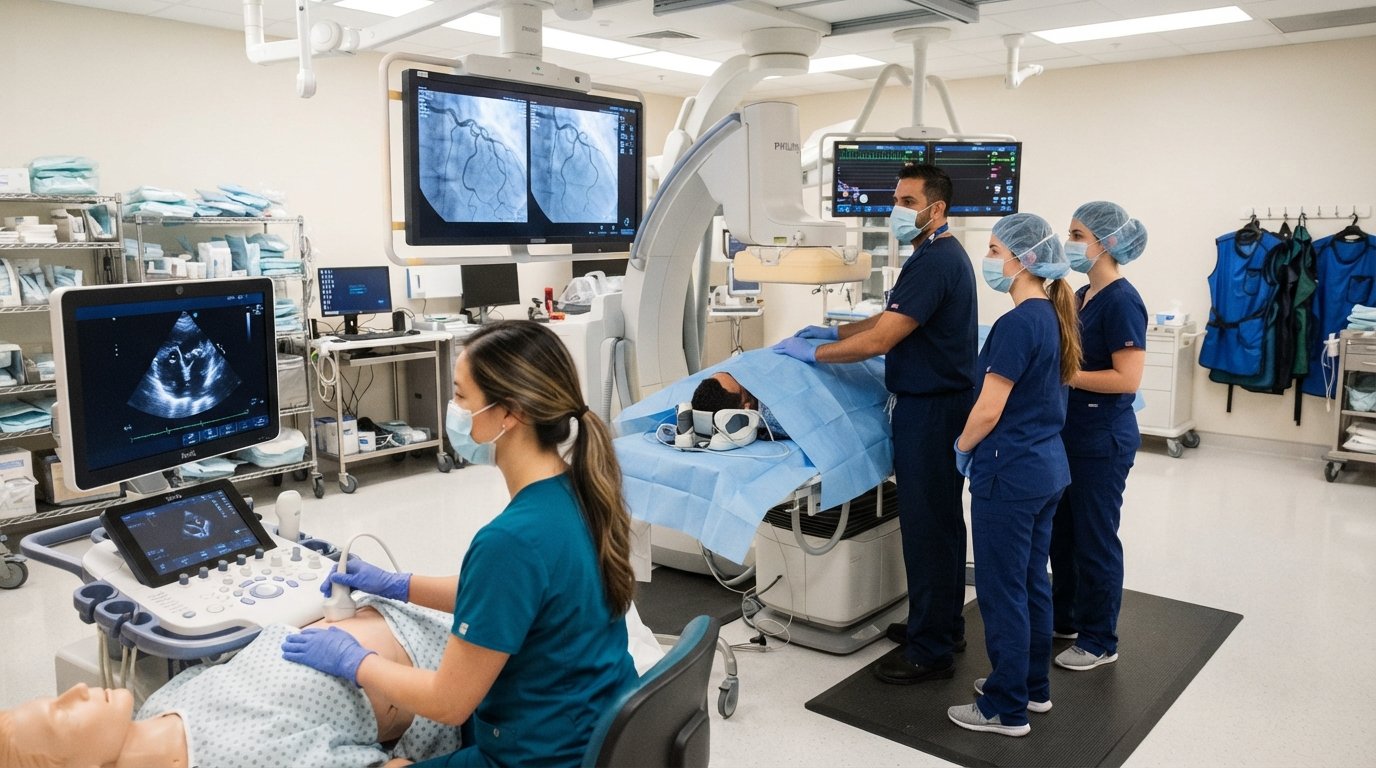
Classroom instruction is paired with laboratory work where students practice using actual equipment they will encounter on the job. This includes electrocardiogram machines, ultrasound devices, and hemodynamic monitoring systems. Instructors are typically experienced technologists who bring real-world insights into the classroom, helping students understand not just how to use the equipment but why certain protocols exist.
Clinical rotations are a cornerstone of the program. During these rotations, students are placed in hospitals, catheterization labs, and diagnostic centers. They observe and then gradually perform procedures under supervision. This hands-on training is critical because cardiovascular technology is a field where confidence and precision matter. By the time students graduate, they have accumulated hundreds of hours of practical experience, making them attractive candidates to employers.
Below are some of the core topics covered in the curriculum:
- Advanced cardiac life support and basic life support certification
- Non-invasive testing: electrocardiography, stress testing, Holter monitoring
- Echocardiography: two-dimensional, M-mode, and Doppler imaging
- Invasive procedures: cardiac catheterization, angioplasty, stent placement
- Patient preparation, monitoring, and post-procedure care
Electives or additional modules may cover pacemaker technology, electrophysiology studies, and vascular ultrasound. The goal is to produce well-rounded technologists who can adapt to different roles within a cardiology department.
Admission Requirements and How to Apply
Admission to the program is competitive but straightforward. Prospective students typically need a high school diploma or equivalent, and they must complete an entrance assessment or interview. Some applicants may need to submit transcripts for review. Because the program is in-person, applicants should also consider their availability for daytime classes and clinical rotations.
Concorde Career Institute-Orlando accepts applications on a rolling basis, with start dates throughout the year. The admissions process generally includes the following steps:
- Submit an online application or visit the campus to meet with an admissions advisor.
- Provide proof of high school graduation or GED completion.
- Complete any required placement tests or interviews.
- Discuss financial aid options, including federal grants, loans, and scholarships.
- Enroll and attend orientation before classes begin.
It is important to note that Concorde does not guarantee admission, and meeting basic requirements does not ensure a spot in the program. Prospective students should apply early and prepare for the assessment. For those who need to strengthen their academic skills, Concorde may offer refresher courses or tutoring.
Financial aid is available for those who qualify. The financial aid office can help students explore grants, loans, and work-study opportunities. Additionally, some employers offer tuition reimbursement, so it is worth checking with your current employer if you are already working in healthcare.
Career Outcomes and Job Outlook
Graduates of the Cardiovascular Technology/Technologist Associate's degree, usually 2 years In-person at Concorde Career Institute-Orlando, are prepared for entry-level positions in a variety of settings. Common job titles include cardiovascular technologist, cardiac catheterization technologist, echocardiographer, and electrocardiogram technician. Employers include hospitals, outpatient cardiac centers, physician practices, and diagnostic imaging facilities.
Salary potential varies by location, experience, and certification. According to the Bureau of Labor Statistics, the median annual wage for cardiovascular technologists and technicians was around $60,000 in recent years, with top earners making over $90,000. In Florida, demand is particularly strong due to the large retiree population and the prevalence of heart disease.
Certification can enhance job prospects and earning potential. Many employers prefer to hire candidates who hold credentials from organizations such as Cardiovascular Credentialing International (CCI) or the American Registry of Diagnostic Medical Sonographers (ARDMS). Concorde's program prepares students to sit for these exams upon graduation.
Career advancement opportunities exist as well. With experience, technologists can move into supervisory roles, specialize in areas like electrophysiology or vascular imaging, or pursue teaching positions. Some technologists return to school to earn a bachelor's degree in cardiovascular technology or a related field, which can open doors to management or research roles.
Is This Program Right for You?
Choosing a career path is a personal decision, and the right fit depends on your interests, strengths, and goals. If you enjoy working with technology, have a strong attention to detail, and want to make a difference in patient lives, cardiovascular technology could be a rewarding field. The two-year timeline means you can enter the workforce relatively quickly compared to earning a bachelor's degree.
However, it is important to be realistic about the demands of the program. Clinical rotations may require early mornings, late evenings, or weekend hours. The coursework is rigorous, covering complex anatomy and technical procedures. Students who succeed are those who are dedicated, organized, and comfortable interacting with patients who may be anxious or ill.
If you are considering this path, take the time to visit the Concorde Career Institute-Orlando campus, speak with instructors, and observe a class or lab. This firsthand experience can help you determine whether the program aligns with your expectations. You can also explore other healthcare training options through resources like Big Bend Accounting Technology Associate's Degree: 2-Year Path, which, while focused on a different field, illustrates how two-year degrees can lead to stable careers.
Comparing Cardiovascular Technology to Other Healthcare Programs
Prospective students often weigh cardiovascular technology against other allied health programs such as nursing, radiologic technology, or respiratory therapy. Each field has its own scope of practice, educational requirements, and work environment. Cardiovascular technology is unique in its focus on the heart and vascular system, and it offers a blend of direct patient care and high-tech diagnostics.
Nursing programs, for example, typically lead to a broader scope of practice but may require additional time and clinical hours. Radiologic technology focuses on imaging of the entire body, while cardiovascular technology zeroes in on cardiac and vascular structures. Respiratory therapy deals with lung function. The choice depends on what aspect of patient care interests you most.
One advantage of cardiovascular technology is the relatively short training period. In about two years, you can earn an associate degree and enter a specialized role. For career changers or those who want to start working quickly, this can be a significant benefit. Additionally, the hands-on nature of the work appeals to people who prefer active, technical tasks over administrative duties.
If you are exploring multiple options, consider using an education matching tool to compare programs side by side. Websites like CheapOnlineEducation allow you to browse sponsored programs by field and request information from schools without obligation. This can help you make an informed decision before committing to a specific path.
Financial Aid and Tuition Considerations
Cost is a major factor for many students. Tuition for the Cardiovascular Technology/Technologist Associate's degree, usually 2 years In-person at Concorde Career Institute-Orlando, varies depending on factors such as whether you are a Florida resident and what financial aid you qualify for. It is best to contact the school directly for current tuition rates and fee schedules.
Financial aid options include federal grants (such as Pell Grants), federal student loans, and institutional scholarships. Concorde's financial aid office can help you complete the Free Application for Federal Student Aid (FAFSA) and explore other funding sources. Some students also qualify for veterans' benefits or employer tuition assistance.
When budgeting, remember to account for additional costs such as textbooks, uniforms, certification exam fees, and transportation to clinical sites. These expenses can add up, so it is wise to plan ahead. Many students work part-time while enrolled, but the demanding schedule of clinical rotations may limit work hours. Discussing your situation with a financial aid advisor can help you create a realistic plan.
Tips for Success in the Program
Success in cardiovascular technology requires more than just showing up to class. Here are some strategies that can help you thrive:
- Form study groups with classmates to review complex concepts and prepare for exams.
- Take advantage of open lab hours to practice using equipment until you feel confident.
- Build strong relationships with clinical instructors and preceptors; they can serve as references later.
- Stay organized with a calendar or planner to manage coursework, clinical hours, and study time.
- Prioritize self-care, including sleep, nutrition, and exercise, to manage stress.
Networking is also important. Attend professional meetings or join student organizations related to cardiovascular technology. These connections can lead to job leads and mentorship opportunities. Finally, keep an open mind during clinical rotations; you may discover a subspecialty you had not considered, such as electrophysiology or pediatric echocardiography.
Taking the Next Step
If you are ready to pursue a career in cardiovascular technology, the next step is to contact Concorde Career Institute-Orlando or visit their website to request more information. Speak with an admissions advisor about start dates, curriculum details, and financial aid. You can also schedule a campus tour to see the labs and meet instructors.
Remember that this program is just one of many paths in healthcare. If you are still comparing options, consider using HigherEducationAdvisor.com to explore other sponsored programs in fields like nursing, radiologic technology, or respiratory therapy. The site allows you to browse by state or field of study and request information from multiple schools without any obligation to apply. This low-pressure approach can help you gather the details you need to make a confident decision.
Whether you choose cardiovascular technology or another allied health field, investing in your education is a step toward a stable and meaningful career. With dedication and the right training, you can become a vital member of a healthcare team, helping patients live longer, healthier lives.