
Big Bend Accounting Technology Associate's Degree: 2-Year Path
Earn your Accounting Technology/Technician and Bookkeeping Associate's degree in 2 years in person at Big Bend Community College. Start a stable career fast.

By Leslie Wulfert
Choosing a career path that combines job security, clear skill development, and a relatively short timeline is a priority for many students today. For those who are detail-oriented, organized, and interested in the financial side of business, an Accounting Technology/Technician and Bookkeeping Associate's degree, usually 2 years In-person at Big Bend Community College, offers a direct route into a stable and essential profession. This program is designed to equip students with the practical skills needed to manage financial records, process payroll, and handle accounts payable and receivable for a wide range of organizations.
Big Bend Community College, located in Moses Lake, Washington, provides a hands-on learning environment that prepares graduates for immediate entry into the workforce. Unlike four-year degrees that often focus heavily on theory and advanced accounting principles, this associate-level program zeroes in on the day-to-day technical skills that employers are actively seeking. The in-person format allows for direct interaction with instructors who have real-world experience, as well as valuable networking opportunities with peers who are on the same career trajectory.
If you are exploring your options for higher education and want to find a program that aligns with your career goals, using a resource like TopStudents can help you compare different schools and fields of study. However, for those who thrive in a structured, face-to-face classroom setting and want to enter the accounting field quickly, the pathway at Big Bend is a compelling choice. This article will guide you through every aspect of this degree, from coursework and costs to career outcomes and the unique benefits of the in-person experience.
Why Choose an Accounting Technology Degree at Big Bend?
The decision to pursue an accounting technology degree is often driven by a desire for a practical education that leads to a specific job. Big Bend Community College's program is tailored for students who want to become bookkeepers, accounting clerks, or payroll specialists. The curriculum is designed to meet the needs of local employers, ensuring that graduates have the exact skills required to perform effectively from their first day on the job. This alignment with industry needs is a significant advantage, as it reduces the need for extensive on-the-job training.
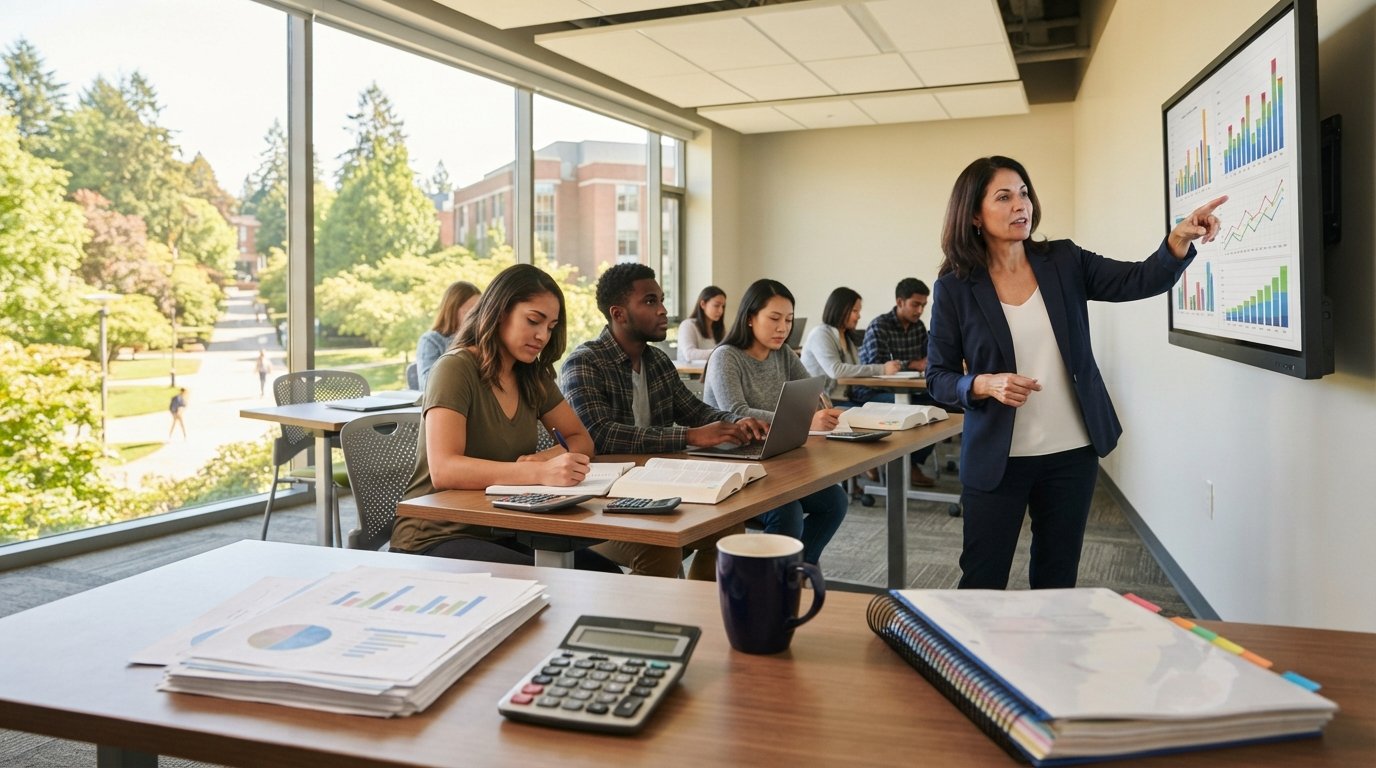
Furthermore, the in-person nature of the program at Big Bend offers distinct advantages over online alternatives. Accounting can be a complex subject, and having the ability to ask questions in real-time, participate in group problem-solving sessions, and receive immediate feedback from instructors can be invaluable. The classroom environment also fosters a sense of community and accountability, which can help students stay motivated and engaged throughout the two-year journey. For many learners, this structure is the key to their academic success.
Here are some of the key benefits of choosing this specific program at Big Bend Community College:
- Accelerated Entry: A two-year timeline means you can enter the workforce and start earning a salary much faster than students in traditional four-year programs.
- Practical, Hands-On Training: The coursework focuses on real-world tasks like preparing financial statements, managing ledgers, and using industry-standard accounting software.
- In-Person Support: Face-to-face instruction provides immediate access to expert faculty and a supportive peer network, which is crucial for mastering technical material.
- Local Employer Connections: Big Bend has established relationships with businesses in the Moses Lake area and beyond, which can be a valuable resource for job placement after graduation.
These benefits collectively make a strong case for the program. The focus on practical application ensures that students are not just learning about accounting but are actually doing it. This hands-on approach builds confidence and competence, making graduates more attractive to potential employers who need reliable and skilled staff.
What to Expect from the Big Bend Community College Program
When you enroll in the Accounting Technology/Technician and Bookkeeping Associate's degree at Big Bend, you are embarking on a structured educational journey that blends general education requirements with specialized accounting courses. The program typically spans four semesters, or two years of full-time study, and is designed to be completed in person. The curriculum is carefully constructed to build a solid foundation in financial accounting, managerial accounting, taxation, and business law, alongside essential software training in programs like QuickBooks and Excel.
In the first year, students can expect to take foundational courses that introduce the core principles of accounting. These classes cover the accounting cycle, from recording transactions to preparing financial statements. You will learn how to use debits and credits, manage journal entries, and understand the structure of balance sheets and income statements. Alongside these accounting-specific classes, you will likely take general education courses in communication, mathematics, and perhaps computer applications, which are essential for any business professional.
The second year delves into more advanced topics. You will explore payroll accounting, where you learn to calculate wages, withhold taxes, and prepare payroll tax returns. Courses in income tax preparation will familiarize you with federal and state tax laws for individuals and small businesses. You will also study computerized accounting systems in depth, ensuring you are proficient in the software that dominates the industry. The program often culminates in a capstone course or a practicum that allows you to apply everything you have learned in a simulated or real-world business setting.
Coursework and Skills You Will Gain
The specific skills you will acquire are directly transferable to the workplace. By the end of the program, you should be able to perform a full range of bookkeeping tasks, including:
- Recording Financial Transactions: Accurately entering data into accounting systems and maintaining a general ledger.
- Managing Accounts Payable and Receivable: Processing invoices, tracking payments, and managing vendor and customer accounts.
- Payroll Processing: Calculating employee pay, handling deductions, and filing payroll taxes.
- Preparing Financial Reports: Generating balance sheets, income statements, and cash flow statements for management review.
- Utilizing Accounting Software: Gaining proficiency in industry-standard tools like QuickBooks, Sage, and Microsoft Excel.
Mastering these skills not only prepares you for immediate employment but also provides a foundation for future career growth. Many graduates start as accounting clerks or bookkeepers and later advance to roles like full-charge bookkeeper, payroll manager, or even staff accountant, sometimes after gaining additional certifications or experience. The technical proficiency gained at Big Bend is the first step on a rewarding career ladder.
For students who are also considering other fields in the broader realm of healthcare, our guide on a Health Sciences Associate Degree at Collin College offers a comparative look at another two-year pathway. However, the accounting technology program remains a distinct and focused route for those passionate about finance and business operations.
Admission, Costs, and Financial Aid
Getting started at Big Bend Community College is a straightforward process. The college has an open-door admission policy, meaning that as long as you have a high school diploma or equivalent, you are eligible to apply. The steps typically involve submitting an application, providing transcripts, and taking a placement test to determine your starting point in math and English. As an in-person program, you will also need to be prepared to attend classes on campus in Moses Lake, Washington.
Understanding the costs associated with your education is crucial for planning. Tuition at a community college is significantly lower than at a four-year university, making this an affordable option. However, you will also need to budget for books, supplies, and any technology fees. The total cost will depend on your residency status and the number of credits you take each quarter. It is important to check the Big Bend Community College website for the most current tuition rates and fee schedules.
Financial aid is available to help offset these costs. Most students qualify for some form of assistance, whether it is need-based grants, work-study programs, or student loans. The first step is to complete the Free Application for Federal Student Aid (FAFSA). The college's financial aid office can guide you through the process and help you understand your options, including scholarships that may be available specifically for students in the accounting technology program.
Here is a brief overview of the typical steps to enroll:
- Apply for Admission: Complete the online application for Big Bend Community College.
- Submit Transcripts: Provide official high school and any college transcripts.
- Placement Testing: Take the assessment test to determine course placement in math and English.
- Apply for Financial Aid: Complete the FAFSA to see what grants, loans, and work-study you qualify for.
- Meet with an Advisor: Schedule a meeting with an academic advisor to map out your degree plan and register for classes.
Following these steps will set you on the right path. The advisors at Big Bend are there to help you navigate the process and ensure you are enrolling in the correct courses to complete your degree efficiently. They can also help you identify any prerequisites and plan your schedule to balance school with work or other commitments.
Career Outlook and Job Opportunities
The job market for accounting technicians and bookkeepers is consistently strong. Every business, from small startups to large corporations, nonprofit organizations, and government agencies, needs someone to manage its financial records. This ubiquitous need translates into a stable demand for skilled professionals in this field. According to the Bureau of Labor Statistics, employment of bookkeeping, accounting, and auditing clerks is projected to remain steady, with numerous openings expected each year as workers retire or transition to other occupations.
Graduates of the Big Bend program are well-prepared for a variety of entry-level positions. Common job titles include:
- Bookkeeper
- Accounting Clerk
- Accounts Payable Clerk
- Accounts Receivable Clerk
- Payroll Clerk
- Accounting Assistant
These roles can be found in almost any industry, including healthcare, retail, manufacturing, education, and professional services. The skills you learn are portable, meaning you can choose to work in a field that interests you. For example, you could work as a bookkeeper for a medical office, an accounting clerk for a manufacturing firm, or a payroll specialist for a school district. This flexibility is one of the most attractive aspects of a career in accounting technology.
With experience and perhaps additional certifications, such as the Certified Bookkeeper (CB) credential, you can advance to higher-level positions. A full-charge bookkeeper, for instance, is responsible for the entire accounting cycle for a small business and often commands a higher salary. Some graduates also choose to continue their education, transferring their credits to a four-year institution to earn a bachelor's degree in accounting or business administration, which can open doors to even more advanced roles like staff accountant or financial analyst.
Is the In-Person Format at Big Bend Right for You?
The decision between online and in-person education is a personal one. The Accounting Technology/Technician and Bookkeeping Associate's degree at Big Bend is offered in person, and this format offers unique advantages that can be particularly beneficial for this subject matter. Accounting involves complex rules and problem-solving. In a classroom, you can immediately ask an instructor to clarify a confusing concept, work through a problem on the whiteboard, or collaborate with classmates on a case study. This immediate feedback loop can significantly enhance understanding and retention.
Moreover, the in-person setting helps build soft skills that are highly valued by employers, such as communication, teamwork, and professional networking. You will have the opportunity to build relationships with your professors, who can serve as mentors and provide references when you start your job search. You will also form study groups and connections with peers that can extend into your professional life. For students who may struggle with the self-discipline required for online learning, the structured schedule of in-person classes provides a routine that promotes success.
If you are someone who values direct interaction, thrives in a collaborative environment, and wants to be fully immersed in your education, the in-person program at Big Bend Community College is likely a great fit. It provides a supportive ecosystem that helps you transition from student to professional. To explore other in-person and online options and compare what different schools offer, you can use resources like HigherEducationAdvisor.com to request information and find the program that best suits your needs.
In conclusion, the Accounting Technology/Technician and Bookkeeping Associate's degree at Big Bend Community College is a smart, efficient, and practical choice for anyone looking to start a career in finance. With its focus on hands-on skills, affordable tuition, and supportive in-person learning environment, it provides a clear pathway to a stable and in-demand profession. By earning this degree in just two years, you can quickly transition into a rewarding role and begin building a successful career in the world of accounting.