
Occupational Therapy Beyond Bachelor's at D'Youville
Earning a bachelor's degree is just the start. Occupational Therapy/Therapist Beyond bachelor's degree In-person at D'Youville University prepares you for a rewarding clinical career.

By Raymond Espinoza
Earning a bachelor's degree is a significant achievement, but for many aspiring occupational therapists, it is only the first step in a longer professional journey. The path to becoming a licensed occupational therapist (OT) requires a graduate-level education, and choosing the right program is critical to your future success. At D'Youville University, students can pursue a comprehensive, in-person graduate education designed to prepare them for the demands of a rapidly evolving healthcare field. This guide explores what it takes to move beyond a bachelor's degree in occupational therapy, why D'Youville's in-person approach offers distinct advantages, and how you can navigate the application and enrollment process with confidence.
Why a Graduate Degree Is Essential for Occupational Therapists
In the United States, the path to becoming a practicing occupational therapist has evolved. While a bachelor's degree provides a strong foundation in the sciences and liberal arts, it is no longer sufficient for entry-level practice. Since 2007, the Accreditation Council for Occupational Therapy Education (ACOTE) has required a master's degree or higher for new graduates entering the field. This shift reflects the growing complexity of occupational therapy practice, which demands advanced clinical reasoning, evidence-based decision-making, and leadership skills that are cultivated at the graduate level.
For students with a bachelor's degree in a related field such as psychology, kinesiology, or biology, this means pursuing either a Master of Science in Occupational Therapy (MSOT) or a Doctor of Occupational Therapy (OTD). Both degrees qualify graduates to sit for the national certification exam administered by the National Board for Certification in Occupational Therapy (NBCOT). However, the choice between an MSOT and an OTD can shape your career trajectory, influencing everything from clinical specialization to research opportunities and leadership roles.
D'Youville University offers both pathways, allowing students to select the degree that aligns with their professional goals. The university's in-person format ensures that students benefit from hands-on learning, direct mentorship from experienced faculty, and access to state-of-the-art simulation labs and clinical partnerships. For those who thrive in collaborative, immersive environments, this approach can make a substantial difference in both learning outcomes and career readiness.
Understanding the Difference: MSOT vs. OTD at D'Youville
Prospective students often wonder whether they should pursue a master's or doctoral degree in occupational therapy. At D'Youville University, both options are available, and each serves a distinct purpose. The MSOT program is typically completed in two to two and a half years of full-time study, including fieldwork placements. It is designed for students who want to enter clinical practice as quickly as possible while still receiving comprehensive training. Graduates of the MSOT program are well-prepared for roles in hospitals, schools, rehabilitation centers, and community-based settings.
The OTD program, on the other hand, extends beyond the master's curriculum to include advanced coursework in leadership, advocacy, program development, and research. This degree is ideal for students who aspire to take on administrative roles, teach at the university level, or contribute to the evidence base of occupational therapy through original research. D'Youville's OTD program also emphasizes interprofessional collaboration, preparing graduates to work effectively in multidisciplinary healthcare teams. While the OTD requires a longer time commitment (typically three to three and a half years), it can open doors to leadership positions and specialized practice areas.
When deciding between the two, consider your long-term career goals, your interest in research or administration, and your willingness to invest additional time in your education. D'Youville's faculty advisors are available to help prospective students weigh these factors and choose the path that best fits their aspirations.
The Advantages of In-Person Learning at D'Youville University
In recent years, online education has become increasingly popular, offering flexibility for students who balance work, family, and other commitments. However, for a hands-on profession like occupational therapy, in-person learning offers irreplaceable benefits. At D'Youville University, the in-person format is not merely a logistical choice; it is a pedagogical commitment to immersive, experiential education. Students learn in small cohorts, engage in face-to-face discussions with faculty, and practice clinical skills in dedicated labs equipped with the latest technology.
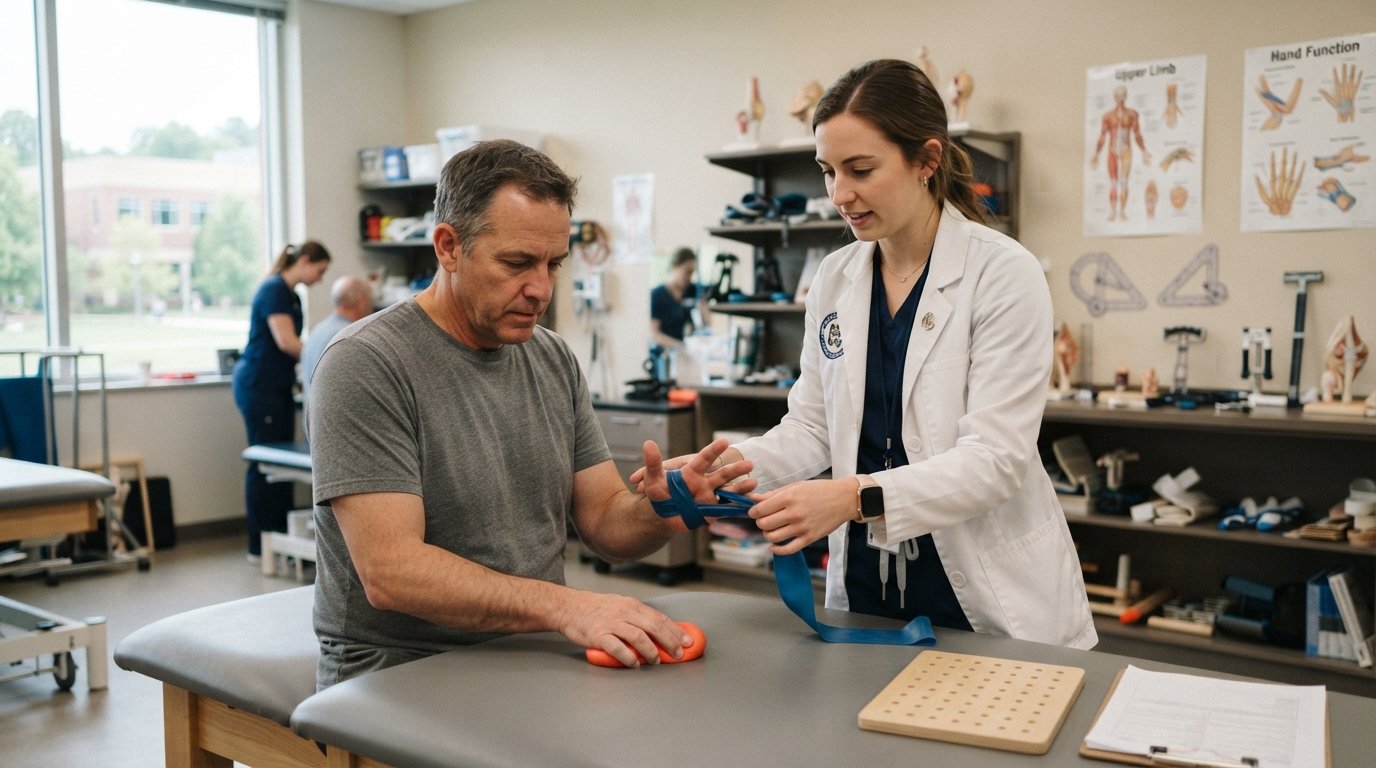
One of the most significant advantages of in-person learning is the opportunity for immediate feedback. When students practice transferring a patient from a wheelchair to a bed or fabricating a splint, they need real-time guidance from instructors who can correct their technique and offer encouragement. This level of interaction is difficult to replicate in a virtual environment. Additionally, D'Youville's location in Buffalo, New York, provides access to a rich network of clinical sites, including hospitals, schools, and community agencies, where students complete their fieldwork placements.
Beyond clinical skills, in-person education fosters the development of professional behaviors and communication skills that are essential for success in healthcare. Students learn to collaborate with peers from other disciplines, such as nursing, physical therapy, and physician assistant studies, through interprofessional education activities. These experiences mirror the realities of modern healthcare practice, where teamwork and effective communication are paramount.
Admission Requirements and Application Process
Admission to D'Youville University's occupational therapy programs is competitive, and prospective students should begin preparing well in advance. While specific requirements may vary depending on the program (MSOT or OTD), there are several common prerequisites and application components. Understanding these requirements can help you plan your undergraduate coursework and gather the necessary materials before the application deadline.
Most applicants will need to complete prerequisite courses in anatomy and physiology, statistics, psychology, and other related subjects. A minimum GPA is typically required, and many programs also require the Graduate Record Examination (GRE). Additionally, applicants must submit letters of recommendation, a personal statement, and a resume detailing relevant volunteer or work experience. Observing or shadowing a licensed occupational therapist is often strongly recommended, as it demonstrates your commitment to the field and provides insight into the profession.
To streamline the application process, D'Youville University uses the Occupational Therapy Centralized Application Service (OTCAS), which allows students to submit one application to multiple programs. Key steps include:
- Complete prerequisite coursework and maintain a competitive GPA.
- Register for and take the GRE if required by your chosen program.
- Request letters of recommendation from professors or healthcare professionals.
- Write a compelling personal statement that highlights your motivation and fit for the program.
- Submit your application through OTCAS by the posted deadline.
After submitting your application, you may be invited to interview with faculty members. The interview is an opportunity to demonstrate your interpersonal skills, professionalism, and understanding of the occupational therapy profession. Preparing thoughtful responses to common questions and articulating your goals can help you stand out as a candidate.
Curriculum Highlights and Clinical Experience
D'Youville University's occupational therapy curriculum is designed to build on the foundation of a bachelor's degree while introducing students to the advanced concepts and skills required for practice. The program integrates coursework in occupational science, neuroscience, kinesiology, and therapeutic interventions with hands-on laboratory experiences. Students learn to assess clients across the lifespan, from children with developmental delays to older adults recovering from strokes or managing chronic conditions.
A distinguishing feature of D'Youville's program is its emphasis on clinical fieldwork. Students complete multiple Level I and Level II fieldwork placements, totaling a significant number of hours in real-world settings. These placements allow students to apply classroom knowledge to actual client care, under the supervision of licensed occupational therapists. Many students find that fieldwork is the most rewarding part of their education, as it confirms their passion for the profession and builds their confidence as practitioners.
In addition to fieldwork, D'Youville offers opportunities for research and scholarly activity. Students may collaborate with faculty on research projects, present at conferences, or contribute to publications. These experiences not only enrich the learning process but also strengthen applications for doctoral study or specialized clinical positions.
Career Outcomes and Licensure
Graduates of D'Youville University's occupational therapy programs are well-positioned for a variety of career paths. According to the Bureau of Labor Statistics, employment of occupational therapists is projected to grow much faster than the average for all occupations, driven by the aging population and increased demand for rehabilitative services. Graduates work in diverse settings, including hospitals, outpatient clinics, schools, nursing homes, and private practice.
To practice, graduates must pass the NBCOT certification exam and obtain licensure in the state where they intend to work. D'Youville's program includes comprehensive preparation for the exam, including review sessions and practice tests. The university's strong reputation and alumni network can also be advantageous when seeking employment. Many graduates receive job offers before graduation, reflecting the high demand for qualified occupational therapists.
For those interested in advancing their careers further, D'Youville offers continuing education and post-professional opportunities. Whether you aspire to become a clinical specialist, educator, or researcher, the foundation you build at D'Youville can support your long-term professional growth.
Financial Considerations and Support
Pursuing a graduate degree is a significant investment, and prospective students should carefully consider the costs and available financial aid options. D'Youville University offers a range of scholarships, grants, and assistantships to help offset tuition expenses. Students are encouraged to complete the Free Application for Federal Student Aid (FAFSA) to determine their eligibility for federal loans and work-study programs.
In addition to institutional aid, there are external scholarships available through professional organizations such as the American Occupational Therapy Foundation (AOTF). These awards can help reduce the financial burden of graduate education. Prospective students should also explore loan repayment programs, such as the Public Service Loan Forgiveness (PSLF) program, which may be applicable for those who work in nonprofit or public sector settings after graduation.
It is also worth noting that D'Youville's in-person format may offer cost advantages compared to some online programs, particularly when considering access to local clinical placements and reduced travel for fieldwork. Prospective students should calculate the total cost of attendance, including tuition, fees, housing, and transportation, when comparing programs. For more information on exploring degree options and connecting with schools, resources like TopStudents can provide additional guidance on college matching and program discovery.
Why Choose D'Youville University for Your Occupational Therapy Education
D'Youville University has a long-standing reputation for excellence in health sciences education. The occupational therapy programs are accredited by ACOTE, ensuring that graduates meet the highest standards of professional preparation. The faculty are experienced clinicians and researchers who are dedicated to student success, providing mentorship and support both inside and outside the classroom.
The university's commitment to interprofessional education sets it apart from many other programs. Students from various health disciplines learn together, fostering a collaborative spirit that benefits both their education and their future practice. This approach aligns with the increasingly team-based nature of healthcare delivery. Additionally, D'Youville's location in Buffalo offers a vibrant cultural and professional community, with numerous opportunities for networking and career development.
For students who value a personalized, immersive learning experience, D'Youville's in-person format is an excellent choice. The small class sizes, state-of-the-art facilities, and strong clinical partnerships create an environment where students can thrive. Whether you are a recent graduate or a career changer, D'Youville provides the support and resources you need to succeed.
If you are considering a graduate degree in occupational therapy, take the time to research programs thoroughly and visit campuses if possible. Attending information sessions, speaking with current students, and consulting with admissions advisors can help you make an informed decision. For those exploring broader educational pathways, resources such as Environmental Science Beyond Bachelor's Degree at DePaul illustrate how different institutions approach advanced study, though the focus here remains on occupational therapy at D'Youville.
Next Steps for Prospective Students
If you are ready to take the next step toward a career in occupational therapy, begin by reviewing the admission requirements for D'Youville University's MSOT and OTD programs. Ensure that you have completed the necessary prerequisite courses and have a competitive GPA. Gain experience by volunteering or working in healthcare settings, and cultivate relationships with potential recommenders.
Prepare for the application process by drafting a strong personal statement that conveys your passion for occupational therapy and your reasons for choosing D'Youville. Practice for interviews and be ready to discuss your experiences and goals. Finally, explore financial aid options and create a budget for your graduate education.
Becoming an occupational therapist is a rewarding journey that allows you to make a meaningful difference in people's lives. With its rigorous curriculum, dedicated faculty, and emphasis on experiential learning, D'Youville University offers a pathway to a fulfilling career. By moving beyond your bachelor's degree and embracing graduate study, you can unlock new opportunities and achieve your professional aspirations. Take the first step today and invest in your future as an occupational therapist.