
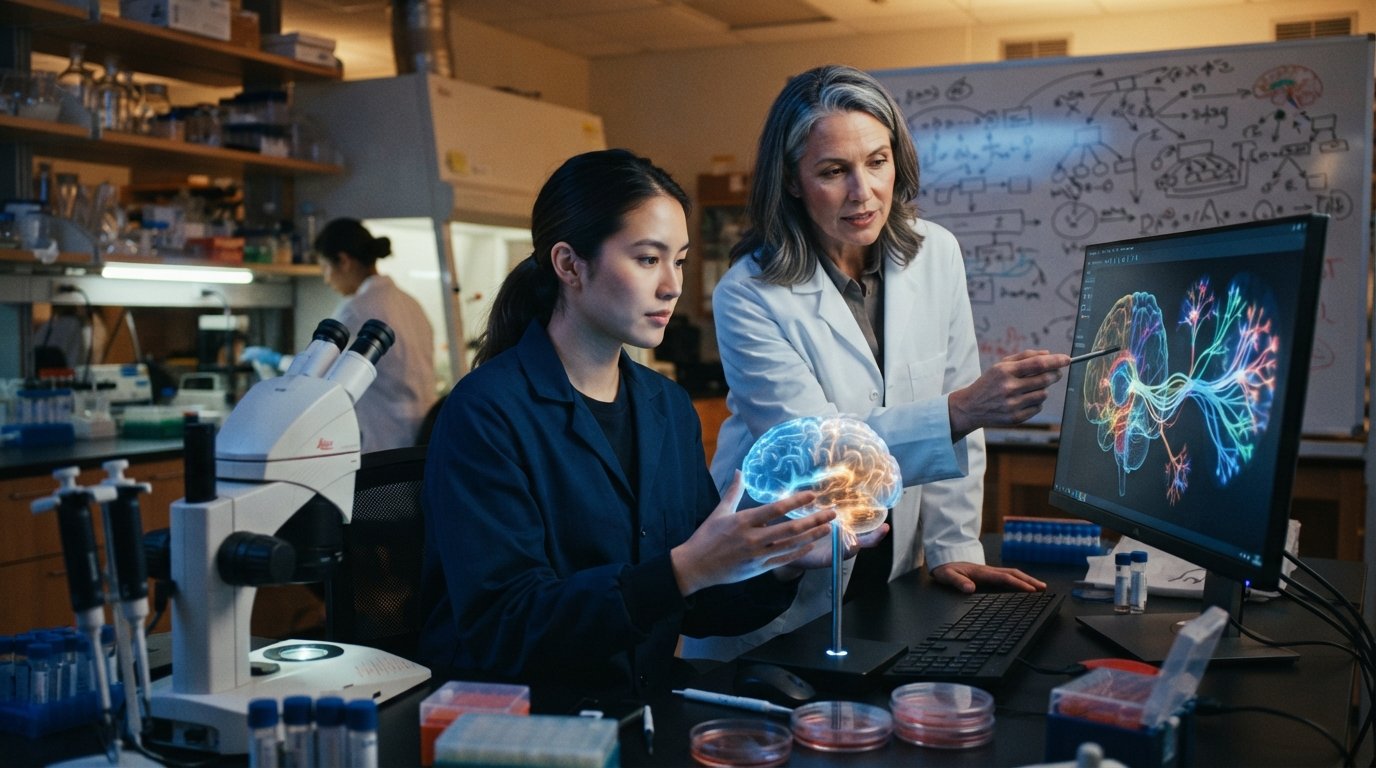
Neuroscience Graduate Programs at Central Michigan University
Explore in-person neuroscience graduate programs at Central Michigan University, including research opportunities, funding, and career outcomes for advanced students.

By Raymond Espinoza
For students who discover a passion for the brain during their undergraduate years, the question of what comes next can feel both exciting and overwhelming. A bachelor's degree in neuroscience opens doors, but advanced training often unlocks the most rewarding research, clinical, and industry careers. At Central Michigan University (CMU), the path forward is clear, hands-on, and deeply connected to real-world applications. This article explores the benefits of pursuing neuroscience beyond a bachelor's degree in-person at Central Michigan University, the specific programs available, and how this choice can shape your professional future.
Why Pursue Neuroscience Beyond a Bachelor's Degree?
The field of neuroscience is vast, spanning molecular mechanisms, cognitive processes, neurological disorders, and even artificial intelligence. An undergraduate curriculum typically provides a broad foundation, but it rarely offers the depth required for specialized roles. Graduate study at CMU allows you to focus on a niche, develop advanced research skills, and work closely with faculty mentors who are active in their fields. This is especially true when you choose an in-person program, where lab access, peer collaboration, and direct faculty interaction are part of the daily experience.
Moreover, the job market increasingly values advanced degrees. According to the Bureau of Labor Statistics, occupations in medical science, including neuroscience research, are projected to grow faster than average over the next decade. A master's degree can lead to roles as a research assistant, lab manager, or industry analyst, while a doctoral degree opens doors to independent research, university teaching, and senior positions in biotech and pharmaceutical companies. The investment in time and effort is substantial, but the payoff in terms of career flexibility and earning potential is significant.
CMU's In-Person Neuroscience Programs
Central Michigan University offers a range of graduate-level neuroscience options, each designed to meet different career goals. The most prominent is the Master of Science in Neuroscience, which emphasizes both coursework and original research. Students can choose between a thesis and a non-thesis track, allowing them to tailor the experience to their aspirations. The thesis track is ideal for those considering a PhD or a research-intensive career, while the non-thesis track suits students who want to enter the workforce or pursue professional degrees like medicine or pharmacy.
For those aiming for the highest level of expertise, CMU also offers a PhD in Neuroscience through its College of Medicine. This program is highly research-focused, with students working alongside faculty on projects ranging from neurodegenerative diseases to neuropharmacology. The in-person format is crucial here, as it provides access to state-of-the-art laboratories, animal facilities, and collaborative research centers. You are not just a student; you become an active contributor to the scientific community.
Specializations and Research Opportunities
One of the standout features of CMU's neuroscience programs is the breadth of research areas available. Faculty members specialize in behavioral neuroscience, cellular and molecular neuroscience, and computational neuroscience, among others. This diversity means you can find a mentor whose expertise aligns with your interests, whether you are fascinated by the neural basis of memory, the effects of stress on the brain, or the development of new treatments for epilepsy.
Graduate students at CMU are encouraged to present their work at national conferences and publish in peer-reviewed journals. The university provides travel grants and research funding to support these activities. In your first year, you will rotate through different labs, giving you a taste of various techniques and research questions before committing to a thesis or dissertation project. This hands-on approach ensures that you graduate with not just theoretical knowledge, but practical skills that are highly valued by employers.
Career Outcomes and Professional Development
Graduates of CMU's neuroscience programs pursue diverse career paths. Some go on to doctoral programs at other institutions, while others enter the workforce directly. Common roles include research technicians in academic or industrial labs, clinical research coordinators at hospitals, and science writers or educators. The pharmaceutical and biotechnology industries are also major employers, hiring neuroscientists for drug discovery, safety assessment, and regulatory affairs.
The university's Career Development Center offers dedicated support for graduate students. You can access resume workshops, mock interviews, and networking events with alumni working in the field. Additionally, CMU's location in Mount Pleasant, Michigan, provides a close-knit community where you can build strong relationships with faculty and peers, which often lead to job referrals and collaborative opportunities after graduation. The in-person experience is invaluable for these connections, as spontaneous conversations in the lab or at seminars can spark ideas and open doors.
Admissions Requirements and Application Tips
Admission to CMU's neuroscience graduate programs is competitive, but the requirements are transparent. For the master's program, you typically need a bachelor's degree in neuroscience, biology, psychology, or a related field, with a minimum GPA of 3.0. You must submit transcripts, letters of recommendation, a statement of purpose, and GRE scores (though some programs have waived this requirement recently, so check the current policy). International students must also demonstrate English proficiency through TOEFL or IELTS.
For the PhD program, the expectations are higher. A strong research background is essential, often evidenced by an undergraduate thesis or prior lab experience. Your statement of purpose should clearly articulate your research interests and why CMU is a good fit for you. It is wise to contact potential faculty mentors before applying to ensure they are accepting new students and to discuss your ideas. This personal touch can set you apart in the admissions process.
Tuition, Funding, and Financial Aid
Graduate education can be expensive, but CMU offers several funding options. Master's students may be eligible for graduate assistantships, which provide a stipend and tuition waiver in exchange for teaching or research duties. These positions are competitive but are an excellent way to offset costs and gain valuable experience. PhD students typically receive full funding, including tuition, stipend, and health insurance, for the duration of their program, contingent on satisfactory progress.
In addition to university funding, external scholarships and fellowships are available from organizations like the National Science Foundation and the American Psychological Association. The financial aid office at CMU can help you navigate these options and ensure you are aware of all deadlines. When comparing programs, it is important to consider the total cost of attendance, including living expenses in Mount Pleasant, which is generally lower than in larger cities. This can make CMU an attractive option for students who want a high-quality education without excessive debt.
Comparing In-Person vs. Online Neuroscience Programs
While online programs offer flexibility, they cannot fully replicate the immersive experience of in-person study. In neuroscience, this is particularly true because the discipline is inherently hands-on. You need to be in the lab to learn techniques like electrophysiology, microscopy, and behavioral testing. Online programs may offer virtual simulations, but they lack the tactile experience and the spontaneity of troubleshooting equipment with your own hands. Furthermore, the mentorship that happens informally in hallways and during coffee breaks is difficult to replicate online.
That said, online programs can be a good option for working professionals who cannot relocate. If you are considering a fully online path, it is crucial to research the program's lab requirements and whether they offer intensive on-campus residencies. However, for students who are able to commit to full-time study, the in-person route is generally more enriching and better prepares you for a career in research. CMU's program is explicitly designed to maximize this in-person value, with small class sizes and a collaborative culture.
How to Make the Most of Your Time at CMU
Once you are admitted, your success depends on your engagement. Here are some strategies to maximize your graduate experience:
- Build relationships with faculty: Beyond your advisor, get to know other professors whose work interests you. They can serve on your committee, write letters of recommendation, and offer diverse perspectives.
- Get involved in the neuroscience community: Join or start a student journal club, attend departmental seminars, and participate in the annual Graduate Research Exhibition. These activities enhance your learning and your resume.
- Seek out interdisciplinary opportunities: Neuroscience overlaps with psychology, computer science, and engineering. Take courses or collaborate on projects outside your immediate discipline to broaden your skill set.
- Take advantage of professional development workshops: The university offers training in scientific writing, public speaking, and responsible conduct of research. These skills are essential for any career, not just academia.
- Plan for your future early: Whether you aim for a postdoc or a job in industry, start preparing in your second year. Update your CV, practice your interview skills, and network at conferences.
Following these steps will help you transition from a student to a professional. The connections you make and the skills you acquire will serve you well long after you leave CMU.
Life in Mount Pleasant: A Supportive Environment for Graduate Students
Mount Pleasant is a classic college town, offering a safe, affordable, and vibrant community. The cost of living is lower than the national average, and you can find housing within walking distance of campus. The city has a variety of restaurants, coffee shops, and outdoor recreational opportunities, including the Chippewa River and several parks. The CMU campus itself is modern, with dedicated research facilities and a new health sciences building that houses the neuroscience labs.
Graduate students often form tight-knit cohorts, organizing study groups, social events, and peer support networks. The university also has a Graduate Student Association that advocates for student needs and hosts professional and social events. If you are moving from out of state, you will find a welcoming community that helps ease the transition. For those with families, the local school system is well-regarded, and there are numerous family-friendly activities in the area. This supportive environment allows you to focus on your studies without the distractions and high costs of a large metropolitan area.
Alternative Paths: Certificate and Professional Options
If a full master's or PhD is not the right fit, CMU also offers graduate certificates in related areas, such as cognitive science or neuropsychology. These shorter programs, typically 12 to 15 credits, can enhance your credentials or complement a degree in another field. They are an excellent way to gain specialized knowledge without the time commitment of a full degree. Additionally, for those considering medical school, a master's in neuroscience can be a strong foundation, and CMU's pre-medical advising can help you navigate the application process.
It is also worth noting that some students choose to pursue a PhD in a related discipline, such as psychology or biological sciences, with a focus on neuroscience. CMU's interdisciplinary environment makes this possible, as you can take neuroscience courses and work with neuroscience faculty even if your primary department is different. This flexibility is a significant advantage of a larger university like CMU, where collaboration across departments is encouraged.
Taking the Next Step
Deciding to pursue neuroscience beyond a bachelor's degree in-person at Central Michigan University is a significant commitment, but it is one that can lead to a fulfilling and impactful career. The programs are rigorous, the faculty are dedicated, and the community is supportive. You will graduate with a deep understanding of the nervous system, hands-on research skills, and a professional network that will help you succeed.
Before applying, take the time to visit the campus, talk to current students and faculty, and review the curriculum in detail. The admissions team is available to answer your questions and guide you through the process. If you are ready to take this step, you will find that CMU provides the ideal environment to advance your knowledge and achieve your goals. For additional guidance on comparing programs and finding the right fit, you can explore resources at TopStudents.com, which offers tools to match you with schools that align with your interests. The journey is challenging, but the rewards, both personal and professional, are immense. Take the first step today and see where your curiosity can lead you.