
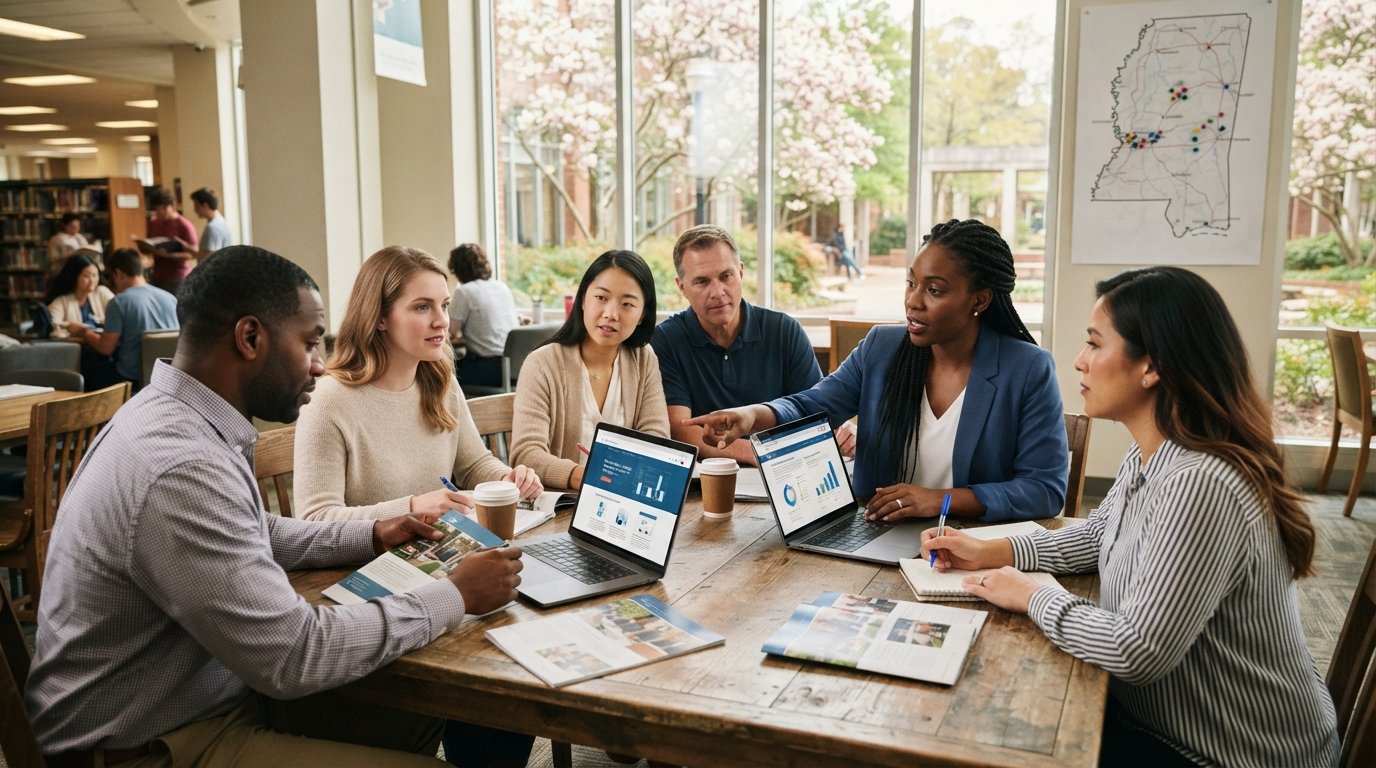
Mississippi Colleges: Online and On Campus Programs
Explore colleges in Mississippi online and on campus programs, from criminal justice to education, and learn how to compare accreditation and outcomes.

By Leslie Wulfert
Mississippi often gets overlooked in national conversations about higher education, but the Magnolia State offers a surprisingly diverse landscape of colleges and universities. From the Gulf Coast to the Delta, students can choose from public research institutions, regional universities, community colleges, and private schools. What has changed dramatically in recent years is how those institutions deliver their programs. Online learning has moved from a niche option to a core strategy, allowing students in rural counties, working adults, and career changers to earn credentials without relocating. If you are exploring colleges in Mississippi online and on campus programs, the key is understanding how to compare formats, fields of study, and accreditation so you can request information from schools that actually fit your life.
How to Browse Mississippi Colleges Using a State Directory
One of the most efficient ways to start your search is to use a state-specific directory that lists participating colleges and universities. Rather than visiting dozens of individual websites, you can filter by degree level, field of study, and format. A tool like the HigherEducationAdvisor.com colleges by state directory lets you browse Mississippi institutions in one place, then request information from those that match your goals. This is a low-pressure way to gather details before committing to an application.
When you browse a directory, pay attention to whether the listing includes both online and on-campus options. Many Mississippi schools offer hybrid programs, where some coursework is completed online and some on campus. That flexibility can be ideal if you live near a campus but need to balance work or family obligations. The directory format also makes it easy to compare sponsored listings side by side, which saves time and reduces the risk of missing a program that fits your schedule.
Before you start requesting information, it helps to understand how to evaluate the schools you find. Our guide on factors to compare when researching online colleges walks through criteria like accreditation, cost, and support services. Keep those factors in mind as you explore Mississippi listings, because the state's institutions vary widely in size, mission, and program offerings.
How Online Programs Expand Access Across Mississippi
Mississippi is a largely rural state, and geography can be a real barrier to higher education. Students in small towns may live an hour or more from the nearest four-year university. Online programs help close that gap. A student in a rural county can now enroll in a bachelor's completion program, a nursing prerequisite sequence, or a master's in education without commuting long distances or relocating. This is especially important for adult learners who cannot uproot their families or leave their jobs.
Online delivery also benefits students who need flexible pacing. Many Mississippi colleges offer asynchronous courses, which means you can complete assignments at times that work for you, within weekly deadlines. Others use synchronous sessions, where you attend live virtual classes. Both formats have trade-offs: asynchronous courses demand strong time management, while synchronous courses provide more real-time interaction with instructors and peers. When you request information from a school, ask which format dominates its online programs and whether any required labs or clinicals must be completed in person.
It is also worth noting that online programs in Mississippi are not limited to general education. You can find fully online degrees in business, criminal justice, education, nursing (with clinical components), and technology. The availability of these programs means that students outside metro areas can pursue specialized fields that might otherwise require moving to a city with a larger campus. For adult learners returning to school, this flexibility can be the difference between starting a degree and putting it off indefinitely.
Fields of Study to Compare in Mississippi
Mississippi colleges offer a broad range of fields, but some areas stand out because of state workforce needs and the availability of both online and on-campus formats. Criminal justice and education are two strong examples. Criminal justice programs prepare students for roles in law enforcement, corrections, homeland security, and legal support. Many Mississippi schools offer associate and bachelor's degrees in criminal justice, and some deliver the coursework fully online. Education programs, meanwhile, are critical in a state that continues to invest in teacher preparation. You can find undergraduate and graduate education degrees, alternative certification pathways, and endorsements in specialties like special education and literacy.
When comparing fields of study, consider how much hands-on training is required. Criminal justice degrees may include internships with local agencies, while education degrees typically require student teaching or field observations. Nursing programs require clinical hours. If a program is advertised as online, ask how the hands-on components are handled. Some schools arrange local preceptors or clinical placements near your home community, which can make an online program feasible even for students in remote areas.
Other fields worth comparing include business administration, information technology, psychology, and health sciences. Mississippi's community colleges also offer career-focused associate degrees and certificates in skilled trades, healthcare support, and industrial technology. These programs often blend classroom instruction with hands-on labs, and some have online components for the general education coursework. If you are considering a two-year degree or certificate, browse the state's community college listings alongside the four-year universities to get a full picture of what is available.
Checking Accreditation and Program Outcomes Before You Request Info
Accreditation is one of the most important factors to verify before you enroll in any college, whether online or on campus. Regional accrediting bodies, such as the Southern Association of Colleges and Schools Commission on Colleges (SACSCOC), review entire institutions. Programmatic accreditors review specific programs, such as nursing, education, or business. Attending an accredited institution matters for financial aid eligibility, credit transfer, and employer recognition. If a school cannot clearly state its accreditation status, treat that as a red flag and look elsewhere.
Program outcomes are another area to investigate. Graduation rates, job placement rates, and licensure exam pass rates can tell you whether a program delivers on its promises. For example, if you are considering a nursing program, ask about the NCLEX pass rate for recent graduates. For education programs, ask about the percentage of graduates who obtain teaching licenses. These data points are not the only factor in your decision, but they provide useful context. You can often find outcome data on a school's website or by requesting it directly from an admissions representative.
Cost is another critical consideration. Mississippi generally has lower tuition rates than many other states, but costs still vary by institution and program. Online programs sometimes carry different tuition rates than on-campus programs, and some schools charge additional fees for technology or clinical placements. Before you request information, decide on a budget and ask each school for a clear breakdown of tuition, fees, and any other required costs. This will help you compare apples to apples and avoid surprises later.
Connecting with Schools and Taking the Next Step
Once you have narrowed your list, the next step is to request information from the schools that interest you. This is not the same as applying. Requesting information simply signals that you want to learn more about a program, and it typically involves filling out a short form with your contact details and area of interest. Schools may then send you program brochures, invite you to virtual information sessions, or connect you with an admissions counselor. There is no obligation to apply or enroll, which makes this a low-risk way to gather details.
If you want to explore online and campus degree options beyond Mississippi, you can also browse sponsored programs by subject or state through CheapOnlineEducation. That site helps prospective students connect with participating schools and compare listings, with no obligation to apply. Combining a state-focused directory with a broader matching service can give you a more complete view of what is available.
As you move forward, keep your goals front and center. Are you seeking a credential to advance in your current job, or are you preparing for a new career? Do you need the flexibility of online coursework, or do you thrive in a traditional campus environment? The answers to these questions will guide your choices. Mississippi's colleges and universities offer a wide range of options, and with a little research, you can find a program that fits your budget, schedule, and career plans.