
LPN Training Certificate at Columbia Central University-Caguas
Earn your LPN/VN certificate in 1 to 2 years at Columbia Central University-Caguas with hands-on training and clinical experience.

By Margaret Reis
Practical nursing is one of the fastest paths to a healthcare career, and the Licensed Practical/Vocational Nurse Training Certificate, 1 year to less than 2 years In-person at Columbia Central University-Caguas offers exactly that speed without sacrificing hands-on preparation. Students who choose this program are not just earning a credential; they are building a foundation for patient care that can lead to immediate employment in clinics, hospitals, and long-term care facilities. If you have been weighing the time and cost of nursing education, this certificate stands out because it is short, focused, and delivered in a traditional classroom and lab setting where you practice skills directly with instructors.
This article breaks down everything you need to know about the program, from curriculum and clinical rotations to licensure requirements and career outlook. You will also learn how to compare this pathway with other nursing options and how to use a free school-matching service to explore similar programs across the country. By the end, you will have a clear picture of whether this in-person certificate aligns with your goals and how to take the next step toward becoming a licensed practical nurse.
Why Choose the LPN/VN Certificate at Columbia Central University-Caguas
Columbia Central University-Caguas is located in Caguas, Puerto Rico, and its practical nursing program is designed for students who want to enter the workforce quickly. The program typically lasts between one and two years, depending on the exact schedule and any prerequisite requirements. Unlike an associate degree in nursing, which takes about two years and includes general education courses, this certificate focuses almost entirely on nursing-specific coursework and clinical practice. That means you spend less time on unrelated subjects and more time learning how to take vital signs, administer medications, and provide basic patient care.
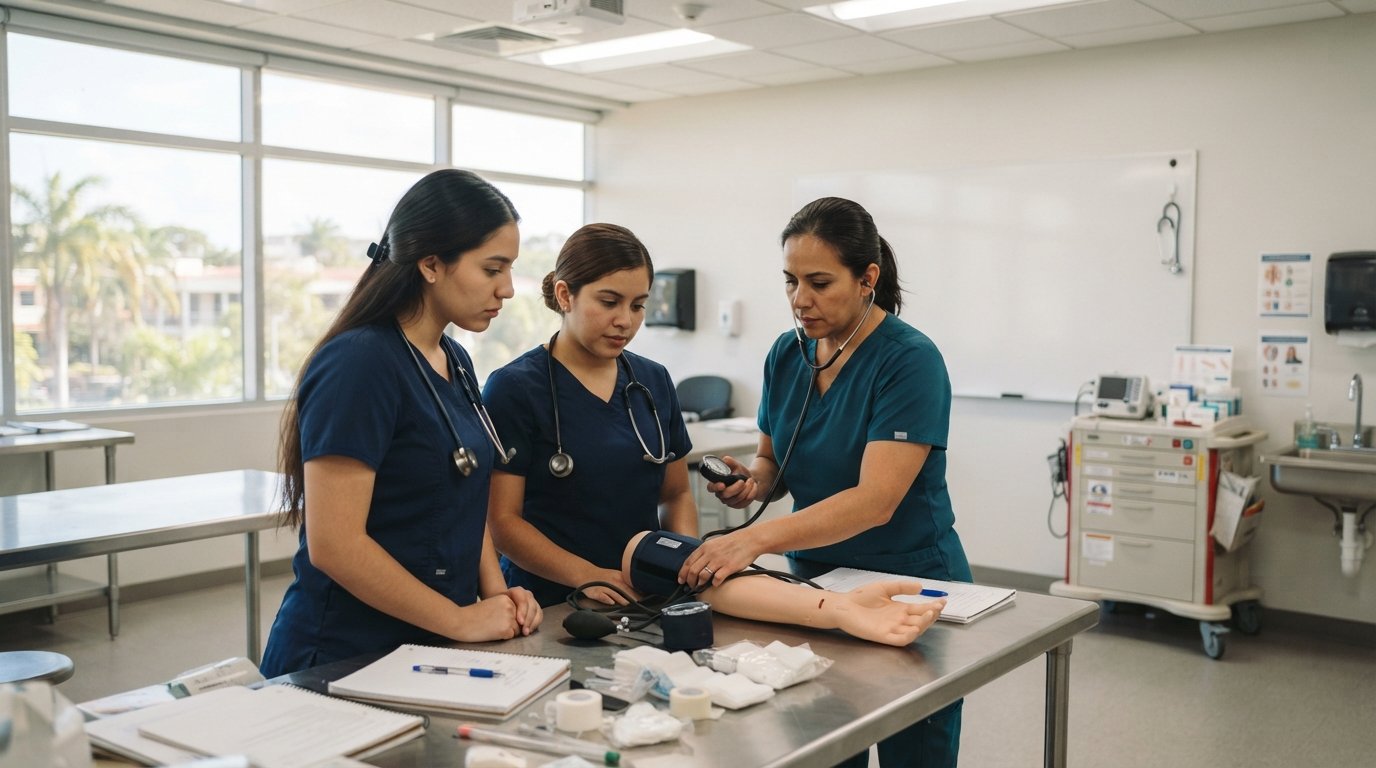
One of the biggest advantages of an in-person format is the direct supervision you receive during lab sessions. You will practice inserting catheters, changing dressings, and using medical equipment under the watchful eye of experienced nurses. This type of tactile learning is hard to replicate online, and it builds confidence before you ever step into a real clinical site. In addition, the university's location in Caguas places you within reach of multiple hospitals and clinics where you may complete your clinical rotations, giving you valuable local connections for future job hunting.
Here is a quick list of what makes this program attractive:
- Accelerated timeline: complete training in roughly 12 to 18 months of full-time study.
- Hands-on labs: practice procedures in a supervised simulation environment.
- Clinical experience: rotate through real healthcare settings to apply your skills.
- Local network: build relationships with preceptors and facilities in the Caguas area.
- Direct licensure prep: coursework aligns with the NCLEX-PN exam blueprint.
These features make the certificate a practical choice for someone who wants to start earning a nursing salary sooner rather than later. However, you should also consider that the program is intensive, and the workload can be demanding. You will need to manage your time well, especially if you are also working or caring for a family. The support of instructors and classmates, however, often helps students stay on track.
Curriculum and Clinical Training
The curriculum for the Licensed Practical/Vocational Nurse Training Certificate, 1 year to less than 2 years In-person at Columbia Central University-Caguas is structured to cover the fundamental areas of practical nursing. Courses typically include anatomy and physiology, pharmacology, medical-surgical nursing, maternal and child health, geriatrics, and mental health concepts. Each course builds on the previous one, so you start with basic health assessment and progress to more complex patient care scenarios. The goal is to give you a broad enough knowledge base to pass the NCLEX-PN and work safely in a variety of settings.
Clinical rotations are a cornerstone of the program. You will spend a significant number of hours in hospitals, nursing homes, and community clinics, where you will work under the supervision of registered nurses and licensed practical nurses. During these rotations, you will perform tasks such as monitoring patient conditions, assisting with activities of daily living, documenting care, and communicating with the healthcare team. This real-world experience is invaluable because it demonstrates your competence to future employers and helps you decide which nursing specialty you might want to pursue later.
For example, a typical week might include two days of classroom lectures and three days of clinical practice. In the classroom, you might learn about diabetes management, and then in the clinical setting, you might help a patient with insulin administration and foot care. This immediate application of theory to practice reinforces learning and prepares you for the pace of a real nursing unit. By the time you graduate, you will have performed hundreds of procedures, giving you a substantial edge over candidates with only theoretical knowledge.
Understanding the NCLEX-PN Exam
Graduating from an approved practical nursing program is only the first step. To become a licensed practical nurse (LPN) or licensed vocational nurse (LVN), you must pass the National Council Licensure Examination for Practical Nurses, commonly known as the NCLEX-PN. This computer-adaptive test assesses your ability to make safe nursing judgments. The curriculum at Columbia Central University-Caguas is designed to prepare you for this exam, and many programs offer review sessions or practice tests as part of the final semester.
Passing the NCLEX-PN is a significant achievement, but it is not the end of your educational journey. Some LPNs choose to continue their education through LPN-to-RN bridge programs, which allow them to earn an associate or bachelor's degree in nursing while working. This certificate can therefore serve as both a terminal credential and a stepping stone, depending on your long-term career ambitions. The flexibility is one reason why many students see this program as a smart investment.
Admission Requirements and Prerequisites
To enroll in the Licensed Practical/Vocational Nurse Training Certificate at Columbia Central University-Caguas, you will typically need a high school diploma or GED. Some programs also require prerequisite coursework in subjects like biology and algebra, although the exact requirements can vary. You may need to pass a background check and provide proof of immunizations before starting clinical rotations. It is important to contact the admissions office directly to get the most current list of requirements, as they can change.
If you are a career changer, do not worry if you have been out of school for a while. Many adult learners thrive in this program because they bring life experience and strong motivation. The university may offer support services such as academic advising, tutoring, and study groups to help you succeed. You should also consider the cost of the program and explore financial aid options, including federal grants and loans, as well as scholarships specific to nursing students.
Here are typical steps to apply:
- Complete the application form and pay any required fees.
- Submit official transcripts from high school or previous colleges.
- Provide proof of any prerequisite coursework, if applicable.
- Complete a criminal background check and drug screening, if required.
- Meet with an academic advisor to review the curriculum and schedule.
Once accepted, you will likely receive an orientation that introduces you to the program's policies, clinical expectations, and student resources. This is a good time to ask questions and connect with your classmates. Building a peer support network early can make a big difference in your success, especially during demanding clinical weeks.
Career Opportunities and Salary Expectations
After earning your certificate and passing the NCLEX-PN, you can begin working as an LPN. The U.S. Bureau of Labor Statistics projects that employment for licensed practical and licensed vocational nurses will grow about as fast as the average for all occupations over the next decade, driven by an aging population and increased demand for long-term care. LPNs work in nursing homes, hospitals, home health agencies, and physician offices, among other settings. In Puerto Rico, the demand is also steady, and having a credential from a local university can make you a strong candidate in the regional job market.
Salary varies by location and employer, but LPNs typically earn a competitive hourly wage. Entry-level positions may start around $18 to $22 per hour, while experienced LPNs in hospitals or specialty clinics can earn more. The relatively short training period means you can start earning sooner, which can improve your return on educational investment. Additionally, many employers offer tuition reimbursement programs if you decide to pursue further nursing education later.
One of the most rewarding aspects of this career is the direct impact you have on patients' lives. You will often spend more one-on-one time with patients than other healthcare team members, providing comfort and education. This role is ideal for those who enjoy building relationships and making a difference on a personal level. If you are compassionate, detail-oriented, and able to work under pressure, practical nursing can be a fulfilling profession.
How to Compare This Program with Other Nursing Pathways
Before committing to any nursing program, it is wise to compare your options. The Licensed Practical/Vocational Nurse Training Certificate, 1 year to less than 2 years In-person at Columbia Central University-Caguas is just one of many pathways. You might also consider an associate degree in nursing (ADN), which takes about two years and leads to registered nurse (RN) licensure, or a diploma program, which is less common but still available. The right choice depends on your career goals, budget, and time availability.
An LPN certificate is a good fit if you want to start working as quickly as possible and are comfortable with a scope of practice that is more limited than an RN. For instance, LPNs typically provide basic care and cannot perform certain advanced procedures that RNs do. If you dream of being an RN or nurse practitioner, starting as an LPN can still be a smart move, because you can work while completing bridge programs. However, if you are certain you want an RN career, an ADN or BSN might be a more direct route, even though it requires more time.
Another consideration is the format. This program is in-person, which is ideal for hands-on learners who value direct feedback. But if you live far from campus or have a busy schedule, an online or hybrid LPN program might be more convenient, though clinical hours still require in-person attendance. You should also research the program's accreditation and NCLEX pass rates, as these are indicators of quality. A high pass rate suggests that the curriculum effectively prepares students for the licensure exam.
To explore other nursing programs and compare them side by side, you can use a free college-matching service like TopStudents, which lets you browse sponsored listings and request information from participating schools. This can help you see what other options exist in your area or online, without any obligation to apply.
Tips for Success in an Intensive LPN Program
Completing a fast-paced nursing certificate requires discipline and effective study habits. Here are some strategies that successful students often use:
- Create a weekly schedule that includes dedicated study time, lab practice, and self-care.
- Form a study group with classmates to review material and quiz each other.
- Take advantage of instructor office hours and tutoring services when you need help.
- Use NCLEX-PN prep books and online question banks early in the program, not just at the end.
- Practice skills in the lab as often as possible, even outside scheduled sessions if permitted.
These habits will help you retain information and build confidence. Remember that nursing school is demanding, but you do not have to go through it alone. Lean on your peers, instructors, and academic advisors. Also, pay attention to your mental and physical health. Getting enough sleep, eating well, and taking breaks can improve your focus and reduce burnout.
Another tip is to stay curious. When you encounter a condition or medication you do not recognize during clinicals, look it up later and read about it. This proactive learning will deepen your understanding and make you a more competent nurse. Employers appreciate graduates who show initiative and a genuine desire to learn.
Financial Aid and Return on Investment
The cost of the Licensed Practical/Vocational Nurse Training Certificate at Columbia Central University-Caguas will vary depending on tuition, fees, books, and supplies. It is essential to get a detailed breakdown from the university's financial aid office. They can help you complete the Free Application for Federal Student Aid (FAFSA) to determine your eligibility for federal grants and loans. You may also qualify for state-based aid or private scholarships, especially if you are willing to work in underserved areas after graduation.
When evaluating the return on investment, consider the total program cost against your expected entry-level salary. Because the program is relatively short, you will start earning sooner than if you pursued a longer degree. This can make the financial burden more manageable. Additionally, some employers offer sign-on bonuses or loan repayment assistance for LPNs, particularly in long-term care facilities. Be sure to ask about these incentives when you begin your job search.
If you are currently working, check whether your employer offers tuition assistance. Some healthcare organizations provide financial support to employees who pursue nursing credentials, with a commitment to work for them for a certain period. This can significantly reduce your out-of-pocket expenses. Also, consider the cost of the NCLEX-PN exam and any review courses, which may not be included in your tuition.
Making Your Decision and Next Steps
Choosing the right nursing program is a significant decision, and you should take your time to gather information. Start by contacting Columbia Central University-Caguas to request a program brochure and talk to an admissions counselor. Ask about the exact duration, class schedule, clinical placement process, and NCLEX pass rates. You can also ask to speak with current students or alumni to get their perspective on the program's strengths and challenges.
If you are considering multiple schools, create a comparison chart that includes factors like tuition, location, accreditation, clinical sites, and post-graduation support. This will help you make an objective choice. And remember, you do not have to navigate this alone. HigherEducationAdvisor.com offers a free matching tool that can connect you with sponsored programs that fit your goals. You can browse by field of study, including nursing, and by state to find options that might be a better fit for your circumstances.
Once you have chosen a program, focus on your application. Prepare your transcripts, write a personal statement if required, and meet all deadlines. After you are accepted, commit to a study plan and build a support network. The journey to becoming an LPN is challenging, but the reward of a stable, meaningful career is well worth the effort.
In summary, the Licensed Practical/Vocational Nurse Training Certificate, 1 year to less than 2 years In-person at Columbia Central University-Caguas offers a direct route to a nursing career. With hands-on training, a focused curriculum, and strong clinical experience, you can graduate ready to pass the NCLEX-PN and start working. Whether you are a recent high school graduate, a parent returning to school, or a career changer, this program can be the launchpad you need. Take the next step by reaching out to the university and exploring your financial aid options. Your future in nursing starts now.