
Electrical Engineering Bachelor's at Case Western: 4-Year Path
Explore the 4-year, in-person Electrical and Electronics Engineering Bachelor's at Case Western Reserve University, a top research program.

By Raymond Espinoza
Choosing the right undergraduate program is a defining decision for any aspiring engineer. If you are drawn to the intersection of innovation, hardware, and digital systems, an Electrical and Electronics Engineering Bachelor's degree, usually 4 years In-person at Case Western Reserve University represents a rigorous and rewarding pathway. This program is not just about mastering circuits and signal processing; it is about cultivating a mindset that solves complex problems, designs sustainable energy solutions, and builds the connected world of tomorrow. For prospective students comparing their options, understanding the unique structure, opportunities, and outcomes of this specific degree is essential.
Case Western Reserve University, located in Cleveland, Ohio, is consistently recognized for its research output and engineering excellence. The electrical engineering program sits within the Case School of Engineering, a hub where theoretical physics meets practical application. Students here do not just learn from textbooks; they engage with faculty who are leading research in areas like biomedical instrumentation, machine learning hardware, and renewable energy systems. The university's emphasis on experiential learning ensures that the theoretical knowledge gained in classrooms is immediately tested in well-equipped laboratories and collaborative projects.
Why Choose the In-Person 4-Year Format?
The structure of an Electrical and Electronics Engineering Bachelor's degree, usually 4 years In-person at Case Western Reserve University, offers distinct advantages that go beyond just earning a degree. The in-person format fosters a immersive campus experience, which is critical for engineering students. The curriculum is intensive, typically starting with foundational mathematics and physics, then progressing to core electrical engineering courses like circuits, electronics, digital logic, and electromagnetics. The senior year often culminates in a comprehensive design project, allowing students to integrate everything they have learned into a tangible solution.
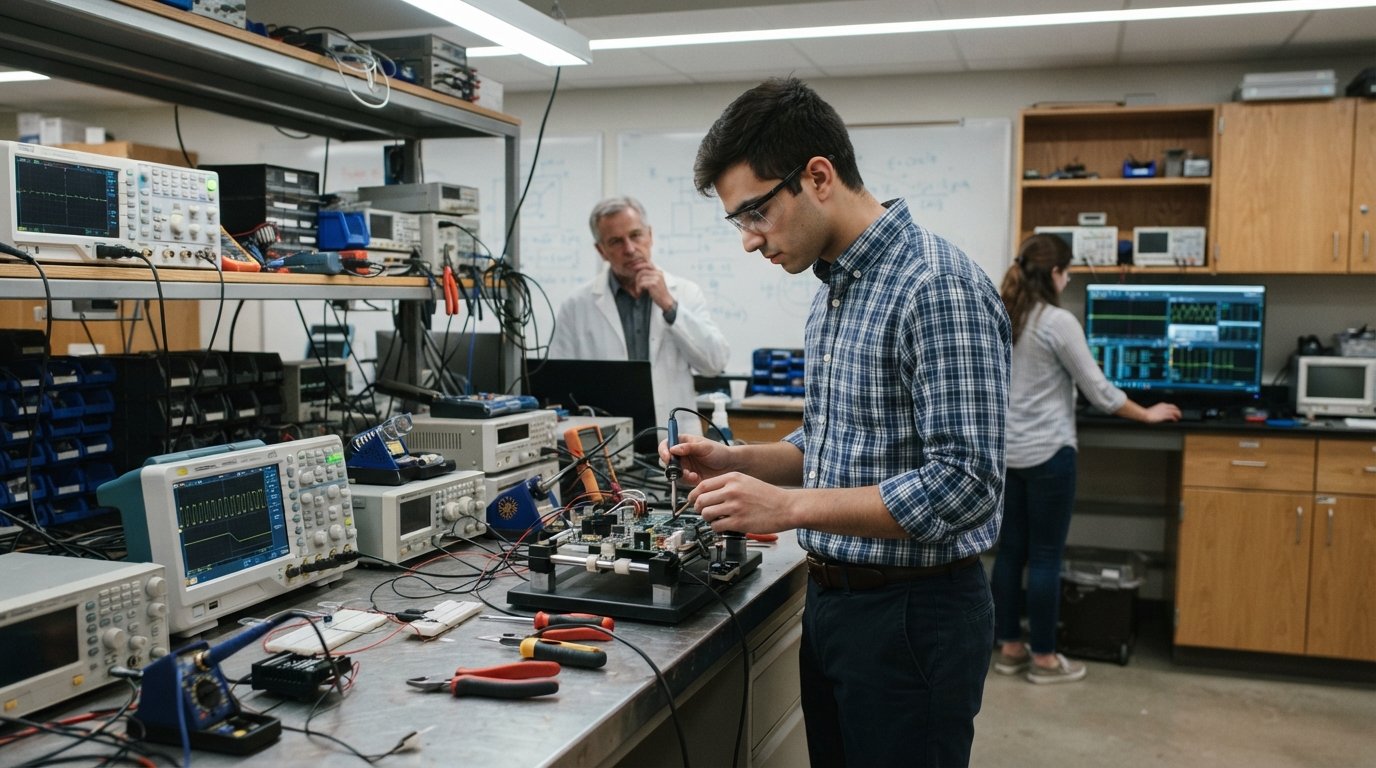
One of the most compelling reasons to choose this format is the immediate access to facilities and faculty. In a lab-based discipline, the value of physically operating oscilloscopes, constructing prototypes, and collaborating with peers cannot be overstated. The in-person environment naturally facilitates study groups, spontaneous problem-solving sessions, and direct mentorship from professors during office hours. This immersive approach builds a professional network and a deep understanding of engineering culture that is harder to replicate in a purely online setting.
Moreover, the four-year timeline provides a structured progression that is both comprehensive and efficient. Each academic year builds upon the previous one, ensuring a solid foundation before tackling advanced topics. For instance, a student cannot fully grasp power electronics without first mastering linear circuits and semiconductor physics. This sequential rigor is a hallmark of the program, ensuring graduates are not only knowledgeable but also possess the critical thinking skills required for professional practice.
Core Curriculum and Specialization Areas
The curriculum for this degree is carefully designed to cover the breadth of the field while allowing for depth in specific areas of interest. Core courses typically include:
- Circuit Analysis and Linear Systems
- Digital Logic and Computer Architecture
- Signals and Systems
- Electromagnetic Fields and Waves
- Electronic Devices and Integrated Circuits
- Control Systems and Robotics
Beyond these fundamentals, students can choose from a variety of technical electives to tailor their education. Case Western is particularly known for its strengths in biomedical engineering applications, where electrical engineering principles are applied to medical imaging, prosthetics, and biosensors. Other popular specialization tracks include communications and networking, power and energy systems, and very large scale integration (VLSI) design. For those interested in the software side, computer engineering courses are readily available, allowing a dual focus.
The program also encourages students to engage in undergraduate research. Whether through the SOURCE (Support of Undergraduate Research and Creative Endeavors) program or by directly joining a professor's lab, this hands-on research experience is invaluable. It allows students to contribute to cutting-edge projects, such as developing algorithms for autonomous vehicles or optimizing the efficiency of solar cells. This research exposure is a significant differentiator for Case Western graduates when applying to graduate schools or competitive industry positions.
Career Outcomes and Industry Connections
Graduates of an Electrical and Electronics Engineering Bachelor's degree, usually 4 years In-person at Case Western Reserve University, are exceptionally well-positioned for the job market. The degree opens doors to a wide range of industries, including consumer electronics, automotive, aerospace, telecommunications, and energy. The title of electrical engineer is versatile, and the analytical and problem-solving skills acquired are transferable to finance, consulting, and technology management roles. According to the U.S. Bureau of Labor Statistics, the median annual wage for electrical and electronics engineers was over $100,000 in 2023, with a projected growth rate that is on par with the national average for all occupations.
Case Western's location in Cleveland's University Circle, a dense concentration of hospitals, research institutes, and tech startups, provides ample internship and co-op opportunities. The university's Career Center has strong relationships with top employers like Rockwell Automation, Sherwin-Williams, and NASA Glenn Research Center. These connections are vital, as many students secure job offers before they even graduate. The program's emphasis on professional development, including resume workshops and career fairs, ensures that students are not only academically prepared but also professionally polished.
For those considering further education, this degree also serves as an excellent foundation for a master's or Ph.D. in electrical engineering, computer science, or a related field. The rigorous coursework and research opportunities prepare students for the demands of graduate-level study. Many graduates choose to pursue advanced degrees to specialize in emerging fields such as quantum computing, artificial intelligence hardware, or advanced materials. The decision to pursue a graduate degree is often influenced by the desire to climb the technical ladder into leadership or research roles, where advanced knowledge is a prerequisite.
Admissions and Prerequisites
Gaining admission to this selective program requires a strong academic record in high school, particularly in mathematics and science. Most successful applicants have taken advanced courses in calculus, physics, and chemistry. The university takes a holistic approach to admissions, considering not only grades and test scores but also extracurricular activities, essays, and letters of recommendation. Demonstrating genuine curiosity and a passion for engineering through projects, clubs, or internships is highly advantageous.
Prospective students should also be aware of the university's general education requirements, which are an integral part of the degree. The SAGES (Seminar Approach to General Education and Scholarship) program is a unique aspect of the Case Western experience. It emphasizes small, discussion-based seminars that develop critical writing and communication skills. While these courses may seem unrelated to engineering, they are crucial for developing the well-rounded perspective and communication abilities that employers highly value in engineers. This integration of liberal arts and technical education is a core strength of a Case Western education.
When comparing this program to others, it is helpful to consider the university's overall rank and reputation. As an institution, Case Western Reserve is often cited among the top national universities. This reputation carries weight with employers and graduate school admissions committees. Furthermore, the return on investment is often discussed in terms of starting salaries and long-term career trajectory. For a detailed comparison of how this on-campus program stacks up against other educational pathways, including those offered online, you might find our analysis of a 4-year on-campus path at another institution to be a useful reference point, though it covers a different field.
Student Life and Campus Resources
Life as an electrical engineering student at Case Western is demanding, but the university provides a robust support system to help students thrive. The campus offers numerous student organizations, including the Institute of Electrical and Electronics Engineers (IEEE) student chapter, which hosts guest speakers, technical workshops, and social events. These organizations provide a sense of community and allow students to develop leadership skills outside the classroom. The university also offers extensive academic support services, such as tutoring centers and study skills workshops, to ensure students have the resources they need to succeed in challenging courses.
The interdisciplinary nature of the university encourages collaboration across departments. As an electrical engineering student, you may find yourself taking classes or working on projects alongside peers in computer science, mechanical engineering, or biology. This cross-pollination of ideas is a fertile ground for innovation and helps students develop a broader perspective. The university's commitment to innovation is also evident in its state-of-the-art facilities, such as the Sears think[box], a massive open-access innovation center that offers 3D printers, laser cutters, and other fabrication tools. This resource is a playground for student inventors and entrepreneurs.
Living in Cleveland also adds a unique dimension to the student experience. The city has transformed into a hub for technology and healthcare, with major companies and startups offering job and internship opportunities. Students can enjoy the cultural offerings of the Cleveland Museum of Art, the excitement of professional sports, and the vibrant food scene, all while being part of a supportive academic community. The balance between rigorous study and a fulfilling personal life is crucial for long-term success, and Case Western's location offers the best of both worlds.
Financial Considerations and Scholarships
Investing in an Electrical and Electronics Engineering Bachelor's degree, usually 4 years In-person at Case Western Reserve University, is a significant financial commitment. Tuition and fees are comparable to other private research universities. However, the university offers a variety of merit-based scholarships and need-based financial aid packages to make education accessible. Many students also participate in the cooperative education (co-op) program, which allows them to alternate periods of full-time study with full-time, paid work in their field. This not only helps offset educational costs but also provides invaluable professional experience.
Prospective students should complete the Free Application for Federal Student Aid (FAFSA) to determine their eligibility for federal loans, grants, and work-study programs. The university's financial aid office is available to help families navigate the process and understand all available options. It is also wise to explore external scholarships from professional organizations, like the IEEE, and local community foundations. A proactive approach to financial planning can significantly reduce the stress associated with college costs.
While exploring options, many students use college matching sites to compare programs and request more information. A valuable resource for this is TopStudents, a platform that connects prospective students with a variety of educational opportunities. Using such tools can help you understand the landscape of electrical engineering programs, although for a program as specific as this one, a direct conversation with the Case Western admissions office is always recommended.
Ultimately, the decision to pursue this degree is a decision to invest in a future of technological innovation. The skills acquired are not just for a first job; they are for a lifetime of adapting to new challenges and leading progress in a field that is central to modern civilization. The blend of a rigorous curriculum, a collaborative campus, and a thriving industrial city creates an environment where the next generation of engineers is forged.