
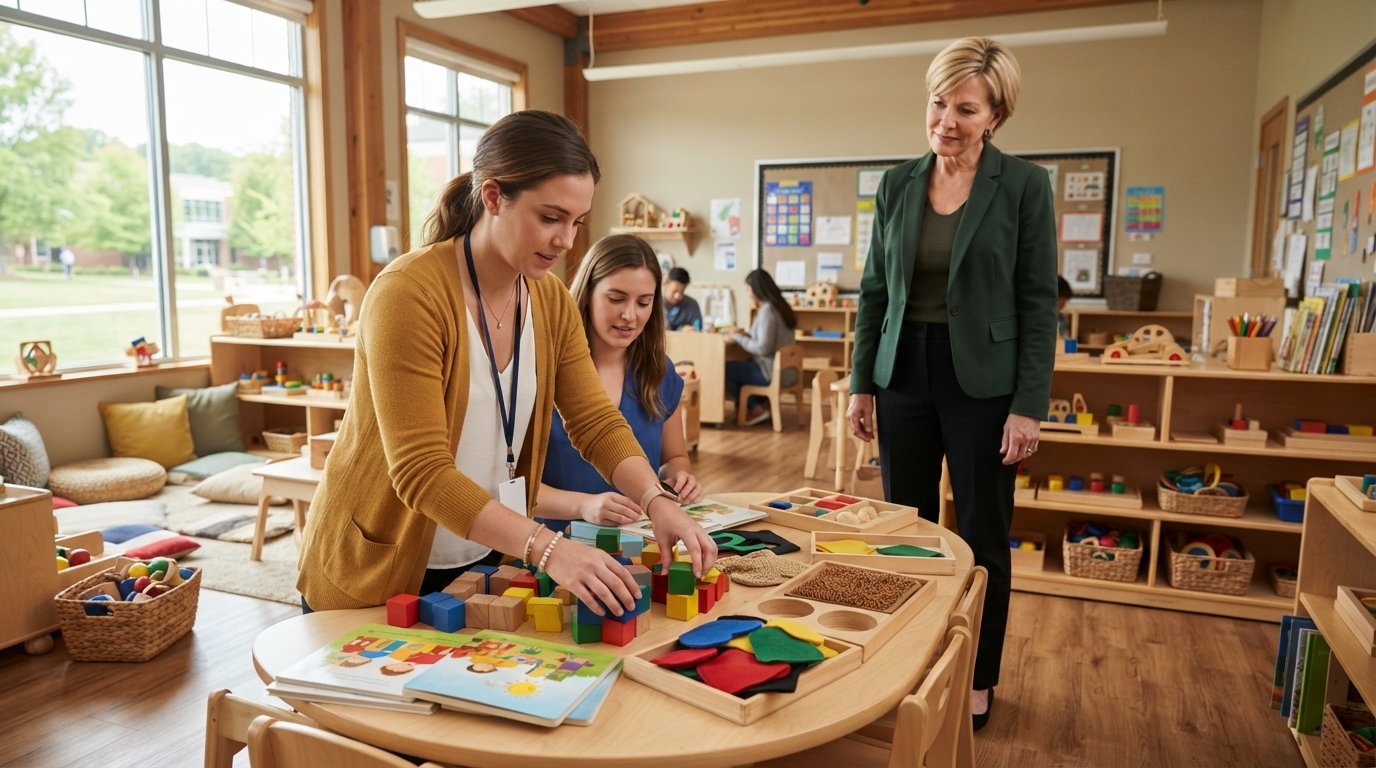
Early Childhood Education Certificate at Centralia College
Earn your Early Childhood Education and Teaching Certificate in less than 12 weeks in person at Centralia College. Start a rewarding teaching career fast.

By Leslie Wulfert
Finding a fast, affordable path into a meaningful teaching career can feel like searching for a needle in a haystack. For people who want to work with young children but cannot commit to a four-year degree right away, Centralia College offers a focused solution: an Early Childhood Education and Teaching Certificate that can be completed in less than 12 weeks of in-person study. This short, stackable credential prepares you for entry-level roles in preschools, child care centers, and early learning programs, and it can serve as a stepping stone toward an associate degree or state teaching certification later on.
If you have been comparing options through an education matching service like HigherEducationAdvisor.com, you already know that program length, format, and cost matter just as much as the subject matter. This article breaks down exactly what the Centralia College certificate involves, who it is designed for, how to enroll, what careers it opens, and how to decide whether an in-person, short-term program fits your life better than an online alternative.
Why a Short In-Person Early Childhood Certificate Makes Sense
Early childhood education is one of the few fields where hands-on experience carries as much weight as classroom theory. Young children learn through play, routine, and relationship-building, and adults who can model those behaviors in real time are in constant demand. A certificate program that meets in person gives you immediate access to that dynamic: you practice guidance techniques with peers, observe child development up close, and receive feedback from instructors who have worked in real classrooms.
Centralia College, located in Centralia, Washington, has built its early childhood program around this practical philosophy. The certificate is not a watered-down version of a degree; it is a concentrated credential that covers the core competencies employers look for when hiring assistant teachers, paraeducators, and family child care providers. Because it takes less than 12 weeks, you can finish during a single academic quarter and enter the workforce or continue your studies without a long gap.
The short timeline also reduces the financial risk that comes with longer programs. Instead of paying for two years of tuition before you know whether the field suits you, you can test the waters, earn a resume-ready credential, and then decide whether to pursue an associate degree in early childhood education or a bachelor's degree in a related area. Many students use this certificate as their first step toward a teaching career and later transfer credits to a four-year institution.
What the Early Childhood Education and Teaching Certificate Covers
The curriculum at Centralia College is designed to align with state early learning guidelines and national best practices. You will study child development from birth through age eight, learn how to design safe and engaging environments, and practice positive guidance strategies that support social-emotional growth. Coursework typically includes health, safety, and nutrition; observation and assessment; and an introduction to working with families and communities.
Because the program is in person, you also get something that online courses cannot fully replicate: live interaction with children and colleagues. Some sections include a practicum or field observation component, where you spend time in a real early learning setting under the supervision of a mentor teacher. That experience is often the difference between graduating with a certificate and graduating with the confidence to lead a classroom.
Here are the core areas the certificate typically addresses:
- Child growth and development from infancy through early elementary years
- Curriculum planning and activity design for diverse learners
- Health, safety, and nutrition practices in group care settings
- Guidance strategies that promote positive behavior and self-regulation
- Family engagement and culturally responsive communication
After completing these courses, you will have a portfolio of skills that maps directly to entry-level job descriptions in child care and preschool settings. You will also be prepared to continue into Centralia College's associate degree program if you choose to deepen your expertise or pursue teacher certification.
Who Should Consider This Certificate
This program is not just for recent high school graduates. It attracts a wide range of learners, including career changers, parents returning to work, and current child care employees who want to formalize their experience with a credential. If you have been working in a daycare or as a nanny and want to move into a lead teacher role, the certificate gives you the documentation employers require.
It is also a strong fit for people who are exploring education as a long-term career but are not ready to commit to a full degree. The in-person format appeals to learners who thrive in structured environments and want face-to-face support from instructors and classmates. If you have struggled with self-paced online courses in the past, a cohort-based, 12-week program can provide the accountability you need to finish.
Finally, the certificate is useful for professionals in adjacent fields, such as social work, speech therapy, or pediatric healthcare, who want a deeper understanding of early childhood development. The knowledge you gain can enhance your current role even if you do not plan to become a full-time teacher.
Admission Steps and Enrollment Timeline
Centralia College makes the admission process for this certificate straightforward, but it still requires planning. Because the program is short and in person, seats fill quickly, and you will need to complete placement and registration steps before the quarter begins. The exact deadlines vary by term, so it is important to check the college's academic calendar as soon as you decide to apply.
The general process looks like this:
- Apply to Centralia College online and obtain your student identification number.
- Submit official transcripts or take placement assessments if required for English and math.
- Meet with an academic advisor or program coordinator to confirm the certificate path.
- Register for the required early childhood education courses for the upcoming quarter.
- Attend any orientation sessions and arrange your in-person schedule, including travel or childcare.
Because the entire certificate takes less than 12 weeks, missing a registration window can push your start date back by an entire term. Prospective students should begin the application process at least one to two months before the quarter starts. Financial aid, workforce training funds, and employer tuition assistance may be available, so ask the college's financial aid office about options early.
Cost, Financial Aid, and Return on Investment
One of the biggest advantages of a short certificate is that it costs far less than a degree. Tuition for a single quarter at a community college is typically a fraction of what a four-year school charges, and you may qualify for grants, scholarships, or workforce development funding that covers most or all of the cost. Centralia College participates in federal and state financial aid programs, and some early childhood educators qualify for specific grants aimed at increasing credential levels in the field.
To estimate your return on investment, compare the cost of the certificate to the wages you can earn after completion. Entry-level early childhood positions in Washington State often start above minimum wage, and lead teachers with credentials earn more. Many employers also offer raises or bonuses when staff complete a certificate or degree, which means the credential can pay for itself within a few months of full-time work.
Keep in mind that costs and aid availability change from year to year. Always confirm current tuition rates, fee schedules, and aid options directly with Centralia College before you enroll. If you are comparing multiple programs, use a college matching site like TopStudents to gather information from several schools side by side and see which ones offer the strongest support for working adults.
Career Outcomes and Next Steps After the Certificate
Graduates of the Early Childhood Education and Teaching Certificate are prepared for roles such as assistant teacher, preschool aide, family child care provider, and paraeducator in public school settings. Some graduates work in Head Start programs, private preschools, or before- and after-school care. The certificate also satisfies some of the credential requirements for child care licensing in Washington State, though specific requirements vary by employer and setting.
If you want to advance further, the certificate stacks into Centralia College's associate degree in early childhood education. From there, you can transfer to a four-year university to earn a bachelor's degree and pursue initial teacher certification. If you are interested in teaching older students or a specific subject, you might explore a Spanish teaching degree at Alma College as a longer-term goal, but the early childhood certificate remains one of the fastest ways to enter the education workforce.
Because the field values continuous learning, many employers support staff who return to school part time. You can work as an assistant teacher while completing your associate degree, which means you earn while you learn and apply new skills immediately in your classroom. That combination of income and experience is difficult to match in longer, full-time degree programs.
In-Person vs. Online: Choosing the Right Format for You
The in-person format at Centralia College is a deliberate choice, not a limitation. Early childhood education is a relational field, and the skills you need, such as redirecting a frustrated toddler, communicating with parents, or setting up a safe learning environment, are best learned through live practice and feedback. Being in a classroom with peers also builds a professional network you can rely on when you start job hunting.
That said, online programs can be a better fit for some learners. If you live far from campus, have unpredictable work hours, or need to study at your own pace, an online certificate may be more practical. The key is to be honest about your learning style and your schedule. A short, in-person program demands consistent attendance for less than 12 weeks, but it rewards you with structure, accountability, and hands-on experience.
If you are unsure which format suits you, request information from multiple schools and ask about attendance requirements, practicum placements, and job placement support. Comparing those details side by side will help you make a decision you can feel confident about.
Earning an Early Childhood Education and Teaching Certificate in less than 12 weeks at Centralia College is an achievable goal for anyone who is ready to invest a single quarter in their future. The program is short, affordable, and grounded in real classroom practice, and it opens doors to meaningful work with young children. Whether you stop there or continue toward a degree, the credential gives you a fast start and a clear path forward.