
Culinary Arts Certificate at COCC: 1-Year Guide
A practical look at the one-to-two-year culinary certificate at Central Oregon Community College, including skills, admission, costs, and career outcomes.

By Irene Ellis
If you love working with food and want to turn that passion into a career without committing to a four-year degree, a focused, hands-on certificate can be the smartest first step. The Cooking and Related Culinary Arts, General Certificate, 1 year to less than 2 years In-person at Central Oregon Community College is designed for exactly that kind of learner: someone who wants practical kitchen skills, real-world experience, and a fast path to entry-level employment or further study. This guide breaks down what the program covers, who it is for, how to enroll, and what you can realistically expect from a certificate that takes roughly twelve to twenty-four months to complete.
What This Culinary Certificate Program Actually Is
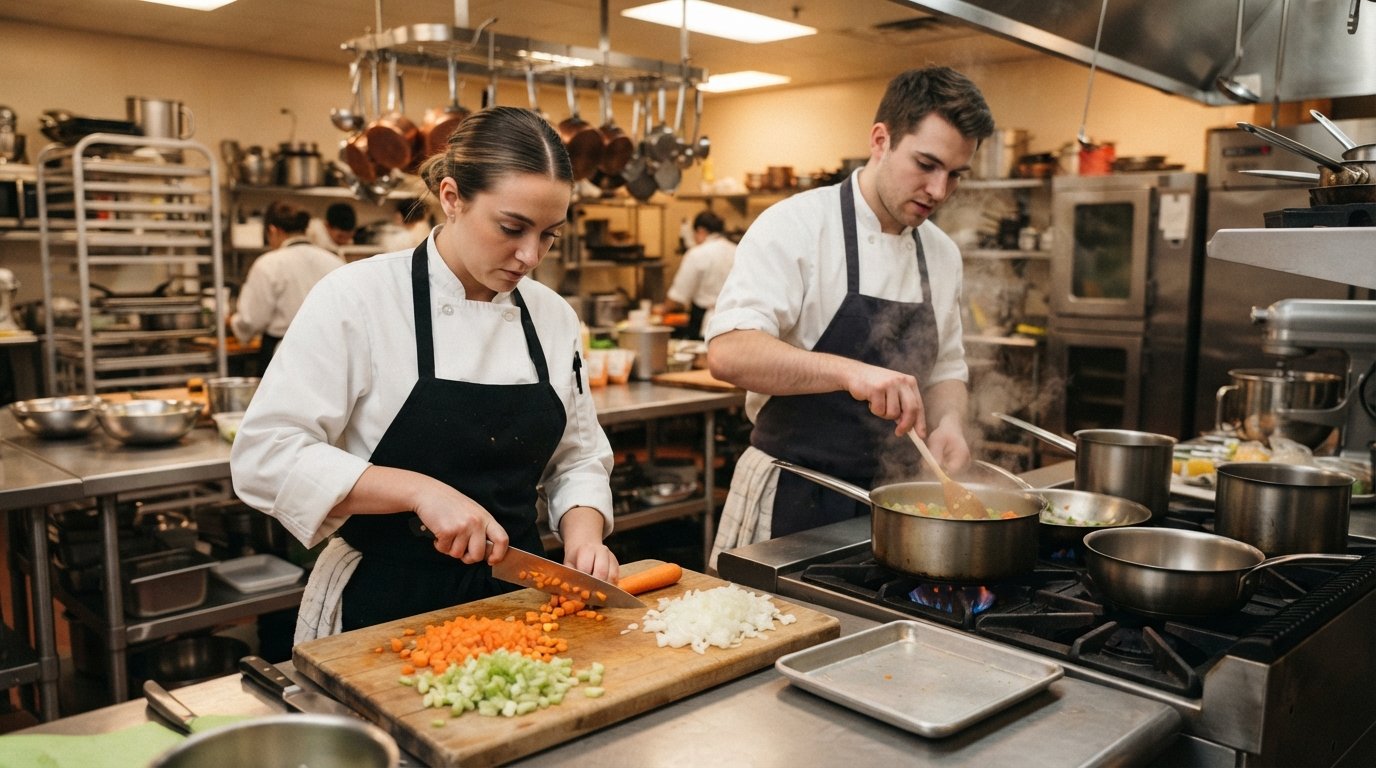
The Cooking and Related Culinary Arts, General Certificate, 1 year to less than 2 years In-person at Central Oregon Community College is a credit-bearing vocational credential, not a full associate degree. It is built around the core competencies that professional kitchens demand: knife skills, food safety and sanitation, stocks and sauces, baking fundamentals, menu planning, cost control, and teamwork under pressure. Because it is delivered entirely in person, students spend substantial time in instructional kitchens and, in many cases, in supervised work experiences or practicums that mirror the pace of a real restaurant or food service operation.
The certificate is classified as a one-year to less-than-two-year program, which means full-time students can often finish in two to four academic quarters, depending on course sequencing and availability. Part-time learners may stretch it out, but the in-person requirement means scheduling flexibility is limited compared with online options. The credential is designed to stack: many culinary certificates articulate into an associate of applied science degree in culinary arts, so graduates who later want management training or advanced pastry work can continue without starting over.
Central Oregon Community College is located in Bend, Oregon, a region with a thriving food scene, farmers markets, craft food producers, and a hospitality sector that hires year-round. That local context matters. In-person culinary training at COCC benefits from proximity to working chefs, caterers, and food businesses that often serve as guest instructors, internship hosts, or employers for graduates. The program is not just textbook instruction; it is embedded in a community where food is part of the economy.
Who Should Consider This In-Person Certificate
This program fits several distinct types of students, and understanding which profile matches you will help you decide whether it is the right investment of time and tuition. The most common applicants are high school graduates who want to enter the workforce quickly, career changers who have discovered a passion for cooking later in life, and hospitality workers who want formal credentials to move from front-of-house roles into the kitchen. Adult learners returning to school also enroll, often because the certificate is shorter and more applied than a traditional degree.
You should think carefully about the in-person requirement. Unlike online culinary programs, which rely on video demonstrations and home-kitchen assignments, this certificate requires you to attend labs and kitchen sessions on campus or at partner facilities. That means relocation, commuting, or a schedule that accommodates daytime classes may be necessary. If you need maximum flexibility because of work or family obligations, a hybrid or online program might be a better fit, and resources such as the online and campus degree options at CheapOnlineEducation can help you compare alternatives before you commit.
Here are the key traits that tend to predict success in this kind of program:
- Comfort working on your feet for extended periods in a hot, fast-paced environment.
- Willingness to accept direct, sometimes blunt feedback from instructors and peers.
- Reliability and punctuality, since kitchen labs depend on every station being staffed.
- Genuine curiosity about food systems, sourcing, and seasonal ingredients.
If those descriptions sound like you, the certificate can be a strong fit. If you are unsure whether you want to cook professionally or simply improve your home cooking, consider a single community education course first. The certificate is a career credential, and it is assessed accordingly: attendance, knife work, sanitation practices, and production speed all count toward your grade.
Core Skills and Coursework You Can Expect
While specific course titles and credit hours vary by catalog year, the general certificate in cooking and related culinary arts at COCC follows a recognizable pattern across culinary schools. Early coursework builds foundational safety and technique. You will likely complete a sanitation and food safety course aligned with industry certification standards, followed by introductory cooking labs that cover knife skills, mise en place, moist and dry heat cooking methods, and basic stock and sauce production. These early classes are where habits form, and instructors tend to be rigorous about cleanliness, organization, and timing.
As you progress, the curriculum broadens into baking and pastry fundamentals, meat and seafood fabrication, garde manger (cold kitchen and charcuterie), and nutrition or menu design. Many programs also include a cost control or purchasing component, because entry-level cooks are often promoted faster when they understand food cost percentages and inventory. A capstone or practicum experience is common, placing students in a working kitchen where they apply what they have learned under professional supervision.
Expect a mix of lecture and lab, with the balance weighted toward hands-on production. Assessment is typically skills-based: you will be observed and graded on your technique, your station organization, your ability to work cleanly, and your contribution to a team. Written exams matter, especially in sanitation and theory courses, but the heart of the program is the kitchen. Students who thrive are those who treat every lab as a shift and every dish as a product for a paying customer.
Admission Steps and Enrollment Process
Community college culinary programs generally have accessible admission requirements, but they are not automatic. You will need to apply to Central Oregon Community College, submit transcripts or demonstrate college readiness in math and writing, and complete any placement steps the college requires. Because this is a limited-entry or cohort-based program in many cases, there may be additional application materials, an advising appointment, or a prerequisite course such as an introductory foods class. Check the current catalog and speak with a program advisor early, since kitchen labs fill and sequencing matters.
Here is a practical sequence to follow if you are serious about enrolling:
- Apply to COCC and establish residency and financial aid eligibility.
- Meet with a culinary program advisor to confirm prerequisites and lab availability.
- Complete any required placement testing or prerequisite coursework.
- Register for first-term courses as soon as the registration window opens.
- Attend orientation and purchase or rent required uniforms, knives, and safety gear.
Costs beyond tuition include a chef coat, apron, non-slip shoes, a knife kit, and possibly a set of small tools. Some programs bundle these through a campus bookstore, while others provide a list. Budget for them early, because showing up to a kitchen lab without proper attire can prevent you from participating. Financial aid, scholarships, and workforce grants may apply to certificate programs, so complete the FAFSA and ask the financial aid office about culinary-specific funding.
How the Certificate Compares With a Culinary Degree
Prospective students often ask whether a certificate is enough or whether they should pursue an associate degree. The honest answer depends on your goal. The certificate is designed for speed and entry-level competence. It gets you into a professional kitchen faster and at lower total cost than a two-year degree. If your objective is to work as a line cook, prep cook, baker, or catering assistant within a year or so, the certificate is the efficient route.
An associate of applied science in culinary arts typically adds management coursework, advanced pastry, beverage and cost control classes, and a longer externship. It can position you for supervisory roles sooner, but it also takes longer and costs more. Many students start with the certificate and return for the degree once they are working and have employer tuition support. That stacking approach is common and sensible, and it is worth asking the college whether your certificate credits transfer directly into the AAS program.
There is also a broader question of fit. If you are still exploring whether college is the right path at all, it helps to understand how different credentials compare. For example, our guide to a four-year psychology bachelor's degree pathway illustrates how longer programs are structured, which can clarify why a one-to-two-year certificate is a very different commitment. Neither path is better in the abstract; they serve different goals, timelines, and budgets.
Career Outcomes and Local Opportunities
Graduates of in-person culinary certificates typically enter the workforce in entry-level kitchen roles: line cook, prep cook, pantry cook, baker's assistant, catering staff, or food service worker in hotels, resorts, hospitals, schools, and independent restaurants. Central Oregon's hospitality sector, including Bend's restaurant scene and the region's resort and event venues, provides a steady demand for reliable, trained kitchen staff. Wages vary by role and season, and the certificate does not guarantee a specific salary, but it does signal to employers that you have been trained in sanitation, technique, and professional kitchen culture.
Career advancement in culinary arts depends heavily on performance, reliability, and willingness to learn. Cooks who show up consistently and master their station often move into lead cook or sous chef roles within a few years, especially in high-turnover environments. Some graduates branch into food entrepreneurship, catering, food trucks, or value-added food production. Others continue their education toward management, dietetics, or hospitality administration. The certificate is a foundation, not a ceiling.
It is important to be realistic about the physical demands and schedule. Kitchens involve evenings, weekends, holidays, and heat. The certificate program simulates those conditions, which is one reason in-person training is valuable: it gives you an honest preview of the work before you invest further. If you complete the program and still enjoy the pace, you are well positioned to succeed.
Paying for the Program and Avoiding Surprises
Tuition for a one-to-two-year certificate is significantly lower than a bachelor's degree, but it is not trivial. Oregon community college tuition varies by residency, and program fees, tools, and uniforms add to the total. The most reliable approach is to build a written budget before you register: tuition per term, fees, books, knife kit, uniform, transportation or relocation costs, and living expenses. Then compare that total against the entry-level wages you expect in your local market.
Financial aid options for certificate programs include federal Pell Grants, state grants, institutional scholarships, and workforce development funding. Some students qualify for trade adjustment assistance or employer tuition reimbursement if they are already working in food service. The college financial aid office can explain which grants apply to non-degree certificate programs, since rules differ from bachelor's degree funding. Ask specifically about culinary scholarships and any foundation funds available through COCC.
Do not overlook the cost of not finishing. Certificate programs have relatively high completion rates when students are prepared, but lab-based programs penalize absences. Missing too many kitchen sessions can force a retake, which adds cost. Treat the program like a job from day one, and your return on investment improves substantially.
Questions to Ask Before You Enroll
Before committing, schedule a conversation with a program advisor and ask direct questions. The answers will tell you more than any brochure. Useful questions include: How many students are admitted each term? What is the graduation and job placement rate for recent cohorts? Are labs offered in the evening, or only daytime? Does the program include an externship, and who arranges it? Do certificate credits transfer into the associate degree? What uniforms and tools are required, and what do they cost? Is there a waitlist, and how long is it typically?
It also helps to visit campus, tour the kitchens, and speak with current students if possible. In-person programs are experiential, and the culture of the kitchen classroom matters. A program with strong instructor mentorship and industry connections will serve you better than one with newer equipment but weak placement support. Central Oregon Community College has the advantage of a local food economy that hires its graduates, so ask about employer relationships and advisory board involvement.
Finally, compare the certificate against alternatives honestly. If flexibility is your top priority, an online or hybrid program may fit better. If cost is the deciding factor, compare total program cost including tools and living expenses. If speed matters most, confirm the actual time to completion with an advisor rather than relying on the catalog range. The Cooking and Related Culinary Arts, General Certificate, 1 year to less than 2 years In-person at Central Oregon Community College is a strong option for the right student, but the right student is one who has done the homework.
For prospective students who want to explore related programs, compare schools, or request information from participating institutions without any obligation, education matching services can simplify the search. The key is to use them as a starting point, verify every detail with the college directly, and make a decision that matches your budget, schedule, and career goals. A culinary certificate is a practical, respected credential, and for many people it is the fastest route from a love of cooking to a professional kitchen.