
Collin College OSH Technician Certificate: 12-Week Career Path
The Occupational Safety and Health Technology/Technician Certificate at Collin College can be completed in 12 weeks to under a year, in person and career-focused.

By Amelia Carter
Safety incidents cost American businesses billions every year, and the demand for trained professionals who can prevent them continues to grow. If you are looking for a fast, hands-on route into this field, the Occupational Safety and Health Technology/Technician Certificate, 12 weeks to less than 1 year In-person at Collin County Community College District offers a focused pathway. This program is designed for people who want practical skills without committing to a multi-year degree, and it can prepare you for entry-level roles in construction, manufacturing, healthcare, and other industries where workplace safety is a daily priority.
Collin County Community College District, often called Collin College, serves students across North Texas with campuses in McKinney, Plano, Frisco, and other communities. The in-person format of this certificate means you will spend time in labs and classrooms working directly with equipment, instructors, and classmates. For many adult learners and career changers, that hands-on environment is exactly what makes the difference between reading about safety regulations and actually applying them on a job site.
What the Occupational Safety and Health Technician Certificate Covers
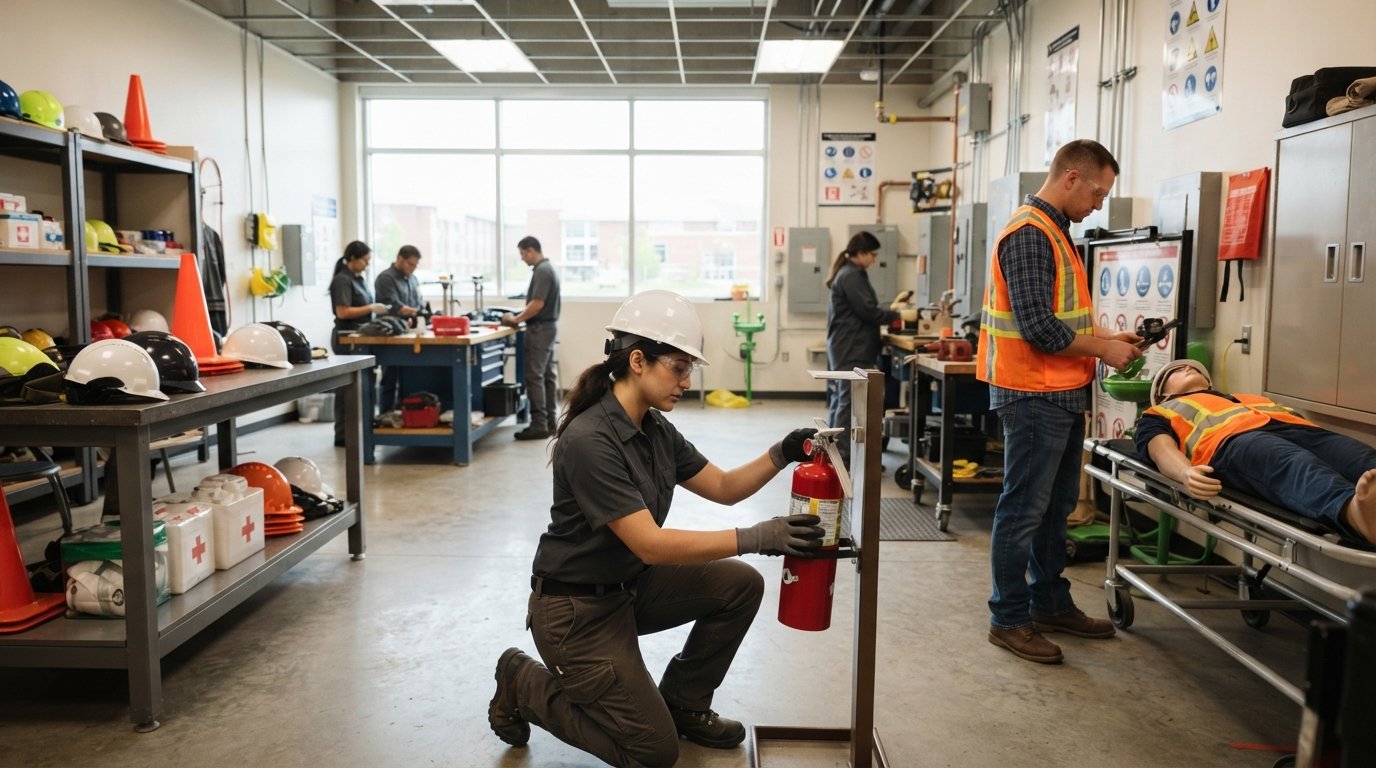
The certificate program is built around the core competencies that safety technicians need on day one. You can expect coursework in hazard identification, OSHA regulations, industrial hygiene basics, emergency response planning, and incident investigation. Rather than treating these as abstract topics, the in-person format lets instructors demonstrate real scenarios, from proper lockout/tagout procedures to the correct way to document a near-miss.
Because the program can be completed in as little as 12 weeks and no longer than one year, it is structured for momentum. You are not spending semesters on general education requirements that do not connect to the job. Instead, the curriculum focuses on technical skills that employers in high-risk industries actually screen for during hiring.
Here is a sample of the skill areas typically emphasized in an occupational safety technician certificate:
- OSHA standards and compliance documentation
- Workplace hazard assessment and control methods
- Personal protective equipment selection and training
- Incident reporting, root cause analysis, and recordkeeping
- Emergency action plans and safety committee participation
Each of these areas maps to tasks that safety technicians perform regularly. For example, a technician might spend a morning inspecting a warehouse for fall hazards, an afternoon updating OSHA 300 logs, and the next day leading a toolbox talk on machine guarding. The certificate is designed to give you familiarity with all of these responsibilities so you can step into a role and contribute quickly.
Why the In-Person Format Matters for Safety Training
Online education has opened doors for many students, but safety training has a physical dimension that is hard to replicate through a screen. When you learn to inspect a fall protection harness, calibrate a gas monitor, or walk through a mock confined space, you benefit from immediate feedback. An instructor can correct your grip, point out a missed tag, or explain why a particular ventilation setup fails in practice.
The in-person requirement at Collin College also creates natural networking opportunities. Your classmates are likely to include people already working in construction, facilities management, or manufacturing who are upgrading their credentials. Those conversations often lead to job leads, mentorship, and a clearer sense of which industries are hiring in the North Texas region.
For students who are comparing formats, it helps to think about how you learn best. If you thrive on structure, direct access to instructors, and the ability to practice with equipment, the in-person certificate is a strong fit. If you need maximum flexibility because of work or family obligations, you may want to ask the program coordinator about scheduling options, since the 12-week to one-year window can sometimes accommodate different course loads.
Admission Steps and What to Expect
Community college certificate programs are generally designed to be accessible, but there are still steps to complete before you enroll. At Collin County Community College District, the process typically begins with applying to the college, submitting transcripts or proof of prerequisites if required, and meeting with an advisor who can confirm the specific start dates and course sequence for the safety technician certificate.
Because the program is in-person, you will also need to plan for travel to campus and for any lab fees or equipment costs that may apply. These costs vary, so it is important to request a current cost sheet from the college rather than relying on general estimates. Financial aid, workforce grants, and employer tuition assistance may be available, and an advisor can help you identify which options apply to your situation.
A practical sequence for most prospective students looks like this:
- Confirm the certificate is currently accepting new students and note the application deadline.
- Complete the college application and any placement or prerequisite steps.
- Meet with an academic advisor to map out the 12-week to one-year completion plan.
- Review costs, payment options, and any available workforce funding.
- Register for classes and arrange your schedule around the in-person lab sessions.
Following these steps in order reduces the risk of missing a deadline or discovering a cost late in the process. It also gives you a chance to ask specific questions, such as whether the certificate stacks into an associate degree later if you decide to continue your education.
Career Outlook and Where Graduates Work
Safety technicians are employed across a wide range of industries, and the certificate is not tied to a single employer type. Graduates may find entry-level opportunities as safety coordinators, field safety technicians, environmental health and safety assistants, or compliance support staff. Construction firms, manufacturing plants, logistics warehouses, hospitals, and municipal agencies all maintain safety functions that need trained personnel.
Job titles and pay vary by region and experience, so it is wise to research current postings in the Dallas-Fort Worth area before enrolling. You can also ask the college about job placement support, internship connections, and employer partnerships that may help you transition from the certificate into a paid role. For readers who want to compare this pathway with other hands-on trade programs, our guide to the Collision Repair Technician Certificate at Baton Rouge Community College offers a useful point of comparison for how short-term technical training translates into employment.
It is important to keep expectations realistic. A certificate does not guarantee a job, and some employers prefer candidates with additional certifications such as the OSHA 30-hour card or first aid/CPR training. The advantage of the Collin College program is that it gives you a structured foundation and a credential you can build on, rather than requiring you to assemble scattered courses on your own.
Comparing Your Options and Next Steps
Before committing to any program, it helps to compare several factors side by side: total cost, time to completion, format, and the support services available. The Occupational Safety and Health Technology/Technician Certificate, 12 weeks to less than 1 year In-person at Collin County Community College District is distinctive because of its short timeline and hands-on delivery, but it may not be the only option in your area.
Prospective students who want to explore a broader range of programs can use matching services to see what else is available. Platforms such as CheapOnlineEducation help learners browse sponsored programs by subject and state, compare listings, and request information from schools without any obligation to apply. That kind of low-pressure research can be valuable when you are deciding whether an in-person certificate or an online alternative better fits your life.
As you evaluate the Collin College certificate, ask direct questions about completion rates, instructor credentials, lab equipment, and whether the college helps students prepare for industry certifications. These details matter more than marketing language, and a good advisor will welcome the questions. You should also confirm current tuition and fees directly with the college, since published figures can change and may not include everything.
Finally, think about how the certificate fits into a longer career plan. Some graduates use it as a stepping stone toward an associate degree in occupational safety and health, while others use it to qualify for a promotion within their current company. Either way, the 12-week to one-year timeline means you can test the field relatively quickly and decide whether to invest further. If you are ready to take the next step, contact Collin County Community College District to confirm start dates and speak with an advisor about your goals.