
Biola University General Education Beyond a Bachelor's
Explore in-person graduate degrees, credentials, and certificates at Biola University and learn how to choose the right path beyond your bachelor's.

By Owen Adler
Finishing a bachelor's degree is a milestone, but for many adults the question that follows is more interesting than the one that came before it. What comes after the cap and gown? At Biola University, a private Christian institution in La Mirada, California, the answer often involves continuing in person, in a classroom, with professors and peers who know your name. General education beyond the bachelor's degree at Biola is not a single program but a family of pathways: graduate degrees, teaching credentials, certificates, and non-degree coursework that build on a completed undergraduate record. If you are weighing whether another credential is worth the time and tuition, this guide walks through what Biola actually offers, how the in-person format works, and how to decide whether it fits your goals.
What General Education Beyond a Bachelor's Degree Means at Biola
The phrase can be confusing because "general education" usually describes the broad liberal arts core inside an undergraduate degree. In the post-baccalaureate context, it refers to the general category of advanced study available to someone who already holds a bachelor's degree. At Biola, that category is broad. You can pursue a master's degree in fields such as education, psychology, business, or theology. You can complete a teaching credential program if you want to enter a classroom. You can take graduate-level courses for professional development without committing to a full degree, and in some cases you can pursue a second bachelor's degree or a certificate.
What ties these options together is the delivery format. Biola has a long history of residential, in-person instruction at its Southern California campus, and many of its advanced programs are designed around face-to-face cohorts. That matters for students who learn best in a structured environment with scheduled class meetings, direct access to faculty, and the accountability that comes from seeing the same classmates week after week. It also matters for fields where hands-on practice, supervised fieldwork, or clinical hours are part of the credential.
Biola is regionally accredited, which is a baseline expectation for any graduate program you consider. Accreditation affects whether credits transfer, whether employers recognize a credential, and whether you can sit for licensure exams in fields like teaching or counseling. Before you apply anywhere, confirm the specific program's accreditation and any state licensing requirements that apply to your career target.
Programs Available Beyond the Bachelor's at Biola
Biola's advanced offerings cluster into a few recognizable areas. The largest is education. The School of Education offers master's degrees, credentials, and certificates for teachers, administrators, and others who work in schools or community organizations. These programs are popular with working educators who need to move up the salary schedule or qualify for administrative roles, and they are also a route into teaching for career changers who already hold a bachelor's degree in another field.
Beyond education, Biola offers graduate study in psychology, including programs that prepare students for counseling and related roles, as well as business and management programs through its school of business. Theology and ministry programs are central to the university's mission, and they attract students preparing for pastoral work, nonprofit leadership, or further academic study. Certificate programs and individual graduate courses round out the picture for students who want targeted skills without a multi-year commitment.
Here is a practical way to sort the options by intent:
- Credentialing: teaching credentials and licensure-oriented programs that qualify you for a specific role.
- Advancement: master's degrees that support promotion, salary increases, or a shift into leadership.
- Career change: programs designed for adults whose bachelor's degree is in a different field.
- Enrichment: certificates and individual courses for skills and knowledge without a full degree.
Each path has different admission requirements, timelines, and costs. A credential program may take a year or less of full-time study, while a master's degree typically spans two to three years for part-time students. Certificate programs can be completed in a semester or two. The right choice depends less on prestige than on what the credential actually unlocks for you.
Why the In-Person Format Matters
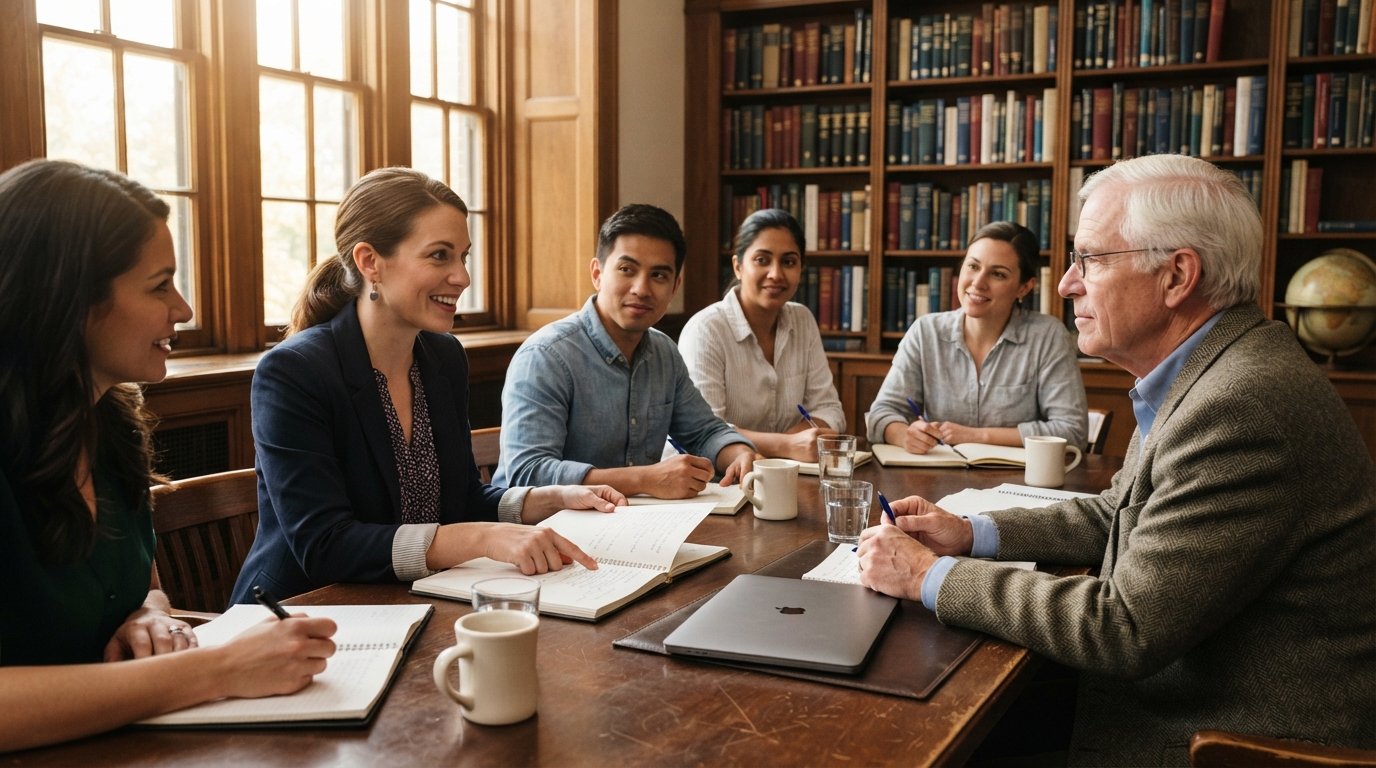
Online education has expanded access dramatically, and for many adult learners it is the only realistic option. Still, in-person study at a residential campus offers advantages that are hard to replicate on a screen. The most obvious is structure. When you commute to a classroom, you protect that time for learning. When you sit across from a professor, you get immediate feedback. When you work through a difficult concept with classmates in the same room, you build relationships that often outlast the course.
For certain fields, in-person instruction is not just nice to have but necessary. Teacher preparation involves supervised fieldwork in real classrooms. Counseling programs include practicum hours and role-play exercises that depend on live interaction. Ministry formation includes chapel, mentorship, and community life. If your target credential requires supervised practice, ask early how much of it is arranged by the university and how much you are responsible for setting up.
There is also the matter of cohort culture. Many Biola graduate programs enroll students in cohorts that move through the curriculum together. That design builds professional networks and peer support, and it is one reason alumni often describe their graduate experience in terms of relationships rather than coursework alone. If you thrive in that kind of environment, an in-person program may be worth the commute.
If you are still exploring online options alongside campus programs, a matching service such as CheapOnlineEducation lets prospective students browse sponsored online and campus degree programs by subject or state and request information from schools with no obligation to apply. It is a useful way to compare formats before you commit to a campus commute.
Admission Requirements and How to Prepare
Admission to Biola's post-baccalaureate programs generally requires a completed bachelor's degree from a regionally accredited institution, a minimum GPA that varies by program, and application materials that typically include transcripts, a personal statement, and letters of recommendation. Some programs require standardized test scores, though many have moved away from that requirement in recent years. Education credential programs often ask for evidence of subject-matter competence, which can be demonstrated through coursework or exams.
Preparation starts well before the application deadline. Request official transcripts early, because processing can take weeks. Identify recommenders who can speak to your work ethic and fit for the field, and give them plenty of notice. Write your personal statement around a specific goal rather than generic enthusiasm; admissions committees read hundreds of essays and remember the ones that explain why this program, at this university, at this point in your life.
For students coming from a different undergraduate field, bridge coursework may be required. A career changer entering a teaching credential program may need to complete subject-matter courses before student teaching. A psychology applicant without a psychology background may need prerequisite courses in statistics or research methods. Ask an admissions counselor for the exact list rather than guessing, and build those prerequisites into your timeline.
Cost, Financial Aid, and Return on Investment
Graduate study is an investment, and Biola is a private university, so tuition is higher than at public institutions. That does not automatically make it the wrong choice. Private universities often offer institutional scholarships, graduate assistantships, and payment plans that reduce the sticker price, and some programs have partnerships with school districts or employers that provide tuition support. The key is to ask specific questions about aid before you enroll, not after.
Financial aid for graduate students differs from undergraduate aid. Federal loans are generally available, but Pell Grants are not. Many students rely on a combination of employer tuition assistance, institutional scholarships, and part-time work. If you are a teacher, check whether your district offers reimbursement for approved graduate coursework, and check whether the program qualifies for public service loan forgiveness if you plan to work in public education or nonprofit settings.
To estimate return on investment, compare the total cost of the credential with the salary or career difference it enables. A teaching credential that moves you from an aide role to a lead teacher role may pay for itself quickly. A master's degree that moves you up a district salary schedule has a predictable payoff. A degree taken purely for personal enrichment has value too, but it should be budgeted as enrichment rather than as a career investment.
Alternative Pathways and How to Compare Them
Biola is one option among many, and the right choice depends on your field, your location, and your learning style. Public universities in California and elsewhere offer comparable graduate programs at lower tuition, though admission can be more competitive and cohort sizes larger. Online programs offer flexibility that in-person study cannot match. Certificate programs can deliver targeted skills faster than a full degree.
When comparing programs, look beyond tuition. Consider time to completion, scheduling format, fieldwork requirements, licensure pass rates, and alumni outcomes. Ask each program for the same set of data so you can compare apples to apples. If you are interested in teaching specifically, resources such as this guide to history teacher education at Ferris State show how one undergraduate pathway is structured, which can help you understand what a credential program builds on.
It also helps to visit. Sit in on a class if the program allows it, talk to current students, and walk the campus. In-person programs are experienced in person, and a visit will tell you more about fit than any brochure.
Making the Decision
Deciding whether to pursue general education beyond a bachelor's degree at Biola comes down to three questions. First, what does the credential actually unlock? If the answer is a specific license, a salary schedule, or a role you cannot access otherwise, the case is strong. Second, can you sustain the time and cost? Part-time study spread over two or three years is often more realistic than a full-time sprint. Third, does the format fit how you learn and live? In-person study offers structure and community, but it requires a commute and a schedule that accommodates daytime or evening classes.
Answer those questions honestly, gather the program data you need, and talk to an admissions counselor before you apply. Biola's in-person advanced programs are built for students who want depth, mentorship, and a cohort experience, and for the right student that combination is worth the investment.