
Auto Mechanics Certificate at Clovis Community College
The Automobile/Automotive Mechanics Technology/Technician Certificate at Clovis Community College delivers hands-on training for entry-level technician jobs in under two years.

By Margaret Reis
A career under the hood does not require four years of college. For students who want to diagnose engines, repair brakes, and service modern vehicles without a long degree timeline, the Automobile/Automotive Mechanics Technology/Technician Certificate, 1 year to less than 2 years In-person at Clovis Community College offers a fast, hands-on pathway into one of the most durable skilled trades in the country. This program packs shop-floor training into a compact schedule, giving graduates a credential they can take straight to dealerships, independent garages, fleet shops, and service chains.
If you are weighing a career change, finishing high school, or simply tired of desk work, an automotive certificate can be one of the most practical investments you make. The Bureau of Labor Statistics projects steady demand for automotive service technicians and mechanics, largely because the number of vehicles on the road keeps growing even as older technicians retire. Employers increasingly prefer formal training over informal apprenticeship alone, which is exactly what a structured certificate delivers.
What the Automotive Mechanics Certificate Covers
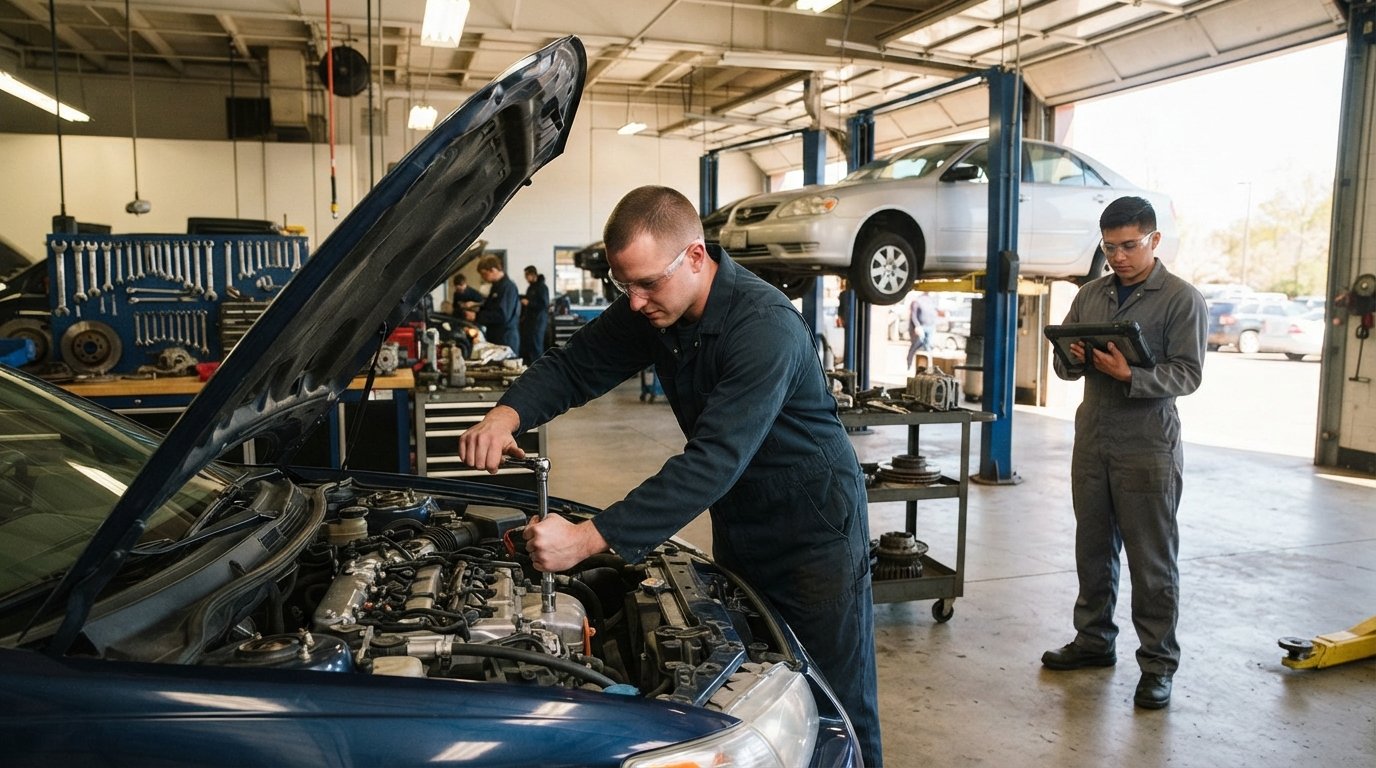
The Automobile/Automotive Mechanics Technology/Technician Certificate, 1 year to less than 2 years In-person at Clovis Community College is built around the core systems every technician must master. Coursework typically blends classroom theory with substantial lab time in a supervised shop, so you are not just reading about a transmission, you are pulling one apart. Because the program is delivered in person, you get direct access to lifts, diagnostic scan tools, engines on stands, and instructors who can correct your technique in real time.
Most automotive certificate programs at this level cover a predictable but essential set of competencies. You can expect to study engine repair, automatic and manual transmissions, suspension and steering, brakes, electrical and electronic systems, heating and air conditioning, and engine performance. Many programs also introduce students to hybrid and electric vehicle fundamentals, since modern shops increasingly service battery-electric and hybrid models alongside gasoline engines.
Here is a quick look at the kinds of skills a one-year to two-year automotive certificate is designed to build:
- Diagnosing engine performance problems using scan tools and oscilloscopes
- Repairing and replacing brake systems, including ABS components
- Servicing steering, suspension, and alignment systems
- Troubleshooting electrical circuits, batteries, starters, and charging systems
- Performing maintenance such as oil changes, fluid flushes, and belt replacements
That list is not exhaustive, and specific course titles vary by catalog year. Always confirm current course requirements directly with the college, since automotive technology programs frequently update their curriculum to match new vehicle platforms. What matters most is that the certificate is structured to move you from basic maintenance to complex diagnostics in a relatively short window.
Why In-Person Training Matters in This Trade
You can learn a lot from videos and simulations, but you cannot feel a warped brake rotor through a screen. Hands-on, in-person instruction is especially important in automotive mechanics because so much of the job depends on physical judgment: torque feel, sound diagnosis, visual inspection of worn parts, and safe handling of heavy components. The Automobile/Automotive Mechanics Technology/Technician Certificate, 1 year to less than 2 years In-person at Clovis Community College is designed precisely for students who want that tactile, supervised learning environment.
In-person programs also tend to build stronger employer relationships. Local shops, dealerships, and fleet operations often recruit directly from community college automotive programs because they know the training aligns with regional workforce needs. Instructors who have worked in the field can serve as references, recommend students for entry-level jobs, and sometimes connect learners with paid internships or part-time shop work while they finish the certificate.
Another advantage is access to equipment you likely do not own. A well-equipped college shop gives students time on alignment racks, tire balancers, diagnostic platforms, and lift systems that would cost thousands to replicate at home. That exposure shortens the adjustment period when you move into a paid position.
Admission Requirements and What to Expect
Community college automotive certificate programs are generally open-access, meaning you do not need a competitive GPA or SAT scores to enroll. Most students begin by applying to the college, completing placement or assessment steps, and meeting with an academic advisor to map out the certificate sequence. Because the program is in person, you should also plan for a schedule that includes daytime or evening lab blocks, depending on what the college offers that term.
Before you register, it helps to confirm a few practical details with the college:
- Whether the certificate is eligible for federal financial aid or workforce grants
- Estimated total cost of tuition, fees, tools, and textbooks
- Required safety gear, such as boots, safety glasses, and gloves
- Typical course load per semester and total program length
- Whether any courses transfer toward an associate degree later
Tool costs deserve special attention. Some programs loan tools for lab use, while others expect students to build their own set over time. Ask the department directly so there are no surprises halfway through the semester. It is also worth asking whether the certificate stacks into a longer degree, because many graduates eventually return for an associate degree to qualify for advanced technician or management roles.
Career Outcomes After Earning the Certificate
Graduates of a one-year to two-year automotive certificate typically enter the workforce as entry-level technicians, lube technicians, tire and brake specialists, or service advisors in training. From there, advancement depends on skill, certifications, and willingness to keep learning. Many technicians pursue Automotive Service Excellence (ASE) certifications after gaining work experience, and those credentials can raise pay and open doors to specialty roles.
Employers that hire certificate holders include new-car dealerships, independent repair shops, tire and service chains, municipal and government fleets, trucking companies, rental agencies, and large retail operations with their own vehicle fleets. Some graduates also move toward parts departments, service writing, or shop ownership over time. The trade rewards people who combine mechanical skill with customer communication and problem-solving.
Pay varies widely by region, employer type, and certification level. Flat-rate and hourly structures also change how earnings work, so it is smart to research local wages before you commit. The college career center and local workforce boards can often provide current regional data.
Comparing Automotive Training Options
Not every path into the trade looks the same. Some students go straight to work as helpers and learn on the job. Others enroll in a certificate, an associate degree, or a manufacturer-sponsored training program. Each route has tradeoffs in cost, time, and depth of preparation.
A certificate is usually the fastest formal option. It signals to employers that you have completed structured training, and it often satisfies the prerequisite for entry-level technician roles. An associate degree takes longer but can improve promotion prospects and may include more general education and business coursework. Manufacturer programs, such as those affiliated with specific automakers, can be excellent but are often selective and tied to particular dealership networks.
If you are still exploring broader options, it can help to compare programs side by side before deciding. Guides such as this overview of a collision repair technician certificate show how a nearby trade program structures its training and what students can expect, which makes it easier to judge whether automotive mechanics is the right fit for your goals.
For students who want to browse a wider range of certificate and degree programs, including automotive and other skilled trades, a matching service can simplify the search. TopStudents connects prospective students with participating schools and lets you request information without any obligation to apply or enroll, which is useful when you are still comparing costs and schedules.
How to Succeed in the Program
Automotive training is demanding in a different way than lecture-heavy majors. You will spend hours on your feet, work with your hands, and be expected to follow safety procedures precisely. Students who do best tend to show up consistently, ask questions when a concept is unclear, and treat lab time as real work rather than practice.
A few habits make a measurable difference:
- Keep a notebook or digital log of diagnostic procedures and torque specs you learn.
- Review electrical fundamentals early, since many students find circuits the hardest topic.
- Volunteer for extra lab tasks, even cleanup, because repetition builds speed.
- Build relationships with instructors and classmates, since referrals often lead to first jobs.
- Start preparing for ASE tests before you graduate, not after.
It also helps to treat the certificate as a beginning rather than an ending. Vehicles are changing quickly, with electrification, advanced driver assistance systems, and software-defined features reshaping what technicians do. Graduates who stay curious and pursue ongoing training will have the most options.
Is This Certificate Right for You?
The Automobile/Automotive Mechanics Technology/Technician Certificate, 1 year to less than 2 years In-person at Clovis Community College fits students who want a practical, relatively short path to employment in a hands-on field. It suits recent high school graduates, career changers, veterans, and anyone who prefers learning by doing rather than sitting through long lecture courses. If you enjoy troubleshooting, do not mind getting dirty, and want a skill that travels well across industries and regions, this kind of program is worth serious consideration.
Before you enroll, visit the campus if possible, tour the shop, and talk with instructors about job placement and local employer demand. Ask about completion rates, certification pass rates, and what recent graduates are doing now. Those conversations will tell you more than any brochure.
Take the next step by requesting information from the college, comparing it with other automotive programs in your area, and confirming costs, schedules, and financial aid options. A one-year to two-year certificate will not make you a master technician on day one, but it can give you the foundation, the credential, and the confidence to start earning while you continue to learn.